Shavit
Shavit
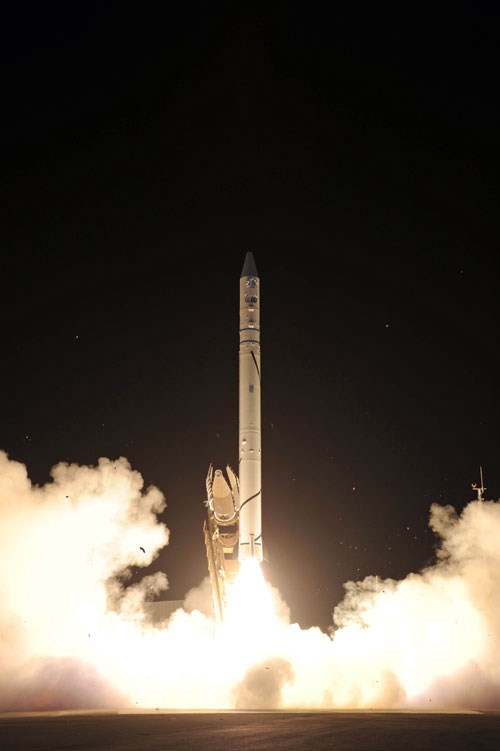


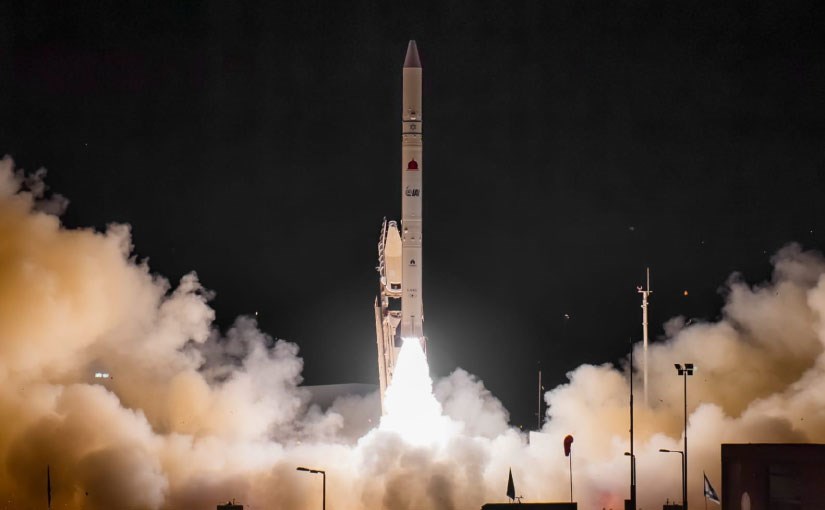

The Shavit is a space launch vehicle designed by IAI/MLM Division to place small payloads into low-earth orbit (LEO) ranging from 200 to 600 kilometers of altitude. Based on fight-proven hardware and software, the Shavit launch vehicle requires short preparation time and thus features reduced launch cost compared to other space launch vehicles. Since its entry into service in 1988 carrying the first Ofeq earth observation satellite, the Shavit launcher has been continuously under an improvement program to achieve the insertion into orbit of more sophisticated OFEK spacecrafts. The Shavit vehicle propulsion system consists of three stages powered by solid rocket motors. The first two stages place the launch vehicle in the proper altitude and the third stage takes care of inserting the payload into the transfer orbit with the correct speed. The first stage places the payload at an altitude of 110 km, the second stage reaches 250 km of altitude, the third stage delivers the payload at an altitude of 260 km. Optionally, the Shavit launch vehicle may be equipped with a liquid propellant fourth stage. The current Shavit LK-A launcher, currently in service, is capable of delivering a 350kg class spacecraft into a 240x600 km elliptical polar orbit. In 2007 IAI/MLM are developing the LK-1 and LK-2 launchers to place spacecrafts into a 700 km circular polar orbit with the payload weighting 350 and 800 kg respectively.
deagel.com: https://www.deagel.com/x/x/a001901