ARMSNET
Military Equipment Database
Initializing 0%

T-62 Russian Medium Tank

T-62
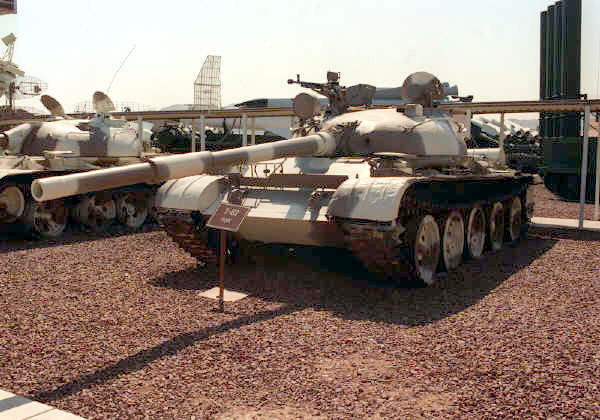
Medium Tank
Spotted an error? Sign in to suggest an edit.
Basic Information
Name
T-62 Russian Medium Tank
Designation
T-62
Alternate Designation
T-62
Equipment Type
Medium Tank
Manufacturer
Nizhnyi Tagil, Russia
Date of Introduction
1961
Description

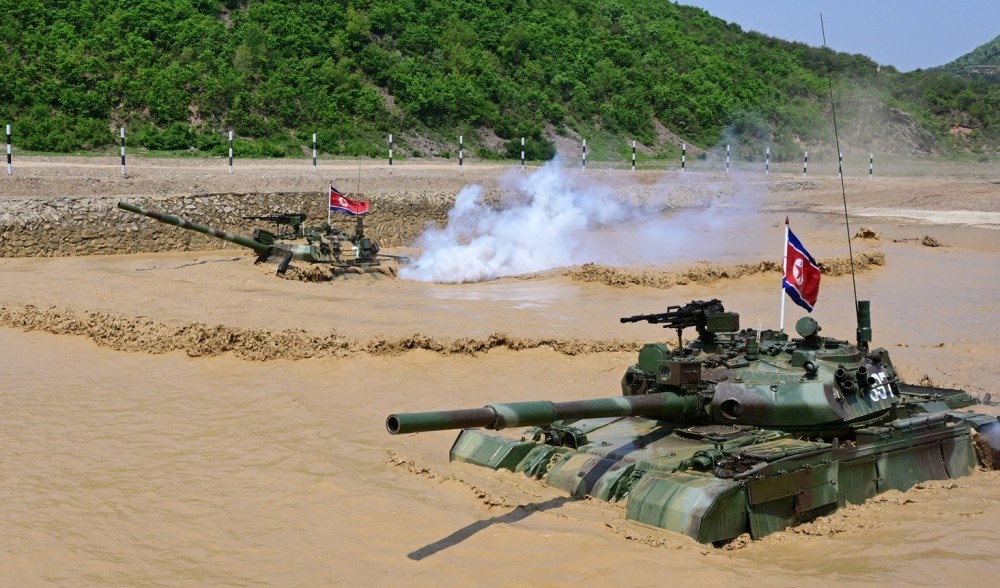
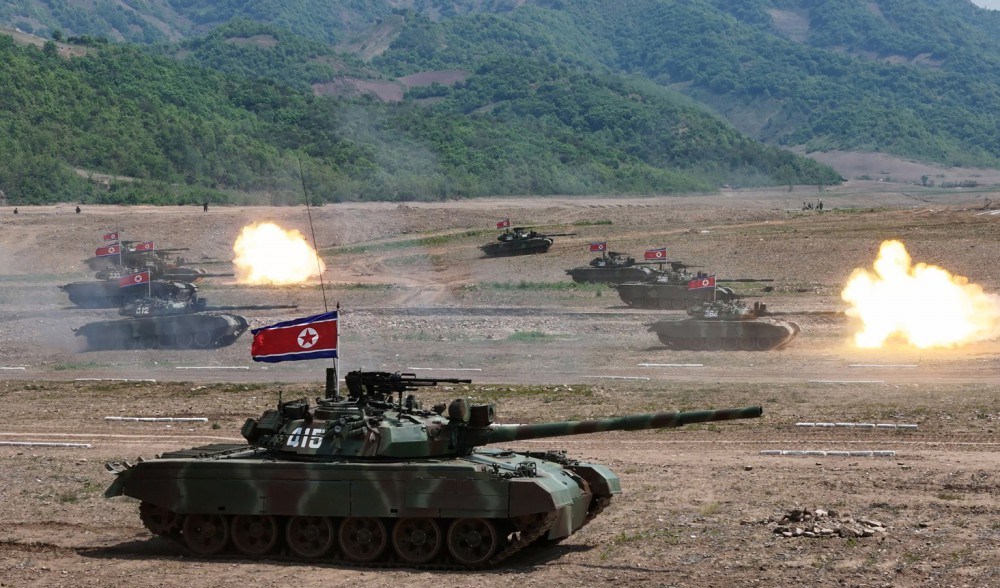
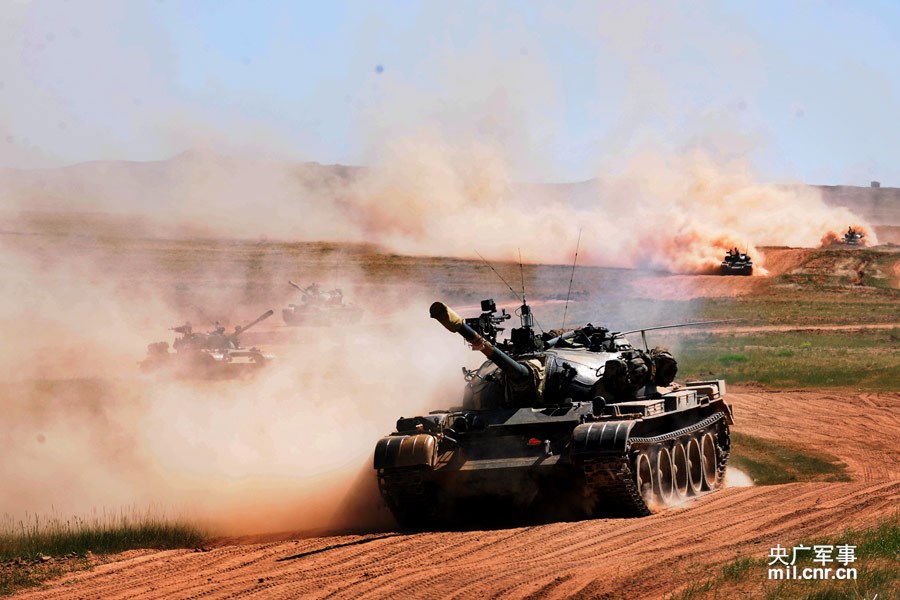
Hezbollah Proliferation. The T-62 is a Soviet main battle tank that was first introduced in 1961. As a further development of the T-55 series, the T-62 retained many similar design elements of its predecessor including low profile and thick turret armor. In contrast with previous tanks, which were armed with rifled tank guns, the T-62 was the first tank armed with a smoothbore tank gun that could fire APFSDS rounds at higher velocities. While the T-62 became the standard tank in the Soviet arsenal, it did not fully replace the T-55 in export markets due to its higher manufacturing costs and maintenance requirements compared to its predecessor. Although the T-62 was replaced in Russia and the successor states of the Soviet Union, it is still used in some countries and its design features became standardized in subsequent Soviet and Russian mass-produced tanks. The T-62 has a typical tank layout: driver's compartment at the front, fighting compartment in the center, and engine compartment in the rear. The four-man crew consists of the commander, driver, gunner, and loader. Although the T-62 is very similar to the T-55 and makes use of many of the same parts, there are some differences. These include the hull, which is a few centimeters longer and wider, the different road wheels, and differences in characteristic uneven gaps between road wheels. Unlike the T-54 and T-55 main battle tanks, the gaps between the last three pairs of road wheels are larger than the rest. The armament consists of the 115 mm U-5TS "Molot" (2A20) Rapira smoothbore tank gun with a two-axis "Meteor" stabilizer and 7.62 mm PKT coaxial general-purpose machine gun mounted on the right of the main gun. The 12.7 mm DShK 1938/46 antiaircraft heavy machine gun is mounted on the loader's hatch. It was optional until 1972 when all newly built tanks were fitted with the AA heavy machine gun. The tank carries 40 rounds for the main gun (although only 4 are placed in the turret, the rest are stored in the back of the fighting compartment and in the front of the hull, to the right of the driver) and 2500 rounds for the coaxial machine gun. All of the vehicle's armament is mounted in or on the round cast egg-shaped turret from the Ob'yekt 140 prototype main battle tank, mounted over the third pair of road wheels. The T-62 was armed with the world's first smoothbore tank gun, giving it considerably greater muzzle velocity than the Western 90 mm and 105 mm tank guns of its time. It can fire BM-3 APFSDS-T, BK-4, BK-4M HEAT and OF-18 Frag-HE rounds. The 115 mm gun introduced the first successful APFSDS ammunition, albeit with a steel penetrator. A smoothbore gun allowed a significantly better performance (from 10% to 20%) from HEAT ammunition, which was considered the main ammunition type for fighting enemy armor at medium and long ranges. The gun can be elevated or depressed between −6° and +16°. It is reloaded manually and gets automatically reset to +3.5° of elevation after it is fired if the stabilizer is enabled. Empty cartridges are automatically ejected outside the vehicle through a small hatch in the rear of the turret. The gun has a range of effective fire of about 4 km during day conditions and 800 m (with the use of night vision equipment) at night. This tank was fitted with a Meteor two-axis stabilizer, it allows the T-62 to aim and fire while moving, according to tests conducted by the US army the Meteor gave the T-62 a first hit probability of 70% for a moving target at 1000 meters with the tank moving up to 20 km/per hour. This gave the tank a good advantage in dynamic battlefields and breakthrough operations, especially in Central Europe where most tank battles would take place under the 1500 meters range. The T-62 uses torsion bar suspension. It has five pairs of rubber-tired road wheels, a drive sprocket at the rear, and an idler at the front on each side, with no return rollers. The first and last road wheels each have a hydraulic shock absorber. The tank is powered by the V-55 12-cylinder 4-stroke one-chamber 38.88-liter water-cooled diesel engine developing 581 hp (433 kW) at 2,000 rpm. This is the same engine as the one used in the T-55. Because the T-62 weighs more than the T-55, it is less maneuverable. Like the T-55, the T-62 has three external diesel fuel tanks on the right fender and a single auxiliary oil tank on the left fender. The tank carries 960 liters of fuel in its internal and external fuel tanks. Two optional 200-liter drum-type fuel tanks can be fitted on the rear of the vehicle for an increased operational range

Ground Specifications
Crew 4
Mobility Type Tracked
Main Weapon 115 mm U-5TS "Molot" (2A20) Rapira smoothbore tank gun
Engine V-12 Diesel (580 hp)
Variants
T-62 (Model 1962) This was an improved version of the first production vehicle, with a new engine deck and other detailed improvements.
T-62A (Model 1972) This variant differs chiefly in the provision of a 12.7-mm DShKM machine gun for air defense. Changes in the turret shape and size were also made.
T-62 (Model 1975) This was the final production model.
T-62D This tank is fitted with the Drozd anti-tank missile defense system, passive armor, V-55U engine and R-173 communications system.
T-62K This command variant is similar to the standard T-62 but with additional communications equipment and the TNA-3 land navigation system.
T-62M This designates T-62s fitted with the Sheksna 9K116-2 (AT-12 Stabber**) laser-guided missile system; thermal sleeve for the cannon; passive armor; 12.7-mm anti-aircraft gun; Volna fire-control system with BV62 ballistic computer and laser rangefinder.
Other T-62M upgrades There are a number of variations of the T-62M.
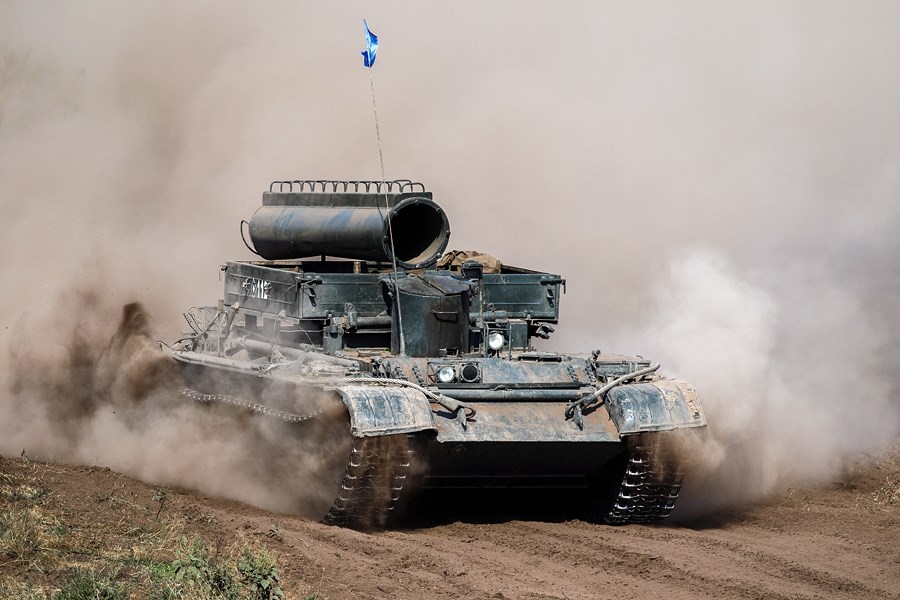
TO-62 flamethrower This tank is fitted with a coaxially mounted flamethrower
IT-2 T-62 chassis fitted with a radio-controlled anti-tank guided weapon with a HEAT warhead and a 7.62-mm machine gun.
RO -115 This is an Egyptian modified T-62 with a British 115-mm tank barrel.
T-62 with 120-mm gun Giat Industries (now Nexter) has fitted a Giat 120-mm smoothbore gun.
TP-62 Bulgarian designation used for the T-62 firefighting vehicle.
T-62ME Upgrade Package Middle Eastern users with a integrated a 120-mm Uralmashzavod-developed smoothbore gun.
T-62 upgrade Transport Engineering in Omsk has developed an advanced upgrade package for the T-62.
TV-62M ARV Bulgarian T-62s converted for recovery missions.
KMDB T-62 upgrades Ukraine upgradedT-62.
System
Alternative Designation T-62
Type Medium Tank
Manufacturer Nizhnyi Tagil, Russia
Proliferation Hezbollah
Crew 4 (commander, gunner, loader and driver)
Equipment One of the many similarities between the T-54/T-55 and T-62 tanks is their ability to create a smokescreen by injecting diesel fuel into the exhaust system. Like the T-54 and T-55, the T-62 has an unditching beam mounted at the rear of the hull. The tank can be fitted with a thin snorkel for operational usage and a large diameter snorkel for training. The thin snorkel can be disassembled and carried in the back of the turret when not used. The commander's cupola is located on the left of the top of the turret. The loader has a single-piece hatch located on the right side of the turret and further back than the commander's cupola. The loader's hatch has a periscope vision block that can be used to view the areas in front of and behind the vehicle. The commander's cupola has four periscopes, two are located in the hatch cover while the other two are located in the forward part of the cupola. The driver has a single-piece hatch located on the left front of the vehicle, directly in front of the left side of the turret. The tank uses the same sights and vision devices as the T-55 except for the gunner, who received a new TSh-2B-41 sight which has x4 or x7 magnification. It is mounted coaxially with an optic rangefinder. The gunner has two periscope vision blocks, one of which is used in conjunction with the main searchlight mounted coaxially on the right side of the main armament. There are two other smaller searchlights. One of these is used by the commander and is mounted on his cupola. The tank has two headlights on the right front of the vehicle, one of which is infrared while the other one is white. Curved handrails around the turret allow easier entry for the commander, the gunner, and the loader. They also help the infantry to mount and dismount the tank while performing a tank desant. The tank has a box-shaped radiation detector/actuator mounted on the right-hand side of the turret, behind the compressed air tanks. While the T-62 did not feature an automatic loader (as would become characteristic of later Soviet tanks), it had a unique "ejection port" built into the back of the turret, which would open as the main gun recoiled, ejecting spent shell casings outside. This was considered advantageous since the spent casings would otherwise clutter the floor of the tank and fill the interior with noxious burnt-propellant fumes. There is a blower mounted in the rear of the turret, to the left of the spent cartridge ejection port.
Dimensions
Length, Total 6.63 m
Length, Gun Forward 9.33 m
Width 3.30 m
Height 2.40 m
Weight, Combat 40,000 kg
Weight, Unloaded 38,000 kg
Ground Clearance 425 mm
Ground Pressure 0.77 kg/sq cm
Track, Length on Ground 4.15 m
Track Width 580 mm
Automotive
Engine Name 1 x V55-5
Engine Type V-12 water-cooled diesel
Engine Power 580 hp at 2,000 rpm
Power-to-Weight Ratio 4.5 hp/metric ton
Fuel Capacity, Internal 675 liters
Fuel Capacity, External Fixed 285 liters
Fuel Capacity, External Jettisonable 400 liters
Transmission manual synchromesh transmission; 5 forward/1 reverse gears
Speed, Maximum Road 50 km/h
Speed Maximum Swim Not Amphibious
Operational Range with Normal Fuel and on Paved Roads 450 km
Operational Range with Normal Fuel on Dirt Roads 320 km
Operational Range with External Fuel Tanks 650 km
Suspension torsion bar, five road wheels, rear drive, front idler, two shock absorbers on each side
Graident 60 %
Vertical Obstacle 0.80 m
Trench 2.80 m
Fording without Preparation 1.40 m
Fording with Snorkel 5.50 m
Main Gun
System
Name 1 x 115-mm/55-cal U-5TS (2A20) Rapira 2
Type Tank Gun
Caliber 115 mm
Barrel Length 6.05 m
Carriage 115 x 728 mmR
Rate of Fire 6–10/minute
Muzzle Velocity 1,600 m/s (APFSDS)
Effective Firing Range 2,000 m-high target – 1,870 m; 3 m-high target – 2,260 m; 4,000 m AT-12 missile.
Maximum Elevation +17 deg
Minimum Elevation -4 deg
Traverse Range 360 deg
Traverse Left 180 deg
Traverse Right 180 deg
Ammunition
Name 3VBM-1
Type Armour-piercing fin-stabilized discarding sabot (APFSDS)
Caliber 115 mm
Armor Penetration INA
Basic Load 40 Total Rounds (Typically 12 x HVAPFSDS, 6 x HEAT and 22 x HE-FRAG; also fires 115-mm Sheksna laser-guided missiles.
Coaxial Weapon System
Name 1 x 7.62-mm PKT Machine Gun with 2,500 Rounds.
Auxiliary Weapon System
Note 1 x 12.7-mm DShK Machine Gun (T-62A) with 500 Rounds.
Fire Control
Name INA
Computerized FCS No
Main Gun Stabilization INA
Commander's Day Sight 5x magnification, 10-deg field of view (FOV)
Commander's Night Sight 4.2x magnification, 8-deg FOV, 1,312-ft (400-m) range w/OU-3GK searchlight
Gunner Sight TSh2B-41u telescope w/3.5x magnification, 18-deg FOV or 7x magnification, 8-deg FOV TPN1-41-11 IR sight w/3.5x magnification, 6-deg
Optics Some may have laser rangefinder and passive night-vision system
Driving Aids Some have GPK-48 or -59 directional gyro driving aids; GPK-48 is accurate for 15 min w/out resetting; GPK-59, accurate for 90 min w/out resetting (some have map coordinate and direction indicator;) earlier version was suitable for 100-km grid square and the later version was expanded to 1,000-km grid square
Protection
Hull Armor Front: 102mm; Sides; 79mm; Rear: 46mm; Top: 31mm
Turret Armor Front: 242mm; Sides: 153mm; Rear: 97mm; Top: 40mm; Hatches: 30mm
Applique Armor Available
Explosive Reactive Armor INA
Active Protection System INA
Mine Clearing The KMT-5 mineclearing plow-roller set consists of two plows and two roller sections of three rollers each. This combination is attached to the front of a tank hull. Stretched between the roller sections is a "dogbone" assembly which consists of a light chain and small roller weights. Using a dragging motion, the "dogbone" covers the exposed area between tank tracks, thus exploding tilt-rod mines. The flexibility of the KMT-5 allows the use of plows or rollers depending on the terrain, type of soil and fuse types encountered. The KMT-5 can be used with the T-54/55, T-62, T-64, and T-72 tanks. The system can withstand approximately nine explosions that have a capacity of five to six kg. It is fitted with a quick-release disconnect unit to allow the tank driver to release the set rapidly. One other capability is that the KMT-5 may be used during night operation, using the luminous lane-marking device (PSK equipment) which marks the clear lane at night with a luminous substance. The T-62, fitted with the KMT-5, has limited speeds of 10 to 15 km/h with the plow in the raised position, and 6 to 8 km/h with the plow in the down position. It has a limited turning radius of 65-m and can not cross ditches wider than 2.5-m. The only limitation known on the T-54/55 is that the plow and the rollers can not be used at the same time.
Self-Entrenching Blade Yes
NBC Protection PAZ collective nuclear warning and protection system blower/dust separator removes fallout no chemical or biological agent filters
Smoke Equipment Generated from the engine exhaust
Details
Country of Origin Russia
Category Tanks
Land > Tanks
Filter Label
T
Classification
Domain
Ground
Equipment Status
Active
Dimensions
Length
6.63 m
Width
3.3 m
Height
2.4 m
Weight
40000 kg
Operators (20)
Russia
Ukraine
Iran
North Korea
Afghanistan
Algeria
Angola
Cuba
Egypt
Eritrea
Ethiopia
Libya
Mongolia
Syria
Tajikistan
Uzbekistan
Vietnam
Yemen
Non-State Actors
Kurdistan
Something went wrong. Please reload the page. Reload