CRJ900 Canadian Regional Jet
CRJ900
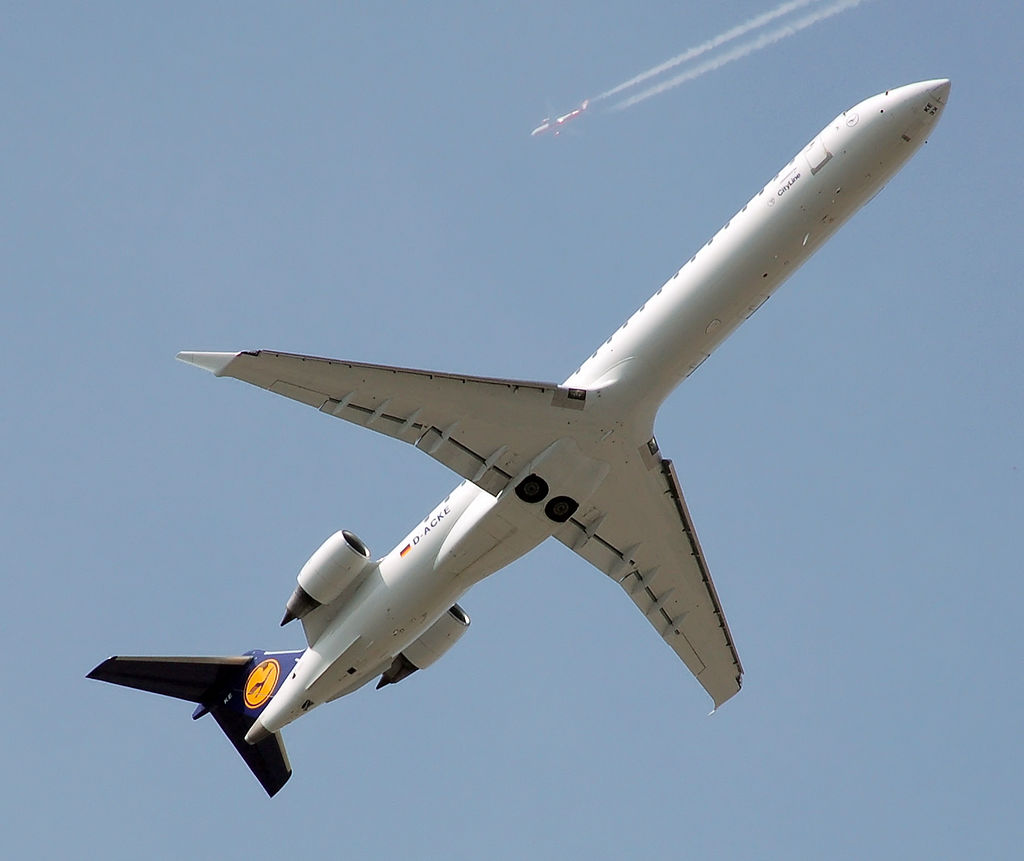
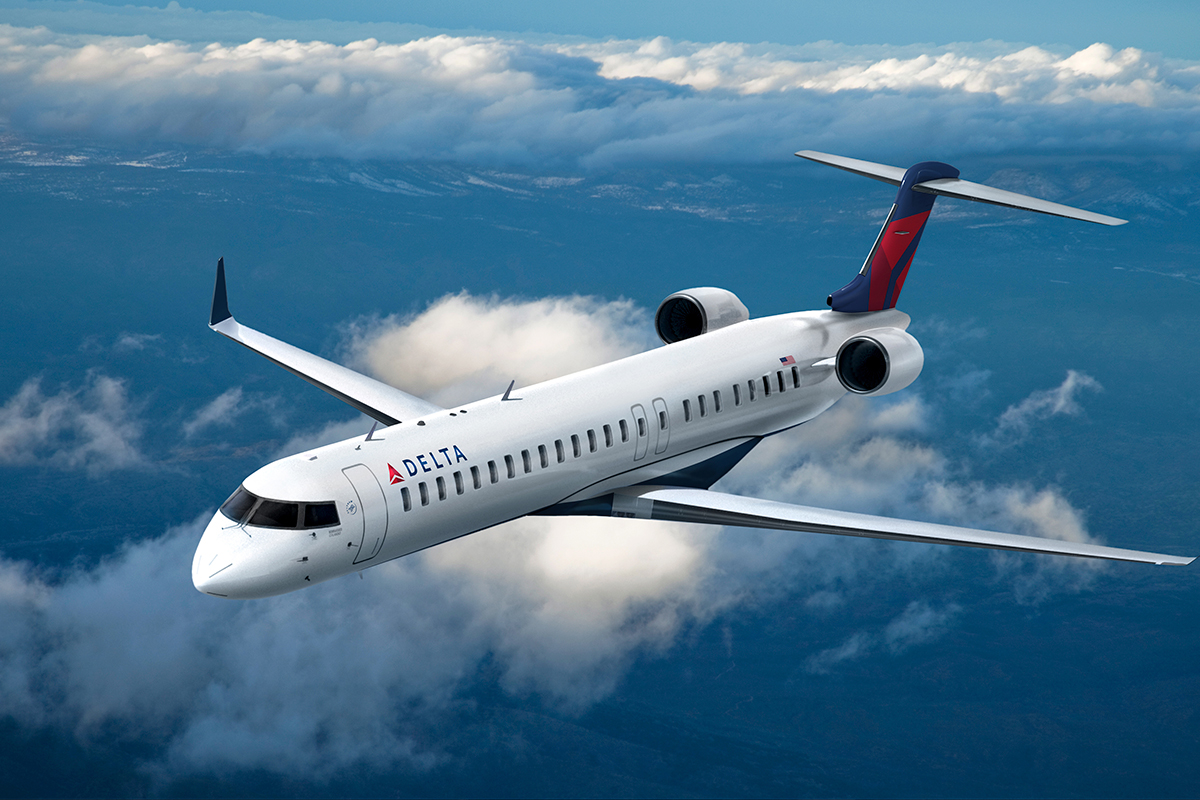
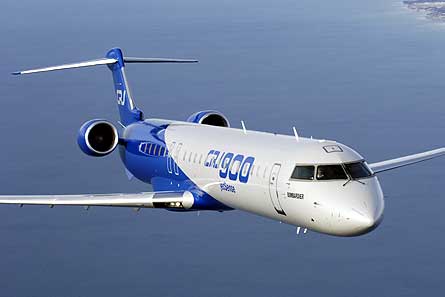
The Bombardier CRJ700, CRJ900, and CRJ1000 (after June 2020, the Mitsubishi CRJ) are a family of regional jet airliners designed and manufactured by Canadian transportation conglomerate Bombardier; this aircraft trio has been collectively marketed by the company as the CRJ Series. Their design was derived from the smaller CRJ100 and 200 airliners. During the 1990s, Bombardier initiated development on the CRJ-X, a program to produce enlarged derivatives of its popular CRJ100/200 family. Officially launched in 1997, the CRJ700's maiden flight took place on 27 May 1999; it was soon followed by the stretched CRJ900 variant. Several additional variants of the type were subsequently introduced, including the CRJ550 and the elongated CRJ1000. While production of the smaller CRJ100/200 range was discontinued during 2006, the larger CRJ Series models have continued to be produced into the 2010s. Competitors have included the Fokker 70/Fokker 100, the BAe 146 family, and the Embraer E-Jet family. In Bombardier's lineup, the CRJ Series was formerly marketed alongside a family of larger jets, the C Series (now majority-owned by Airbus and marketed as the Airbus A220) and a twin-turboprop, the Q Series (now owned by De Havilland Canada and marketed as the Dash 8). During the late 2010s, Bombardier sought to sell off several of its aircraft programs. The CRJ program was acquired by Japanese corporation Mitsubishi Heavy Industries in a deal that closed 1 June 2020. The CRJ900 is a stretched 76–90 seat version of the CRJ700. The first CRJ900 (C-FRJX) was modified from the prototype CRJ700 by adding longer fuselage plugs fore and aft of the wings. It was later converted into the prototype CRJ1000 by replacing the fuselage plugs with longer plugs. The CRJ900 also features strakes located at the rear of the plane. The CRJ900 competes with the Embraer 175, and is more efficient per seat-mile, according to Bombardier. Mesa Air Group was the launch customer for the CRJ900 painted in America West livery. The FAA Type Certificate designation of the CRJ900 is the CL-600-2D24. The wing is wider with added leading edge slats, the tail is redesigned. The cabin floor has been lowered 2 inches which gains outward visibility from the windows in the cabin as the windows become closer to eye level height. The cabin has a re-circulation fan which aids in cooling and heating. The environmental packs have a target temperature instead of a hot-cold knob. The APU is a Honeywell RE220 unit,[68] which supplies much more air to the AC packs and has higher limits for starting and altitude usage. The aircraft features two GE CF34-8C5 engines, 59.4 kN (13,400 lbf) thrust with APR. The engines are controlled by FADEC digital engine control instead of control cables and a fuel control unit. In typical service, the CRJ900 can cruise 8–10,000 ft higher with a slightly higher fuel burn and an average true airspeed of 450–500 knots, a significant improvement over its predecessor. Its maximum ground takeoff weight is 84,500 pounds. In 2018, the CRJ900's list price was $48 million while its market value was $24M; reportedly, most customers are paying around $20–22M and the American Airlines order for 15 was at below $20M. A 2012 aircraft was worth less than $14M and it was to fall by 30% in 2021.