ARMSNET
Military Equipment Database
Initializing 0%

M48 Patton American Main Battle Tank (MBT)

M48 Patton
Main Battle Tank (MBT)
Spotted an error? Sign in to suggest an edit.
Basic Information
Name
M48 Patton American Main Battle Tank (MBT)
Designation
M48 Patton
Alternate Designation
M48 Patton
Equipment Type
Main Battle Tank (MBT)
Manufacturer
Date of Introduction
1952
Description

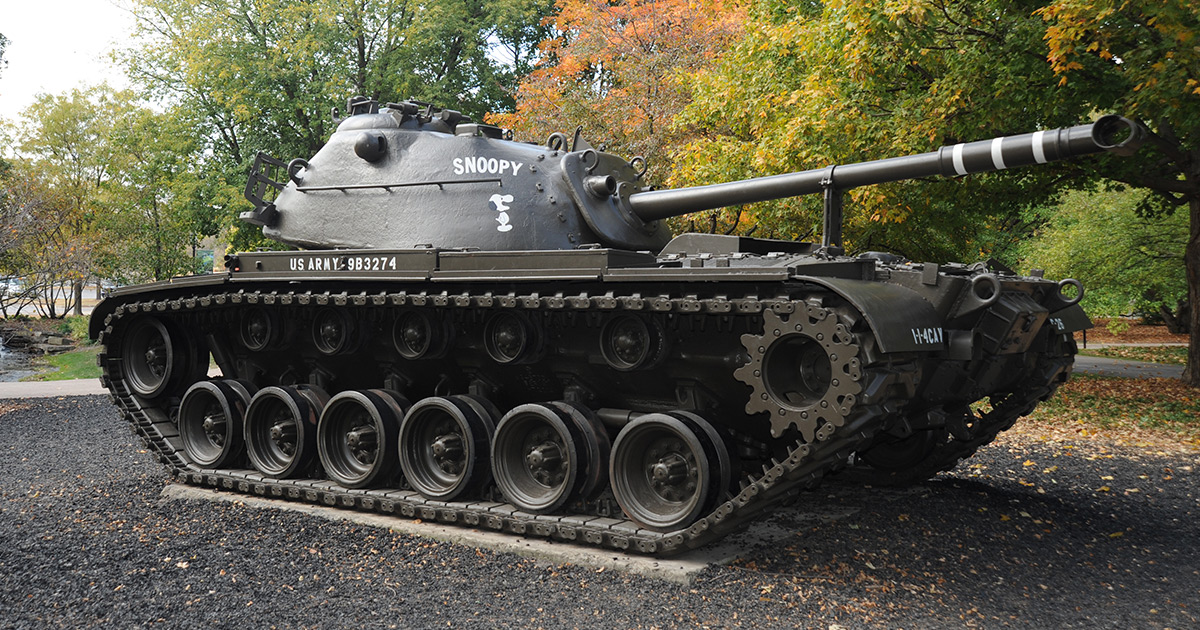
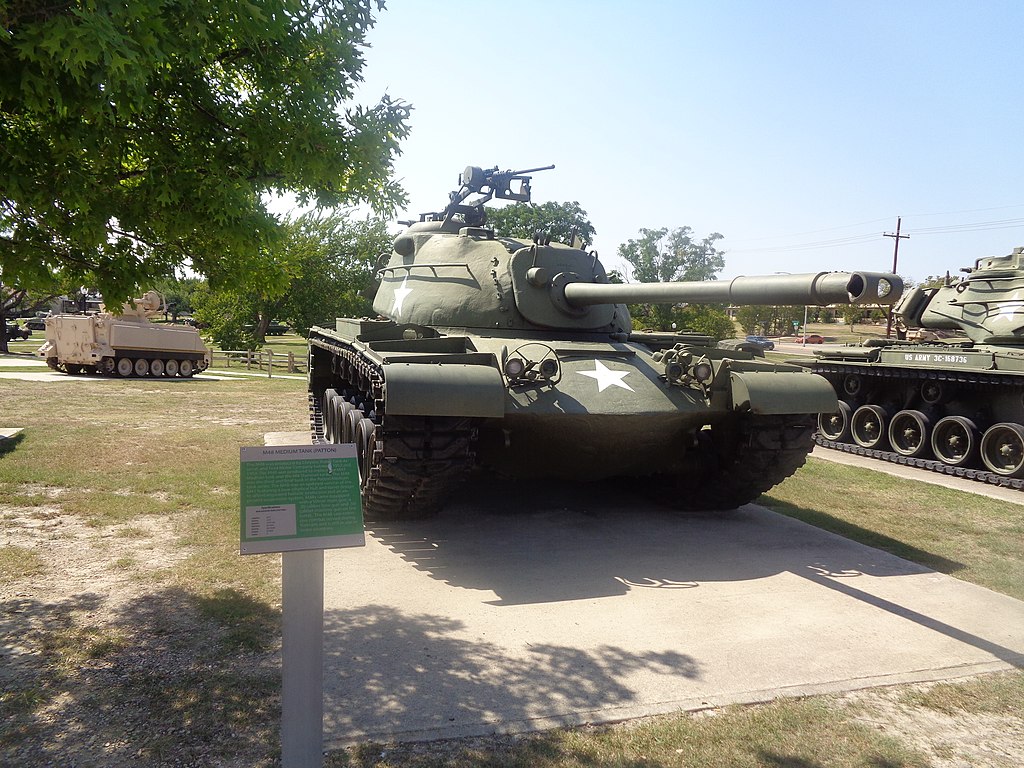
The M48 Patton is an American first generation main battle tank (MBT) introduced in February 1951. It was designed as a replacement for the M26 Pershing, M4 Sherman variants and M46 Pattons used in the Korean War, and as the successor to the M47 Patton. Nearly 12,000 M48s were built, mainly by Chrysler and AlCo, from 1952 to 1961. The M48 underwent many design modifications and improvements during its production life. This led to a wide variety of suspension systems, cupola styles, power packs, fenders and other details among individual tanks. The early designs, up to the M48A2C, were powered by a gasoline engine. The M48A3 and A5 versions used a diesel engine, however gasoline engine versions were still in use in the US Army National Guard through 1968 and through 1975 by many West German Army units. Numerous examples of the M48 saw combat use in various Arab–Israeli conflicts and the Vietnam War. Beginning in 1959, most American M48A1s and A2s were upgraded to the M48A3 model. The M48 Patton-series saw widespread service with the United States and NATO until it was superseded by the M60 tank as well as being widely exported. The tank's hull also developed a wide variety of prototypical, utility and support vehicles such as armored recovery vehicles and bridge layers. Some M48A5 models served into the mid-1980s with US Army National Guard units, and were used as targets for weapons and radar testing into the mid-1990s. Many M48s remain in service in other countries though most of these have been highly modified and had their firepower, mobility and protection upgraded to increase their combat effectiveness on the modern battlefield. The Turkish Army has the largest number of modernized M48 MBTs, with more than 1,400 in its inventory. Of these, around 1,000 have been phased out, placed in storage, or modified as armoured recovery vehicles. Chrysler began building the new Newark Tank Plant in Newark, Delaware in 1951 to produce the M48 while Chrysler Defense Engineering and ARCOVE continued advanced production engineering (APE) to evolve the design using the T48 prototypes at the OTAC Detroit Arsenal. In May 1952 Chrysler came to an agreement to take control on a Government Owned and Contractor Operated (GOCO) basis of the Newark Tank plant production facility with the US Government and to continue production design refinement of the T48 at the OTAC Detroit Arsenal. The first Chrysler production tank was unveiled on 1 July 1952 as the 90mm Gun Tank M48 and christened the M48 Patton by Mrs. Beatrice Ayer Patton, wife of the late General George S Patton.[28] To meet the urgent need for tanks, production contracts were also awarded to General Motors and Ford Motor Company to produce the tank in Michigan starting in 1952. Also in July 1952 the Army awarded American Locomotive Company a $200 million contract to start producing the tank in 1953 at the Schenectady Tank Plant in New York. All four companies were given initial production contracts in that same year for around 400 tanks each. The M48 featured a gasoline-powered engine, different models were used depending on availability and manufacturer. Originally the M48(Mod A) was built at the Chrysler Defense using the Continental AV-1790-5B coupled to a General Motors CD-850-4A or 4B cross-drive transmission as used for the M47. The M48(Mod B) used a Continental AV-1790-5C gasoline engine and either an Allison CD-850-4A or 4B cross-drive transmission. Most of these were built by the American Locomotive Company. Additionally a two-cylinder, gasoline, air-cooled engine (sometimes referred to as the "Little Joe" by tank crews) was provided to power a 28 volt, 300 ampere generator when the main engine was not needed. Fuel capacity was 200 gallons providing a cruising range of about 70 miles (110 km). The suspension consisted of six roadwheel pairs with a torsion bar suspension system and five return rollers. There was a dual compensating idler arm at the front, and dual auxiliary track tension wheels behind the last road wheels, using the T97E2 track assembly as were the previous M46 and M47 tanks. It had hydraulic shock absorbers mount on the first, second and sixth roadwheel pairs (opposite of the M46 and M47). The bow mounted machine gun and its related crew station was eliminated thus providing more ammunition storage for the main gun. The driver's station was moved to the front center of the hull. The steering controls were redesigned. A large aircraft-styled steering wheel (replacing the wobble stick control of the M46 and M47) and placing the transmission range selector on the floor to the driver's right. Mod A hulls had a small oval overhead hatch for the driver. It incorporated a mechanism that dropped his three periscope heads to provide clearance for the hatch door as it swung to the right, and the driver then had to reposition the periscopes by hand once the hatch was closed again. The vehicle did not have an NBC protection system for the crew and a fording depth of approximately 1.2 meters. The M48's turret consisted of a redesigned flat gun shield and standard pop-up hatch for the commander's station. The M48 Mod A turret design had a smaller roof hatches for both the commander and loader. A .50cal M2HB using a M1 remote control mount on a pedestal was available for the commander. When not in use, the machine gun mount could be stowed on a bracket welded to the turret roof in front of the loader. The M48's direct fire control system consisted of an M12/T41 stereoscopic rangefinder with a field of view of 5 degrees and magnification of x7.5, an azimuth indicator, an M20 gunner's periscope and a T13 superelevation actuator. Two main bearings are bolted to the mounting plate on the roof of the tank turret to support the range finder on steel radial ball bearings. A parallel gun linkage between the gun trunnion and the range finder assures that the line of sight of the range finder reproduces the exact motion of the gun in elevation. A .30 caliber M1919E4 machine gun was coaxially mounted to the main gun's right and was operated by the gunner. An M12 full field optical range finder was used, the same as the M47. The tank was not fitted with any night fighting or computerized fire control systems. It featured the 90 mm T139 main gun using a Y-shaped muzzle brake on the barrel and carried 53 rounds. Eight ready rounds were stored in the left side of the turret bustle for the loader, the rest were stored inside safe containers in the hull. Tank crews complained that the Y-shaped fume extractor was found to be prone to snagging brush. It was replaced with a T-shaped model early in production. These early M48 tanks suffered from engine, transmission, track, and suspension problems. The M12 rangefinder was too fragile and often broke. Army Field Forces (AFF) found these tanks to be unsuitable for combat use in Europe and was regulated to limited use by US Army CONUS units until numerous shortcomings were corrected. Furthermore, some 120 hulls were found to have insufficient hull armor. These were denoted as the M48C and relegated to the United States Army Training and Doctrine Command (TRADOC) for non-ballistic training use by the Armor School at Fort Knox to train crewmembers and maintenance personnel.

Ground Specifications
Crew 4
Engine V-12 Diesel (750 hp)
Range 499.0 km
Variants
M48 M48: Differed from the M47 in having yet another new turret design and a redesigned hull, doing away with the bow machine gun position, featuring the M41 90 mm gun. These turrets give the M48 its distinctive non-M26 style look. Originally, the gun featured a Y-shape muzzle brake, but this was changed to the more characteristic T-shape.
M48C M48C: Over a hundred original production hulls were found to be lacking correct ballistic protection and were relegated to training as the M48C.
M48A1 M48A1: New driver hatch and M1 commander's cupola, allowing the M2HB .50 caliber machine gun to be operated and reloaded from within the vehicle.
M48A2 M48A2: Improved powerpack and transmission, redesigned rear plate, and improved turret control.
M48A2C M48A2C: M48A2s with an improved rangefinder, M17, new ballistic drive and bore evacuator for the main gun, and the auxiliary tensioning wheels were deleted.
M48 AVLB M48 AVLB: M48A2 chassis, fitted with a scissors-type bridge. All later upgraded to A3 standard.
M48A3 Refit of M48A1 through M48A2C models to diesel engines and a new fire control system. 1,019 converted.
M48A3 Mod. B M48A3 Mod. B: Additional armor on the exhausts and tail lights, and a raised commander's cupola.
M48A4 M48A4: upgrade proposed 15 October 1966 by Chrysler Defense, mating the T95E5 turret of the original variant of the M60 series tank to the M48A3 hull. Used by Israel in some Magach 3 variants.
M48A5 M48A5: Up-gunned with the 105 mm M68 gun. 2,069 converted.
M48A5E1 M48A5E1: New laser rangefinder, digital fire-control system, improving night vision system.
M48A5PI M48A5PI: M1 cupola replaced by the Israeli Urdan model.
M67 "Zippo" M67 "Zippo": M48 armed with a flamethrower inside a dummy model of the main gun with a fake muzzle brake. Named after a popular brand of cigarette lighter.
M247 Sergeant York: M247 Sergeant York: This self-propelled anti-aircraft gun, cancelled in 1985 before it was deployed, used the M48A5 chassis.
System
Alternative Designation M48 Patton
Type Main Battle Tank
In Service 1953-Present
Crew 4 (commander, gunner, loader, driver)
Dimensions
Length, Hull 6.42 m
Length, Gun Forward 9.31 m
Width 3.63 m
Height 3.09 m
Track, Length on Ground 4.00 m
Track, Width 0.71 m
Ground Clearance 0.41 mm
Ground Pressure 0.88 kg/cm sq
Weight, Combat 48,987 kg
Weight, Unloaded 46,287 kg
Automotive
Engine Name 1 x Teledyne Continental AVDS-1790-2D 1,790-cu in (29.3-liter) air-cooled
Engine Type V-12 Diesel
Engine Power 750 hp at 2,400 rpm
Range 499 km
Speed, Maximum Road 48 kph
Speed, Average Cross INA
Speed Maximum Swim Not Amphibious
Gradient 60%
Vertical Obstacle 0.92 m
Trench 2.59 m
Fording Depth, without Preparation 1.22 m
Fording Depth, with Preparation 2.44 m
Main Armament
System
Name M68
Type 105mm Rifled Gun
Caliber 105mm
Length 5,550 mm
Barrel Length 50 Calibres
Weight 1,128 kg
Fume Extractor Yes
Elevation -9 deg to 19 deg
Traverse 360 deg
Maximum Firing Range 4,000 m
Sights INA
Ammunition
Type Rifle
Caliber 105 mm
Shell INA
Shell Weight INA
Basic Load 54 Rounds
Coaxial Weapon System
System
Name M73 Machine Gun
Type Medium Machine Gun
Caliber 7.62mm
Quantity 1 x 7.62mm M73 machine gun
Manufacturer United States
Proliferation The M73 and M219 are 7.62 mm NATO caliber machine guns designed for tank use. NATO no longer uses them, but they were used on the M48 Patton and M60 Patton MBT series (including the M728 Combat Engineer Vehicle), and on the M551 Sheridan Armored Reconnaissance / Airborne Assault Vehicle (AR/AAV).
In Service 1959-1990s
Length 1,219.2 mm
Barrel Length 609.6 mm
Weight 14.1 kg
Rate of Fire 500-625 round/min
Action Recoil-operated/short-recoil operation with gas assist
Muzzle Velocity 853.44 m/s
Maximum Firing Range 3,657.6 m
Effective Firing Range 899.8 m
Feed System Belt Feed, left or right hand
Sight INA
Ammunition
Type Rifle
Caliber 7.62 mm
Cartridge 7.62×51mm NATO
Basic Load 2,000 Rounds
Auxiliary Weapon System
System
Name M60D
Type 7.62mm
Caliber General-Purpose Machine Gun
Quantity 2 x 7.62mm M60D Machine Gun
Manufacturer Saco Defense U.S. Ordnance
Proliferation Widely Proliferated
In Service 1957-Present
Length 1,105 mm
Barrel Length 560 mm
Weight 10.5 kg
Action Gas-operated, short-stroke gas piston, open bolt
Rate of Fire 550–650 RPM
Muzzle Velocity 853 m/s
Effective Firing Range 1,100 m
Feed System Disintegrating belt with M13 Links
Sights Iron sights
Note The M60D is a mounted variant of the standard M60. It can be mounted on boats, vehicles and as a pintle-mounted door gun in helicopters. When used in aircraft, it differs from the M60C in that it is not controlled by the pilot—rather, it is mounted in a door and operated by a member of the crew. Like the rest of the M60 family, it is an air-cooled, gas-operated, belt-fed weapon. Unlike other models, however, the M60D normally has spade grips and an aircraft ring-type sight or similar, as well as an improved ammunition feed system. A canvas bag is also affixed to the gun to capture ejected casings and links, preventing them from being sucked into the rotor blades or into an engine intake. The M60D was equipped on the UH-1B Huey (using the M23, XM29, M59, and the Sagami mounts), the CH-47 Chinook (using the M24 and M41 mounts) in both door and ramp locations, the ACH-47A "Guns-A-Go-Go" variant of the Chinook (using the XM32 and XM33 mounts), and on the UH-60 Black Hawk (using the M144 mount). The M60D is also used by the British on Royal Air Force Chinooks. In US service, the M60D has been primarily replaced by the M240H. The M60D is still manufactured by U.S. Ordnance and still used on the SH-60 Seahawk.
Ammunition
Type Rifle
Caliber 7.62 mm
Cartridge 7.62×51mm NATO
Basic Load 3,000 Rounds Each
Fire Control
Name INA
Computerized FCS Yes, The fire control system included a rangefinder, mechanical ballistic computer, ballistic drive, and gunner's periscope. Collectively, these mechanical devices resembled in miniature the fire control systems used in naval gunnery. Only after the Second World War did such systems become small enough for use in combat vehicles. These mechanical fire control systems permitted tanks to engage effectively at much longer ranges than in World War II, a critical consideration for the Army, expecting to enter the European battlefield outnumbered. Instead of a gunner's sight being slaved to the gun tube, the ballistic computer and drive computed the range and elevated the gun. The gunner's primary responsibility lay in keeping the sight on the target.
Thermal Sight Tank Commander thermal sights (Taiwanese and Turkish M48s only)
Infrared driving lights and searchlights
Main Gun Stabilization INA
Rangefinders There are two basic types of optical rangefinders, stereoscopic and coincidence. With a stereoscopic model range determination occurred by measuring the distance from the observer to a target using the observer's capability of binocular vision. The coincidence rangefinder uses a single eyepiece. Light from the target enters the rangefinder through two windows located at either end of the instrument. The ARCOVE emphasis upon increased long range accuracy led to the incorporation of a fire control system (FCS) in the M48.
Ballistic Computer M13 electro-mechanical ballistic computer. The mechanical ballistic computer made a more accurate computation of range possible by mathematically accounting for such factors as vehicle cant and ammunition type. Many developmental range finders based on pulses of IR light, such as the OPTAR rangefinder of the T95 continued into 1957.
Protection
Hull Armor hull front: 101/120 mm hull sides: 76 mm hull rear: 44 mm hull top: 57 mm
Turret Armor turret front: 110 mm turret sides: 76 mm turret rear: 50 mm turret top: 25 mm
Applique Armor INA
Explosive Reactive Armor INA
Active Protection System INA
Mine Clearing INA
Self-Entrenching Blade INA
NBC Protection limited protection
Smoke Equipment M339 smoke grenade dischargers; engine smoke-laying system
Details
Country of Origin United States
Category Tanks
Land > Tanks
Filter Label
M
Classification
Domain
Ground
Equipment Status
Active
Dimensions
Length
Width
3.63 m
Height
3.09 m
Weight
48987 kg
Operators (8)
South Korea
Poland
Turkey
North Korea
Greece
Lebanon
Morocco
Thailand
Something went wrong. Please reload the page. Reload