ARMSNET
Military Equipment Database
Initializing 0%

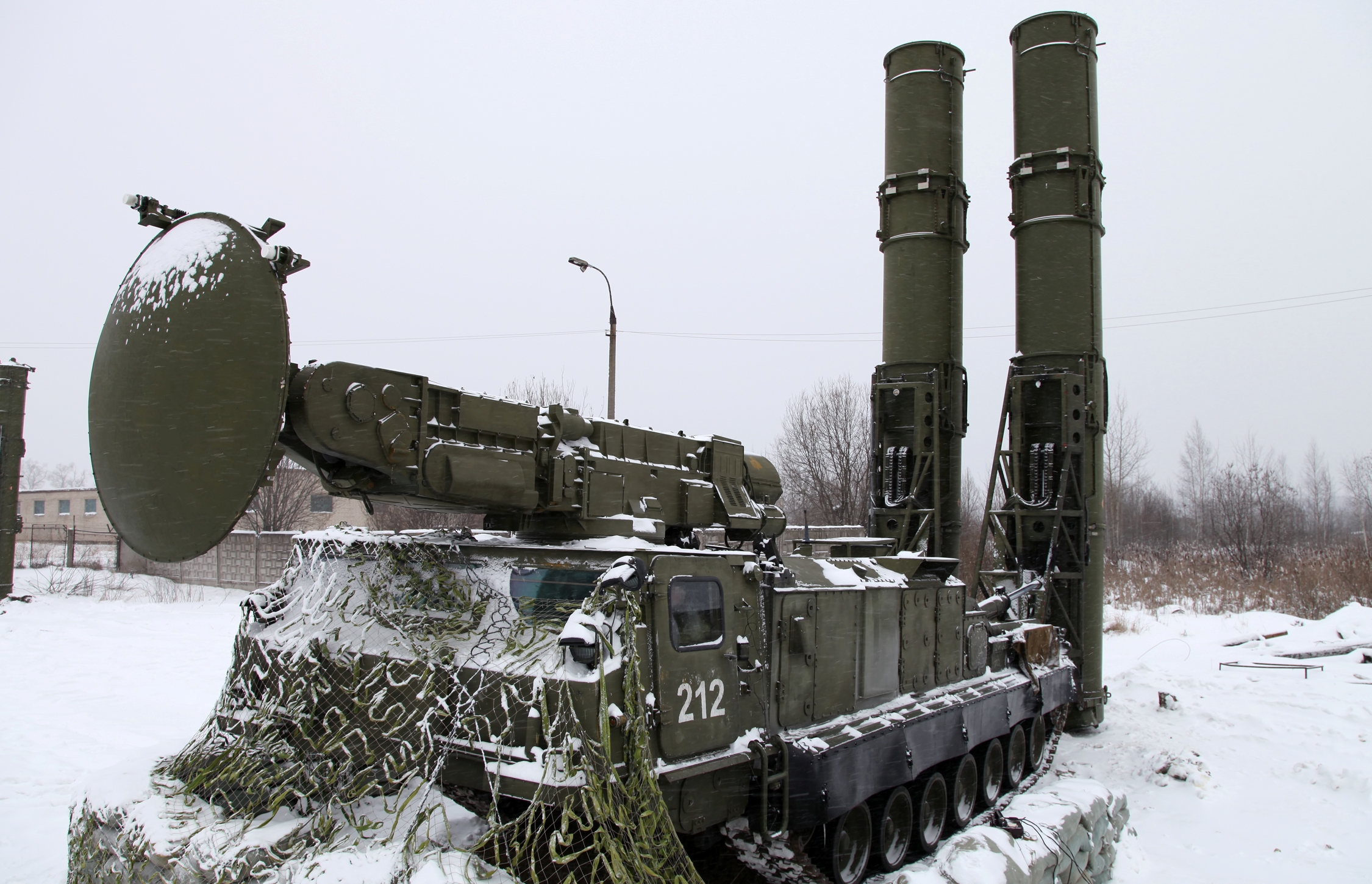
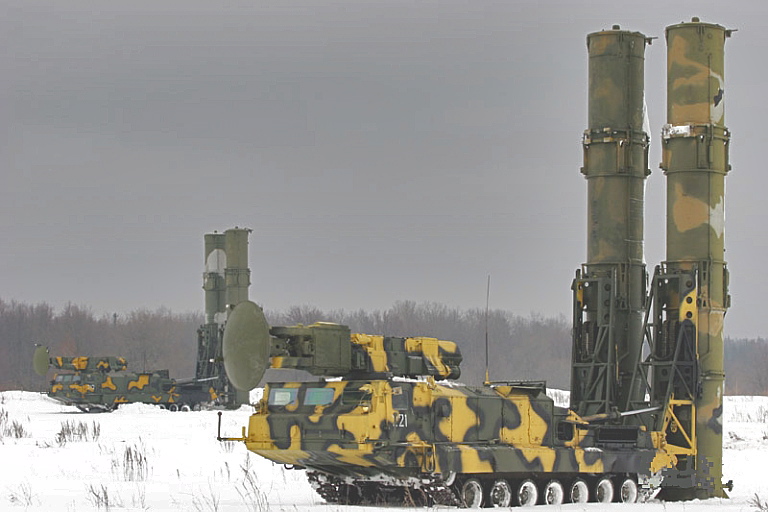
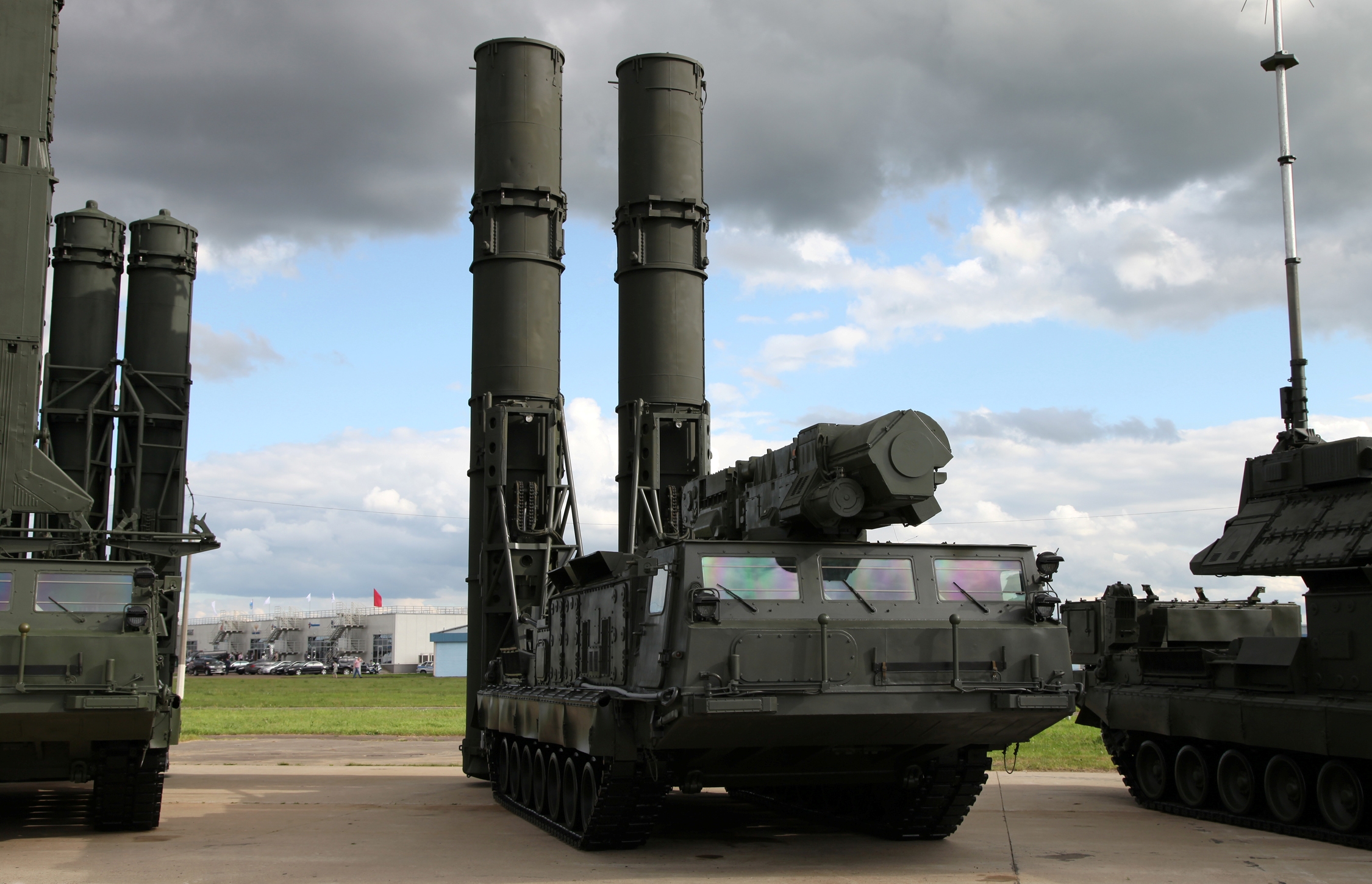
S-300V (SA-12b Giant) Russian Long-Range Air Defense Missile System

S-300V
Surface-to-Air Electronic Jamming System
Spotted an error? Sign in to suggest an edit.
Basic Information
Name
S-300V (SA-12b Giant) Russian Long-Range Air Defense Missile System
Designation
S-300V
Alternate Designation
S-300V; SA-12b Giant
Equipment Type
Surface-to-Air Electronic Jamming System
Manufacturer
Date of Introduction
1988
Description

The S-300V air defense missile system was developed to engage short- and intermediate-range ballistic missiles, cruise missiles, strategic and tactical aircraft, as well as early warning and electronic warfare aircraft. It was designed to counter the threat posed by Lance and Pershing ballistic missiles. The main role of the S-300V is to protect task forces and vital industrial and military installations against massed air attacks. Its reporting name in the West is SA-12 or Gladiator/Giant. The S-300V consists of: 9M82 SA-12b GIANT missile 9M83 SA-12a GLADIATOR missile 9A82 SA-12b GIANT TELAR 9A93 SA-12a GLADIATOR TELAR 9A84 GIANT Launcher/Loader Vehicle (LLV) 9A85 GLADIATOR Launcher/Loader Vehicle (LLV) 9S15 BILL BOARD Surveillance Radar system 9S19 HIGH SCREEN Sector Radar system 9S32 GRILL PAN Guidance Radar system 9S457 Command Station Note: The S-300V comes in two versions: 1. SA-12a Gladiator 2. SA-12b Giant Once equipped with 9M83 missiles is referred in the West as SA-12A or Gladiator. When equipped with 9M82 missiles it is referred as SA-12B or Giant. The 9M83 SA-12a GLADIATOR is a dual-role anti-missile and anti-aircraft missile with a maximum range between 75 and 90 km. The 9M82 SA-12b GIANT missile, configured primarily for the ATBM role, is a longer range system [maximum range between 100 and 200 km] with a longer fuselage with larger solid-fuel motor. The 9A82 SA-12b GIANT and 9A93 SA-12a GLADIATOR TELAR vehicles are similar, though the 9A83-1 carries four 9M83 SA-12a GLADIATOR missiles, whereas the 9A82 carries only two 9M82 SA-12b GIANT missiles. The configuration of the vehicles command radar is also different. On the 9A83-1 the radar is mounted on a folding mast providing 360º coverage in azimuth and full hemispheric coverage in elevation. The radar on the 9M82 TELAR is mounted in a semi-fixed position over the cab, providing 90º coverage on either side in azimuth and 110º in elevation. The TELARs are not capable of autonomous engagements, requiring the support of the GRILL PAN radar. The 9S457-1 Command Post Vehicle is the command and control vehicle for the SA-12 system, which is supported by the BILL BOARD A surveillance radar and the HIGH SCREEN sector radar. The CPV and its associated radars can detect up to 200 targets, track as many as 70 targets and designate 24 of the targets to the brigade's four GRILL PAN radar systems for engagement by the SA-12a and SA-12b TELARs. The BILL BOARD A radar provides general surveillance, with the antenna rotating every 6-12 seconds. The radar, which can detect up to 200 targets, provides target coverage of 0-55º in elevation and 10-250 km in range with an accuracy is 30-35 min of arc in azimuth and 250 m in range. and. The HIGH SCREEN sector radar supports the ATBM role, providing surveillance of anticipated azimuths of threat missiles. The radar is switches to a tracking mode when high speed targets are detected, automatically transmitting the trajectory parameters to the Command Post Vehicle. The CPV prioritizes the threat and instructs the HIGH SCREEN radar to track specific missiles, with the maximum being 16 simultaneous targets. The GRILL PAN radar system controls the battery's launcher vehicles (TELARs and LLVs). It can simultaneously track up to 12 targets and control up to six missiles against these targets The radar can acquire targets with a radar cross-section of 2m2 at a range of 150 km in manual mode and 140 km in automatic mode. The GRILL PAN tracks targets assigned to it by the CP while simultaneously maintaining a horizon search for new targets. The LLVs (9A85 GLADIATOR and 9A83 GLADIATOR) resemble normal TELARs, but with a loading crane rather than command radars. While the primary role of the LLV is to replenish the TELARs, they can also erecting and launch missiles if needed, though they are dependent on the use of command radars from neighboring TELARs.

Ground Specifications
Crew 3
Mobility Type Tracked
Main Weapon 9M82 SA-12b GIANT missile
Engine Diesel (840 hp)
Active Protection None
NBC Protection Yes
Max Speed 53.0 km/h
Variants
SA-12a Gladiator The S-300V with a 9M83 SA-12a GLADIATOR missile 9A93 SA-12a GLADIATOR TELAR
S-300VM S-300VM is an upgraded version of the S-300V. It seems that it is also called S-300V3. Western reporting name for this system is SA-23 Gladiator/Giant. It has new command post vehicle and new radars. It fires improved 9M83M and 9M82M missiles with a longer range. Missiles have a range of 200 km and can reach targets at altitude of 30 km. The S-300VM is in service with Russia.
Antey 2500 Antey 2500 an export version of the S-300VM. It can engage up to 24 aircraft or up to 16 ballistic missiles simultaneously. This system can engage ballistic missiles at a range of 250 km and aircraft at a range of 200 km. Two battalions of these air defense systems were exported to Venezuela. These were delivered in 2013. Estimated export price of this system is 1 billion dollars.
S-300V4 S-300V4 improved version. It seems that this system is also called S-300VMD. It has a range of 300 km. Russian armed forces issued production order for this air defense system. Deliveries commenced in 2014.
System
Alternative Designation S-300V; SA-12b Giant
Type The S-300V air defense missile system was developed to engage short- and intermediate-range ballistic missiles, cruise missiles, strategic and tactical aircraft, as well as early warning and electronic warfare aircraft.
Family S-300 Family
Crew 3 ea
In Service 1988-Present
Emplacement Time 5 min
Displacement Time 5 min
Note #1 A battery of the S-300V typically includes up two six launchers in two variants, command post vehicle, surveillance radar, sector surveillance radar, and up to 6 reloading vehicles/launchers in two variants.
Note #2 S-300V system may be controlled by an upper level command post system 9S52 Polyana-D4 integrating it with Buk missile system into a brigade
Dimensions
Hull Length 9.50 m
Hull Width 2.90 m
Hull Height 3.30 m
Weight, Total 50 tons
Chassis Weight 20,000 kg
Ground Pressure INA
Automotive
Engine Name V-84
Engine Type Diesel
Engine Power 840 hp
Cruising Range 250 km
Speed, Maximum Road 53 km/h
Speed, Average Cross INA
Speed Maximum Swim Not Amphibious
Gradient 40 %
Side Slope 20 %
Vertical Step 0.7
Trench 2.5
Fording Depth 1.2 m
Communications
Radio R-168 Akveduk, Russia’s fifth generation tactical radio system
Missile System
Launcher
Name 9A82 SA-12b GIANT TELAR
Type TELAR
Maximum Elevation +90
Minimum Elevation INA
Note The TELARs are not capable of autonomous engagements, requiring the support of the GRILL PAN radar.
Missile
Name 9M82 SA-12b GIANT missile
Type Semi-Active Radar Homing Missile
Basic Load carries only two 9M82 SA-12b GIANT missiles
Length 8.5 m
Diameter 800 mm
Weight 4,730 kg
Warhead Type HE fragmentation
Warhead Weight 150 kg
Guidance System Semi-Active Radar Homing Missile
Maximum Velocity 2,400 m/s
Maximum Range, Aircraft 13 km
Maximum Range, SRBM 25 km
Maximum Range, Ballistic Targets 40 km
Minimum Range, Ballistic Targets 20 km
Maximum Altitude 30,000 m
Minimum Altitude 1,000 m
Maximum Speed 2,400 m/s, Mach 8.00
Chance to Defeat Ballistic Missiles 40-65% chance of defeating ballistic missile.
Note The larger 9M82 is used to engage intermediate-range ballistic missiles, AWACS and jamming aircraft at ranges of up to 100 km. Warheads of 9M82 and 9M83 missiles are packed with 150 kg of explosives
Launcher/Loader Vehcile (LLV)
Name 9A85 GLADIATOR Launcher/Loader Vehicle (LLV)
Crew 3 ea
Crane Yes
Basic Load carries only two 9M82 SA-12b GIANT missiles
Reloading Time 50-60 minutes
Note #1 There are two variants of reloading vehicles
Note #2 These vehicles are combination of the TEL and reloading vehicle. A unique capability of these vehicles is that they can launch missiles themselves. Firing data is acquired from the launcher vehicle
Command Station
Name 9S457 Command Station (Command Post Vehicle)
Crew 7 ea
Mission It controls radars and up to 4 launcher vehicles
Target Tracking It can track up to 70 air targets simultaneously. It prioritizes which targets should be attacked first and transmits firing data to launcher vehicles
Note he CPV and its associated radars can detect up to 200 targets, track as many as 70 targets and designate 24 of the targets to the brigade's four GRILL PAN radar systems for engagement by the SA-12a and SA-12b TELARs
Fire Control
Fire Control System
Name INA
Computerized FCS Yes
Direct Fire INA
Indirect Fire Yes
Radar #1
Name 9S15 BILL BOARD Surveillance Radar system
Type Phased-Array Surveillance Radar system
Traverse Range 360 deg
Traverse Left 360 deg
Traverse Right 360 deg
Crew 4 ea
Detection Range 330 km
Aircraft Detection At a range of 240 km aircraft are detected with a chance of 50%
Ballistic Missile Detection It detects ballistic missiles at a range of about 150 km
Antenna Rotating Speed 6-12 sec
Target Detection up to 200 targets
Target Coverage Elevation 0-55º in Elevation
Target Coverage Range 10-250 km
Target Coverage Accuracy 30-35 min of arc in azimuth and 250 m in range
Radar #2
Name 9S19 HIGH SCREEN Sector Radar system
Type Sector Radar system
Purpose The HIGH SCREEN sector radar supporst the ATBM role, providing surveillance of anticipated azimuths of threat missiles
Crew 4 ea
Mission t is used to detect high speed targets, such as ballistic missile warheads
Detection Range 175 km
Maximum Targets, Simultaneous maximum being 16 simultaneous targets
Note The radar is switches to a tracking mode when high speed targets are detected, automatically transmiting the trajectory parameters to the Command Post Vehicle
Radar #3
Name 9S32 GRILL PAN Guidance Radar system
Type Parabolic dish target-illumination radar on telescoping mast on missile launch vehicle
Purpose The GRILL PAN radar system controls the battery's launcher vehicles (TELARs and LLVs)
Sector Scan 90-deg sector scan through 50 deg elevation on separate vehicle
Guidance System inertial guidance with semi-active terminal homing
Band X-Band
Multichannel Yes
Peak Power 150 kW
Maximum Range 250 km
Beamwidth 0.5 deg
Antenna ransmission type of space fed phased-array antenna
Maximum Targets, Simultaneous It can simultaneously track up to 12 targets and control up to six missiles against these targets
Radar Cross-Section radar cross-section of 2m2 at a range of 150 km in manual mode and 140 km in automatic mode
Note The GRILL PAN tracks targets assigned to it by the CP while simultaneously maintaining a horizon search for new targets
Protection
Hull Armor INA
Applique Armor No
Explosive Reactive Armor No
Active Protection System No
Mine Clearing No
Self-Entrenching Blade No
NBC Protection Yes
Smoke Equipment No
Note The S-300V is considered as a survivable system. Once all the missiles are launched the launcher vehicles can briefly redeploy. It uses shoot, scoot and hide tactics in order to avoid being destroyed.
Details
Country of Origin Russia
Category Radar Guided Missile Systems
Land > Air Defense > Radar Guided Missile Systems
Filter Label
S
Classification
Domain
Ground
Equipment Status
Active
Dimensions
Length
Width
2.9 m
Height
3.3 m
Weight
50000 kg
Operators (7)
Russia
China
Ukraine
Iran
Bulgaria
Egypt
Syria
Something went wrong. Please reload the page. Reload