D-1 (M1943) Russian 152mm Towed Howitzer
D-1
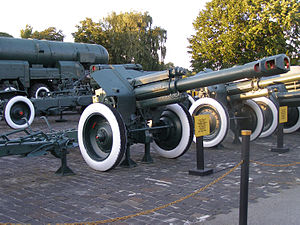
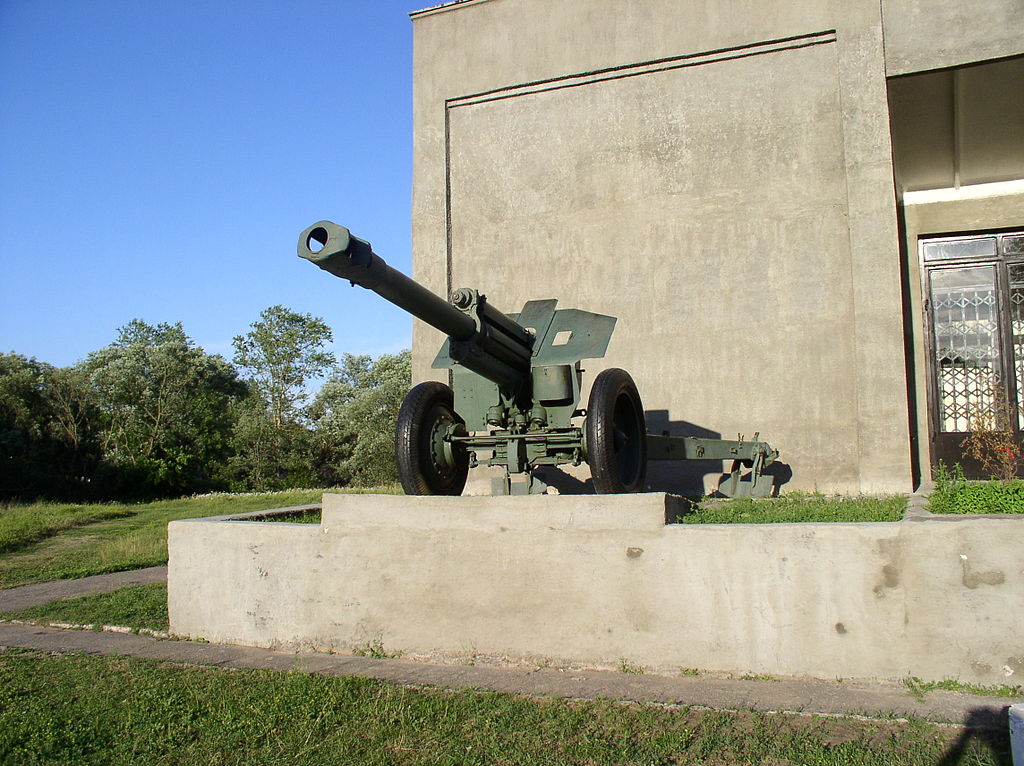
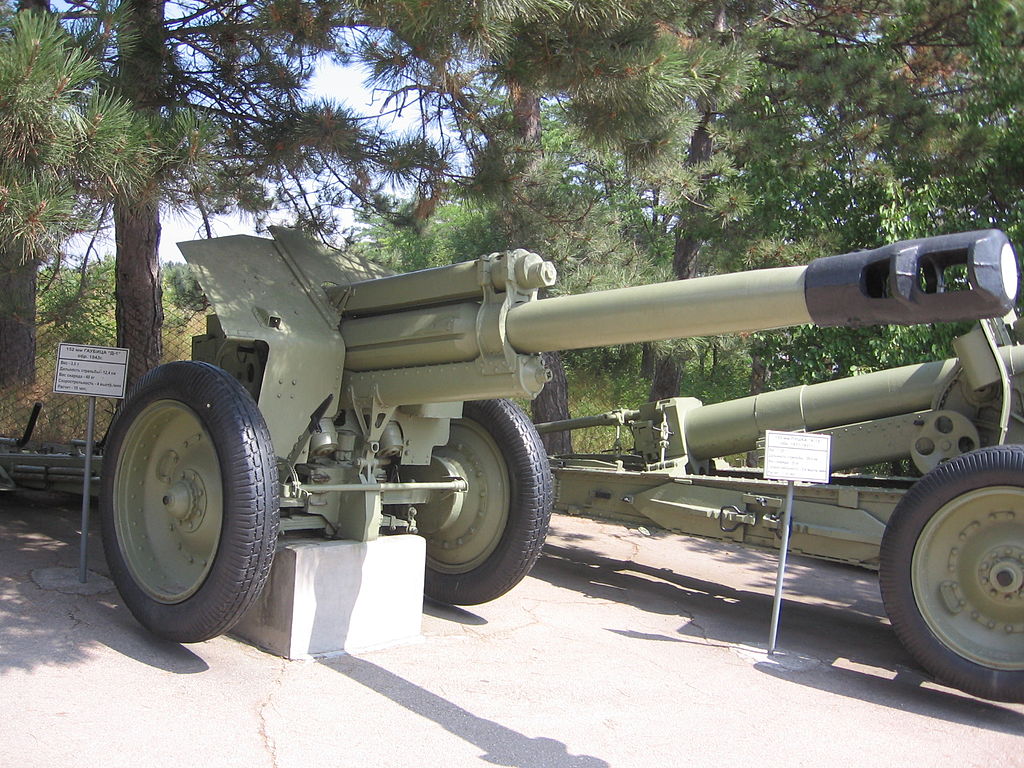
The D-1 howitzer M1943 (Russian: 152-mm gaubitsa obr. 1943 g. (D-1)) is a Soviet World War II-era 152.4 mm howitzer. The gun was developed by the design bureau headed by F. F. Petrov in 1942 and 1943, based on the carriage of the 122 mm howitzer M1938 (M-30) and using the barrel of the 152 mm howitzer M1938 (M-10). The powerful and mobile D-1, with its wide range of ammunition, significantly increased the firepower and breakthrough abilities of Red Army tank and motor rifle formations. Several hundred D-1s were manufactured before the end of World War II. Post World War II, the D-1 saw combat in numerous conflicts during the mid-to-late 20th century. The long operational history of D-1 howitzers in national armies of numerous countries is a testimony to its qualities; the gun still remains in service in a number of post-Soviet states and some other countries. The D-1 is widely considered a valuable element of Soviet artillery. The D-1 howitzer was essentially a combination of the barrel of the 152-mm howitzer model 1938 (M-10) on the carriage of the 122-mm howitzer M1938 (M-30). Since the new carriage was lighter than that of the M-10, the barrel was fitted with a massive double-baffle muzzle brake DT-3 to soften the shock of recoil. The breech block was of interrupted screw type, the recoil system consisted of a hydraulic buffer and a hydro-pneumatic recuperator. The separately loaded ammunition included a variety of shells and eight different propellant charges in cartridges. The carriage was nearly identical to the carriage of the M-30. It had suspension and steel wheels with pneumatic rubber tires. The trails were initially of riveted construction but were eventually replaced in production by welded ones. Late production pieces were equipped with caster wheels to ease manhandling. The time to set up for combat was about two minutes. In an emergency it was possible to fire without splitting trails; however, this was at the price of a drastically reduced traverse (1°30'). Since the gun was not equipped with a limber, it could be towed only by vehicle. The maximum towing speed was 40 km/h on paved roads, 30 km/h on cobbled roads, and 10 km/h off-road. To give the crew some protection from bullets and shell fragments, the gun was fitted with a shield.