ARMSNET
Military Equipment Database
Initializing 0%

Hermione Polish 4x4 Unmanned Ground Vehicle (UGV)

Hermione
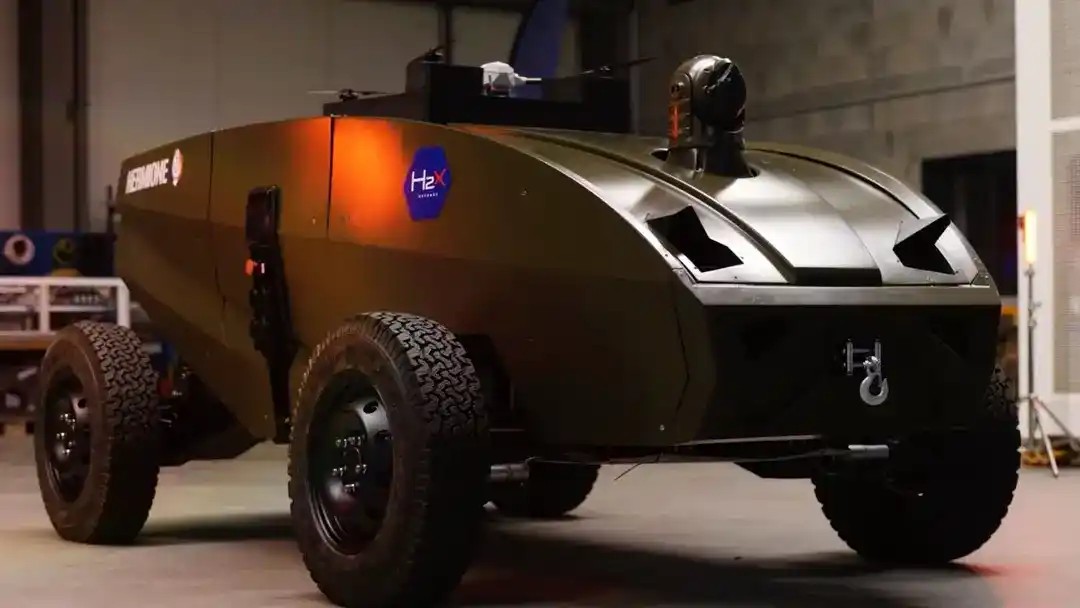
Unmanned Ground Vehicle (UGV)
Spotted an error? Sign in to suggest an edit.
Basic Information
Name
Hermione Polish 4x4 Unmanned Ground Vehicle (UGV)
Designation
Hermione
Alternate Designation
Hermione
Equipment Type
Unmanned Ground Vehicle (UGV)
Manufacturer
jointly developed by Poland's P.H.U. Lechmar and France's H2X-Defense
Date of Introduction
2025
Description

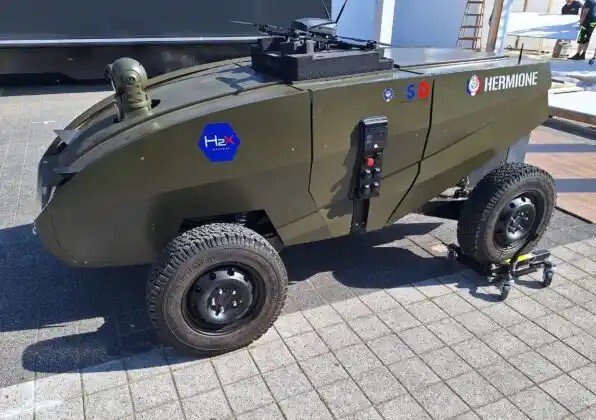
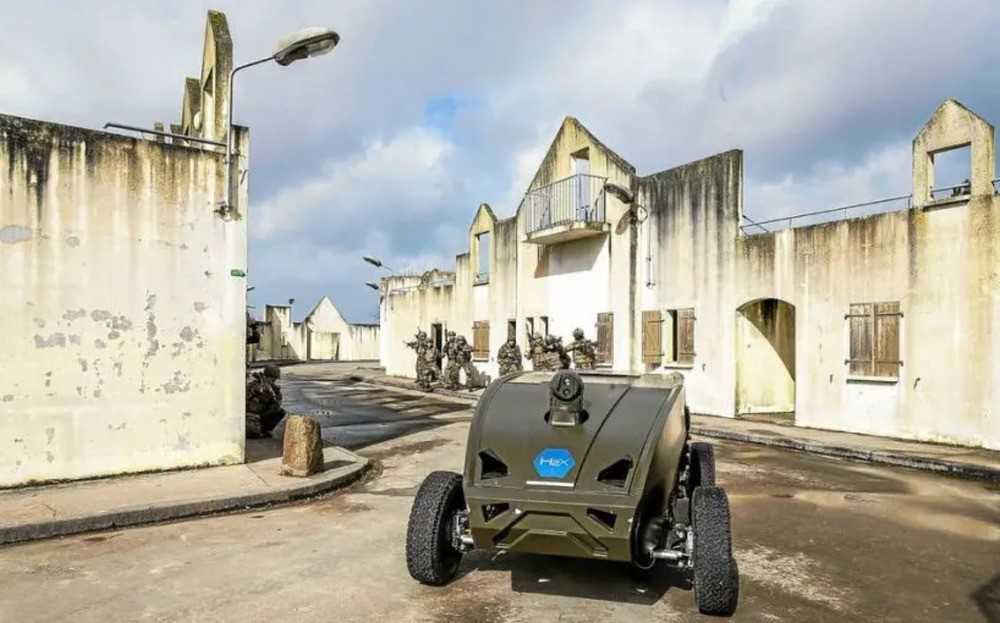
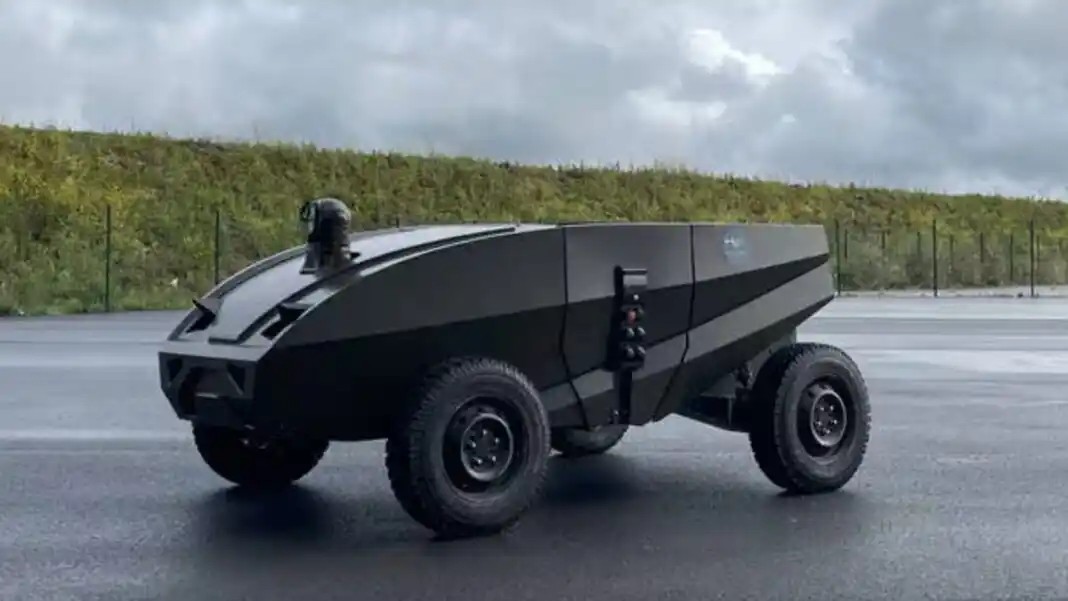
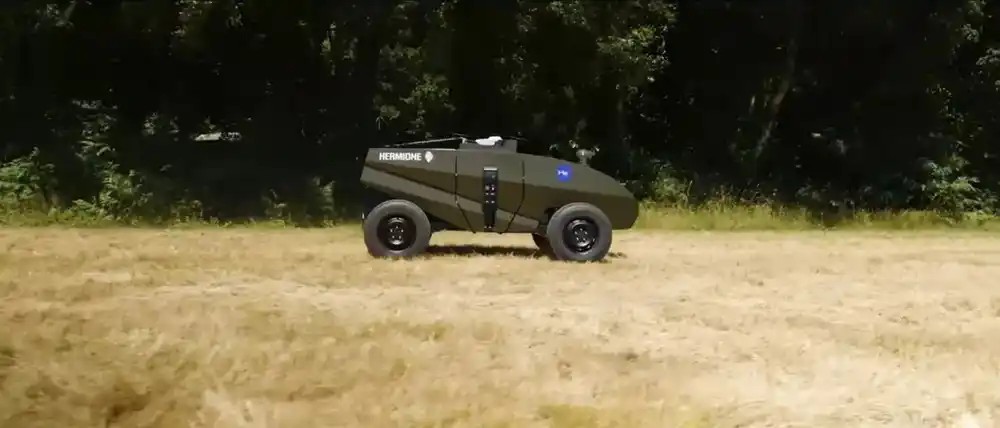
The Hermione Polish 4x4 Unmanned Ground Vehicle (UGV) is a hydrogen-powered, modular unmanned ground vehicle jointly developed by Poland's P.H.U. Lechmar and France's H2X-Defense. Hermione represents a significant advancement in autonomous ground robotics, distinguished by extended operational endurance (up to 20 hours), rapid refueling capability (three minutes), and flexible modular architecture supporting diverse mission profiles from reconnaissance to logistics and potential armed support. The vehicle's hydrogen fuel cell hybrid power system addresses critical limitations of battery-only platforms while establishing a sustainable approach to military operations. The Hermione unmanned ground vehicle represents a watershed moment in European defense innovation, demonstrating the convergence of sustainable energy technology, autonomous systems, and military operational requirements. Developed through French-Polish collaboration and currently undergoing active French Army trials as a cornerstone component of the ambitious Pendragon program, Hermione offers significant performance advantages over existing platforms—particularly its extended 20-hour operational endurance, rapid three-minute refueling capability, and modular mission architecture.

Ground Specifications
Mobility Type Wheeled (4x4)
Max Speed 39.0 km/h
System
Alternative Designation Hermione
Type Unmanned Ground Vehicle (UGV)
Manufacturer jointly developed by Poland's P.H.U. Lechmar and France's H2X-Defense
Configuration 4x4
Crew Unmanned
Payload Capacity 300 kg
Payload Options The vehicle's architecture supports rapid integration of: Surveillance and reconnaissance sensor pods; High-resolution electro-optical cameras; LiDAR mapping systems; Thermal imaging suites; Electronic warfare and jamming equipment; Remote-controlled weapon stations (RCWS); Cargo and resupply containers; Casualty evacuation modules; Drone transport and launch systems.
Primary Sensors High-resolution electro-optical cameras for daylight and low-light reconnaissance. LiDAR (Light Detection and Ranging) systems for 3D terrain mapping and obstacle detection. Thermal imaging for night operations and temperature differential detection.
Navigation Systems GPS positioning with inertial measurement units (IMU). SLAM (Simultaneous Localization and Mapping) algorithms achieving decimeter-level accuracy. Terrain-relative navigation capabilities.
Communication Encrypted secure data links for operator control and command integration. Network capability enabling multi-unit coordination and swarm operations. Compatible with higher-level command and control systems for tactical integration.
AI-Assisted Autonomy The vehicle employs AI-driven navigation algorithms enabling semi-autonomous patrol routes and response to real-time operator commands while maintaining strict human control over lethal decision-making, consistent with international law and NATO doctrine.
Dimensions
Length 3.3 m
Width 1.85 m
Height 1.4 m
Weight, Combat 700 kg
Automotive
Primary Power Source Hydrogen fuel cells housed in TPED-certified high-pressure cylinders capable of storing hydrogen at elevated pressures for extended operational duration.
Secondary Power Source A 25 kWh lithium battery pack that supplements the fuel cell system, providing peak power for acceleration, surge capacity during sensor-intensive operations, and buffering against power fluctuations inherent in pure fuel cell systems.
Motors Four hub-mounted electric motors, each rated at 8 kilowatts, deliver a combined 32 kW of distributed power to enable all-wheel drive capability. This configuration ensures optimal traction distribution across uneven terrain and supports precise maneuvering in confined environments.
Transmission All-wheel drive with independent suspension.
Maximum Range INA
Maximum Speed 39 km/h
Amphibious No
Ground Clearance 300 mm
Endurance 20 hours
Main Weapon System
Note .
Protection
Armor The chassis construction employs lightweight alloys reinforced with composite armor, providing protection for critical electronics against small-arms fire and shrapnel while maintaining agility across rough terrain.
Applique Armor INA
NBC Protection No
Smoke Equipment No
Details
Country of Origin Poland
Category Unmanned Ground Vehicles (UGV)
Land > Unmanned Ground Vehicles (UGV)
Filter Label
H
Classification
Domain
Ground
Equipment Status
Active
Dimensions
Length
3.3 m
Width
1.85 m
Height
1.4 m
Weight
700 kg
Operators (2)
France
Poland
Something went wrong. Please reload the page. Reload