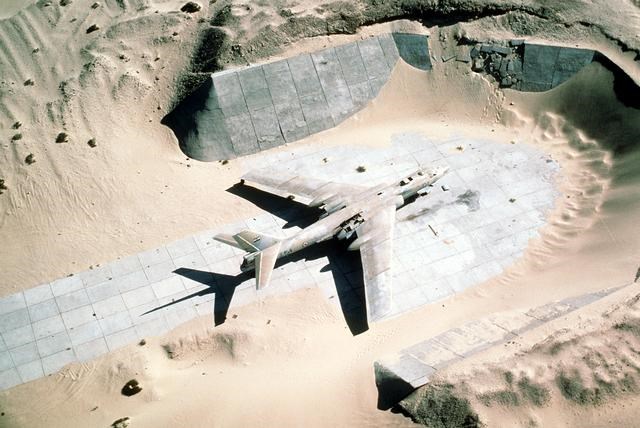
H-6 (Hong-6) Chinese Strategic Bomber
H-6
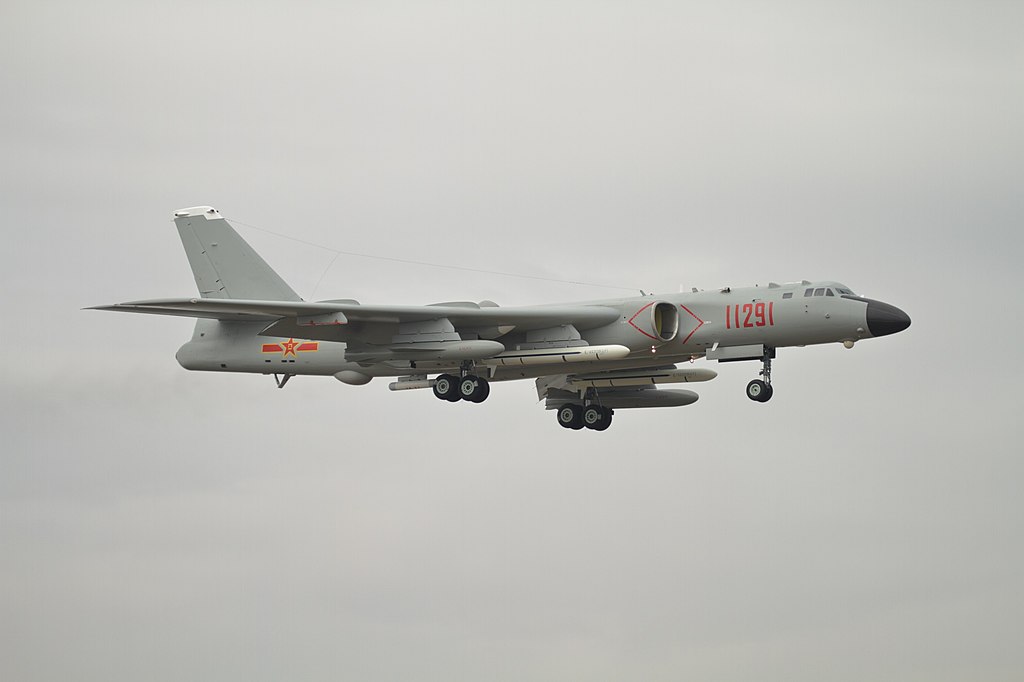
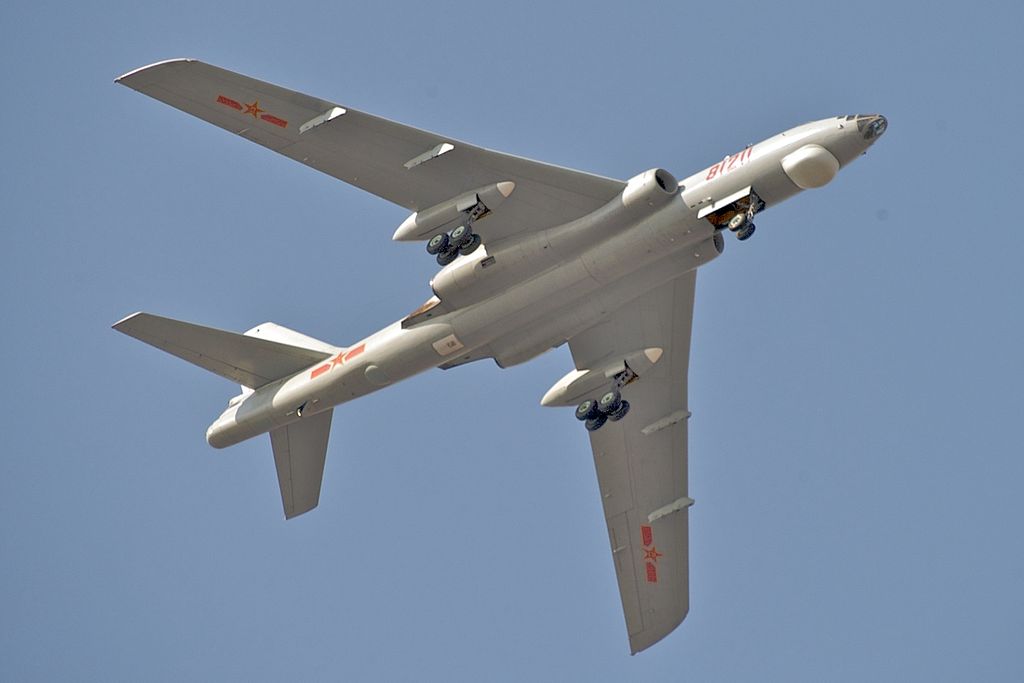
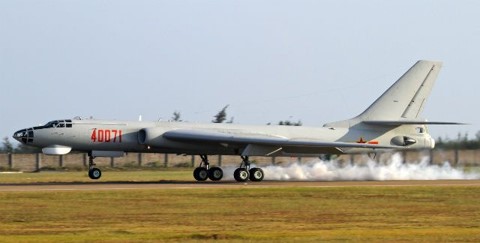
The Xian H-6 (Hōng-6) is a license-built version of the Soviet Tupolev Tu-16 twin-engine jet bomber, built for China's People's Liberation Army Air Force (PLAAF). Delivery of the Tu-16 to China began in 1958, and the Xi'an Aircraft Industrial Corporation (XAC) signed a license production agreement with the USSR to build the type in the late 1950s. The first Chinese Tu-16, or "H-6" as it was designated in Chinese service, flew in 1959. Production was performed by the plant at Xian, with at least 150 built into the 1990s. China is estimated to currently operate around 120 aircraft. The latest version is the H-6N, a heavily redesigned version capable of aerial refueling and carrying air-launched cruise missiles. According to the United States Department of Defense, this will give the PLAAF a long-range standoff offensive air capability with precision-guided munitions. The first domestically produced H-6 was completed in 1968 and evidence of bombing training was recorded by U.S. spy satellites on August 13, 1971. By March of the following year, the CIA estimated that the PRC had 32 aircraft operational with an additional 19 awaiting completion. The H-6 was used to drop nine nuclear devices at the Lop Nur test site. However, with the increased development in ballistic missile technology, the nuclear delivery capabilities that the H-6 offered diminished in importance. The CIA estimated in 1976 that the H-6 had moved over to a dual nuclear/conventional bombing role. Along with the H-6 free-fall bomber, an "H-6A" nuclear bomber was built, as well as an "H-6B" reconnaissance variant, "H-6C" conventional bomber, and "H-6E" nuclear bomber with improved countermeasures, the "H-6D" anti-ship missile carrier, and the "HY-6" series capable of acting as an in-flight fuel tanker. The H-6D was introduced in the early 1980s and carried a C-601 anti-shipping missile (NATO codename "Silkworm"), an air-launched derivative of the Soviet P-15 Termit ("Styx") under each wing. The H-6D featured various modernized systems and sports an enlarged radome with a Type 245 Kobalt I-band surveillance radar under the nose. The Type 245 radar was based on the Soviet PSBN-M-8 NATO codename Mushroom radar used on the Tupolev Tu-16. Earlier versions (Type 241, 242, and 244) were installed on the early models of the H-6. The H-6 has also been used as a tanker and drone launcher. Later H-6 production featured extended curved wingtips. Many H-6A and H-6C aircraft were updated in the 1990s to the "H-6F" configuration, the main improvement being a modern navigation system, with a Global Positioning System (GPS) satellite constellation receiver, Doppler navigation radar, and inertial navigation system. New production began in the 1990s as well, with Xian building the "H-6G", which is a director for ground-launched cruise missiles; the "H-6H", which carries two land-attack cruise missiles. In terms of land-attack cruise missiles, five immediate possibilities were considered by PLAAF - the indigenous HN-1, HN-2 and HN-3, DH-10/CJ-10, and a variant of Russian-designed cruise missiles. It is believed CJ-10 is chosen to be the main land-attack missile for H-6 bombers, and now the "H-6M" cruise missile carrier, which has four pylons for improved cruise missiles and is fitted with a terrain-following system. Apparently, these variants have no internal bomb capability, and most or all of their defensive armament has been deleted.
System
Ammunition
Missile System (Option 1)
deagel.com: https://www.deagel.com/x/x/a000613