9M123 Khrizantema (AT-15 Springer) Russian Anti-Tank Guided Missile (ATGM)
9M123 Khrizantema
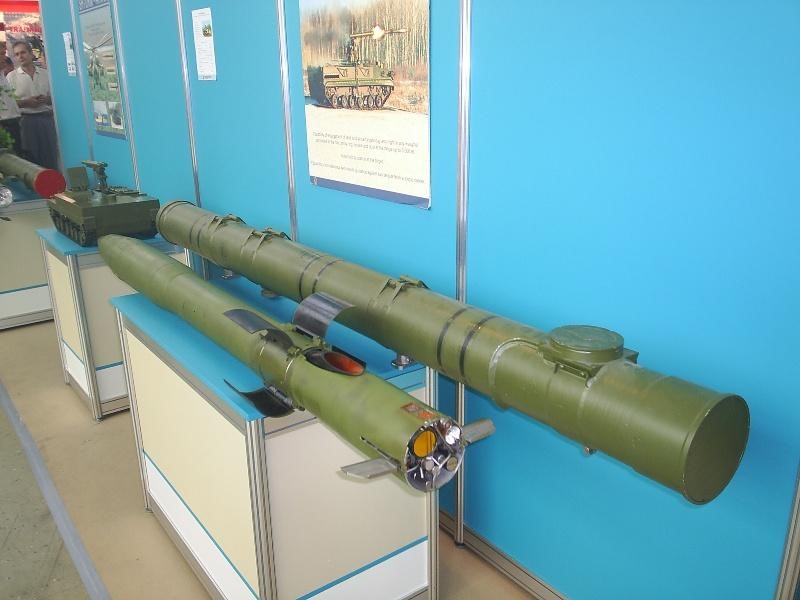
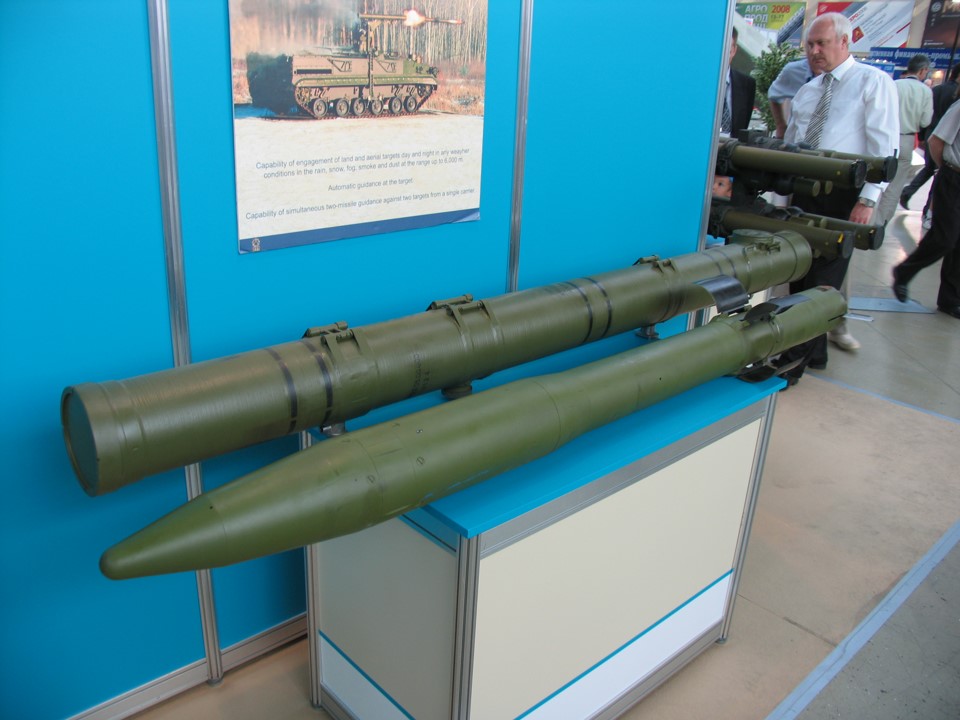
The 9M123 Khrizantema (AT-15 Springer) Russian Anti-Tank Guided Missile development started in the 1980s but wasn't completed until the late 1990s. It was developed to counter modern Western tanks such as the M1 Abrams, Leopard 2, and Challenger. The 9M123 is more capable than the 9K114 Shturm and 9K120 Ataka but is also much more expensive. It is unique in being available with two types of guidance. The 9M123 is transported and launched from a cylindrical canister. It has a long sleek body with a warhead in front, a guidance section in the middle, and a solid-propellant rocket motor at the rear. It has four wrap-around wings for stabilization and steering is achieved by two control surfaces at the nozzle. The 9M123 comes in a laser-guided version and in a version with a millimeter-wave radar seeker. The 9M123 features a powerful tandem HEAT-shaped charge warhead. The estimated penetration is about 1.100 to 1.250 mm RHA behind ERA. This allows it to effectively engage any existing tank from any angle. Alternatively, a thermobaric warhead is available for engaging infantry. The maximum effective range of the 9M123 is 6 km. The supersonic flight speed and high-quality guidance reportedly result in high effectiveness at longer ranges.