Akash Indian Medium-Range Surface-to-Air Missile (SAM) System
Akash
Indian Medium-Range Surface-to-Air Missile (SAM) System
Spotted an error? Sign in to suggest an edit.
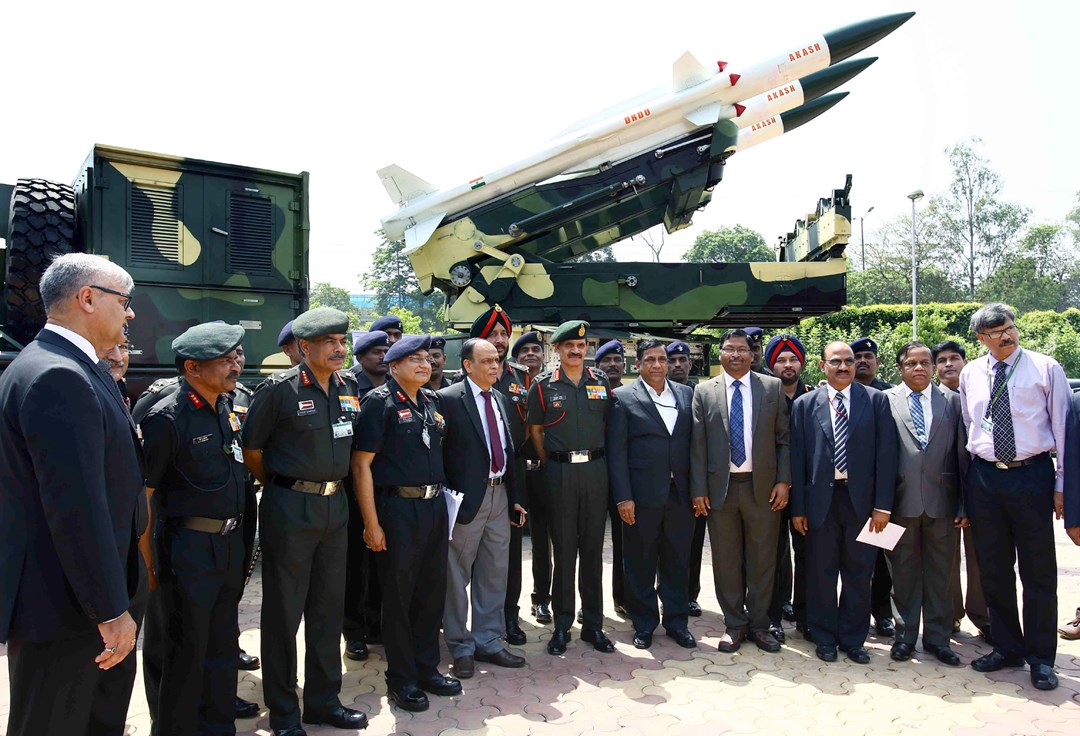
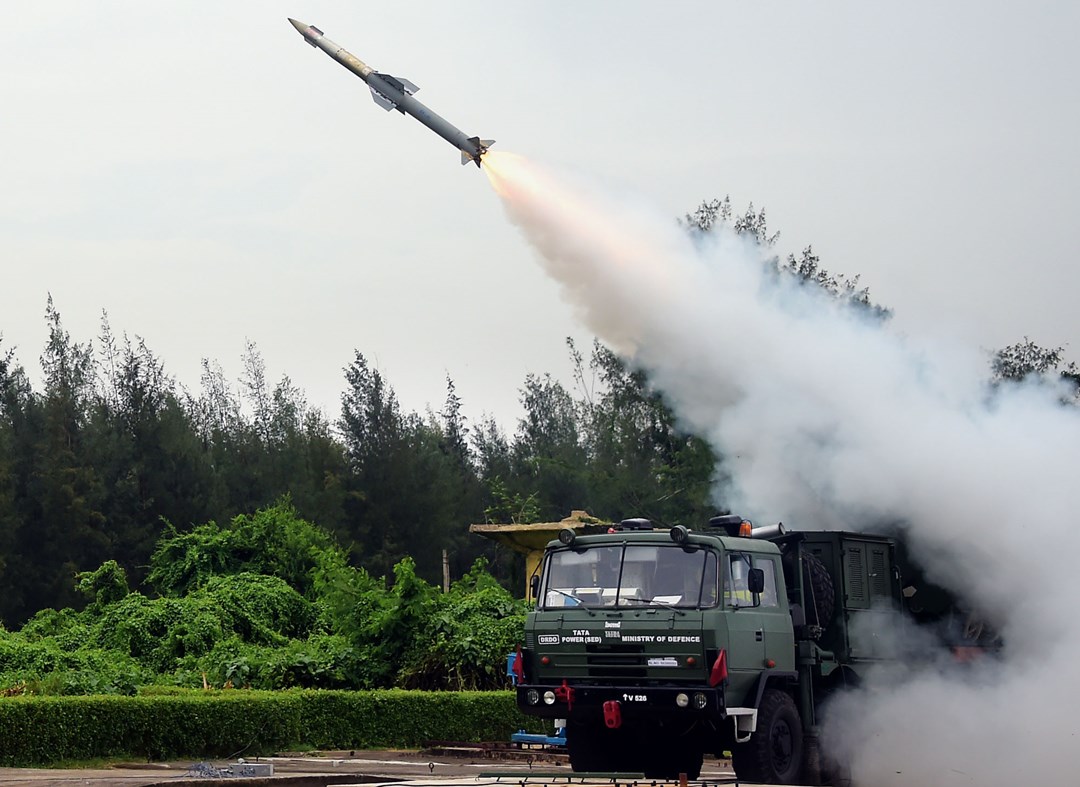
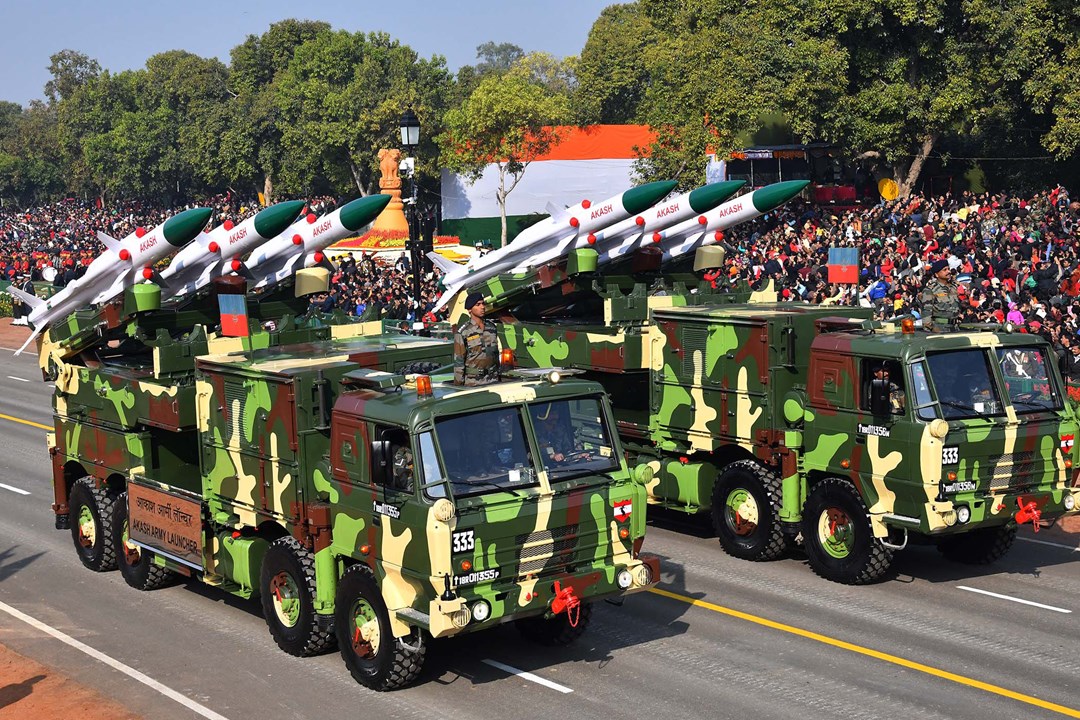
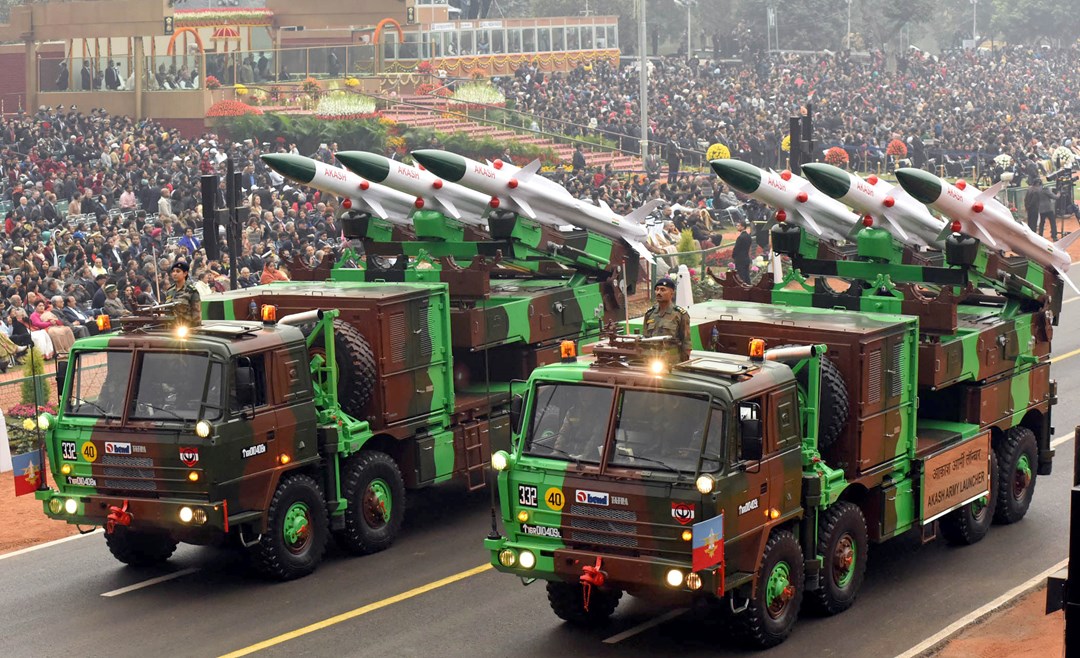
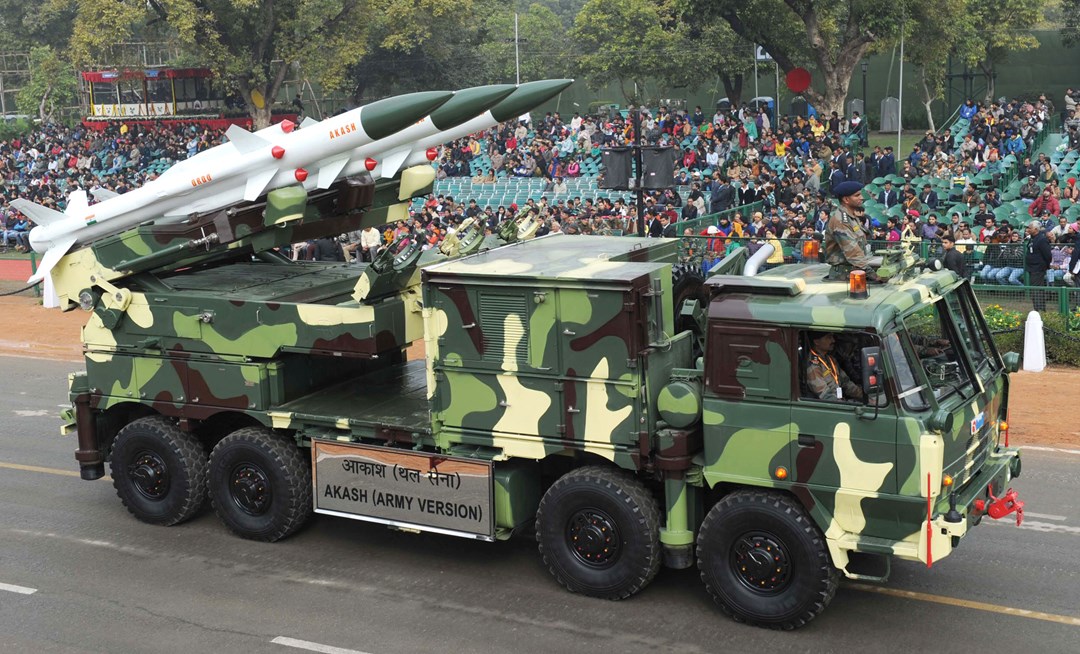
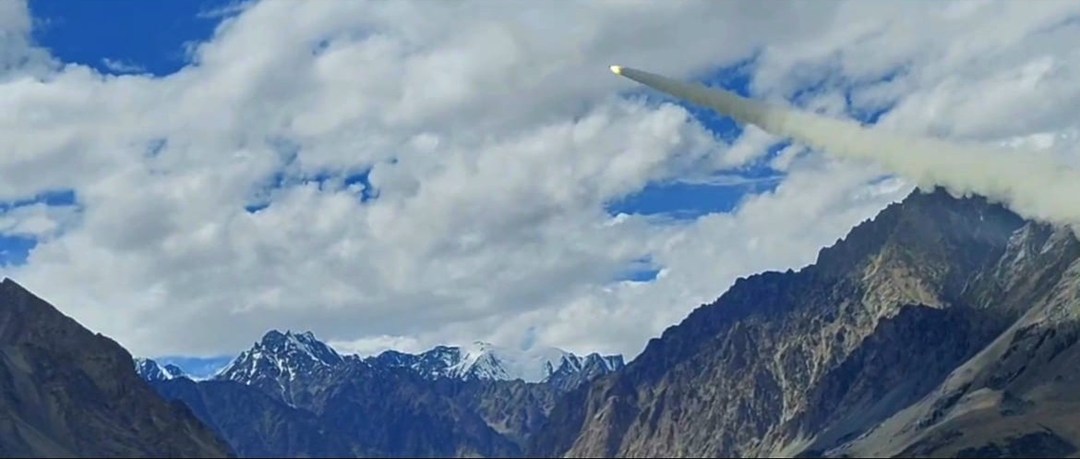
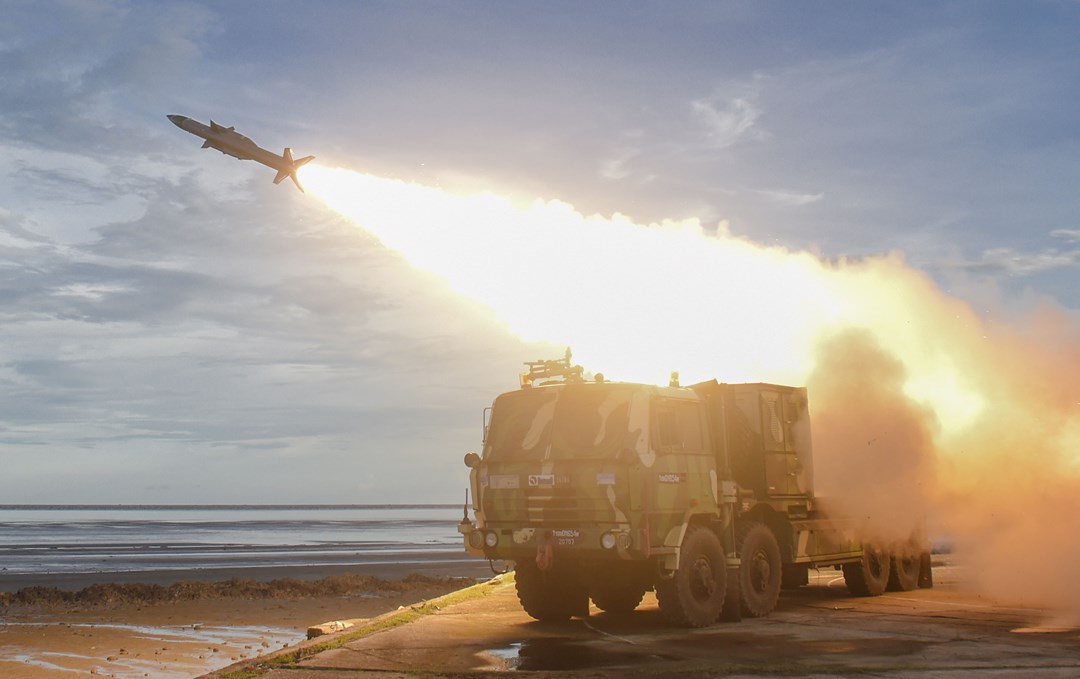
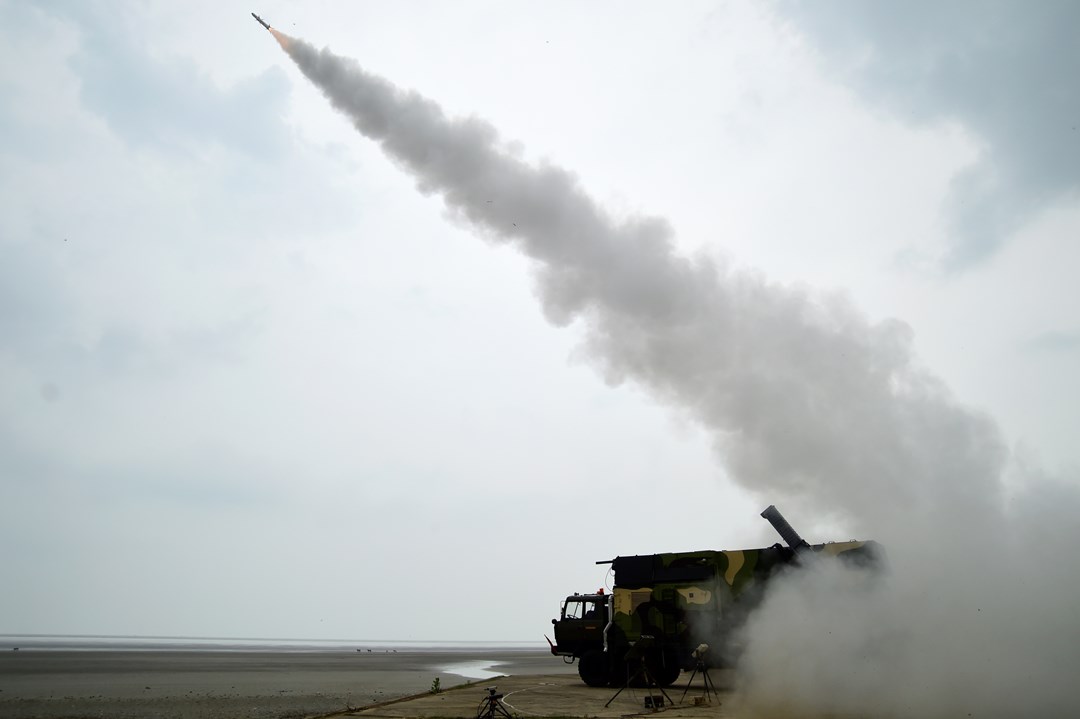
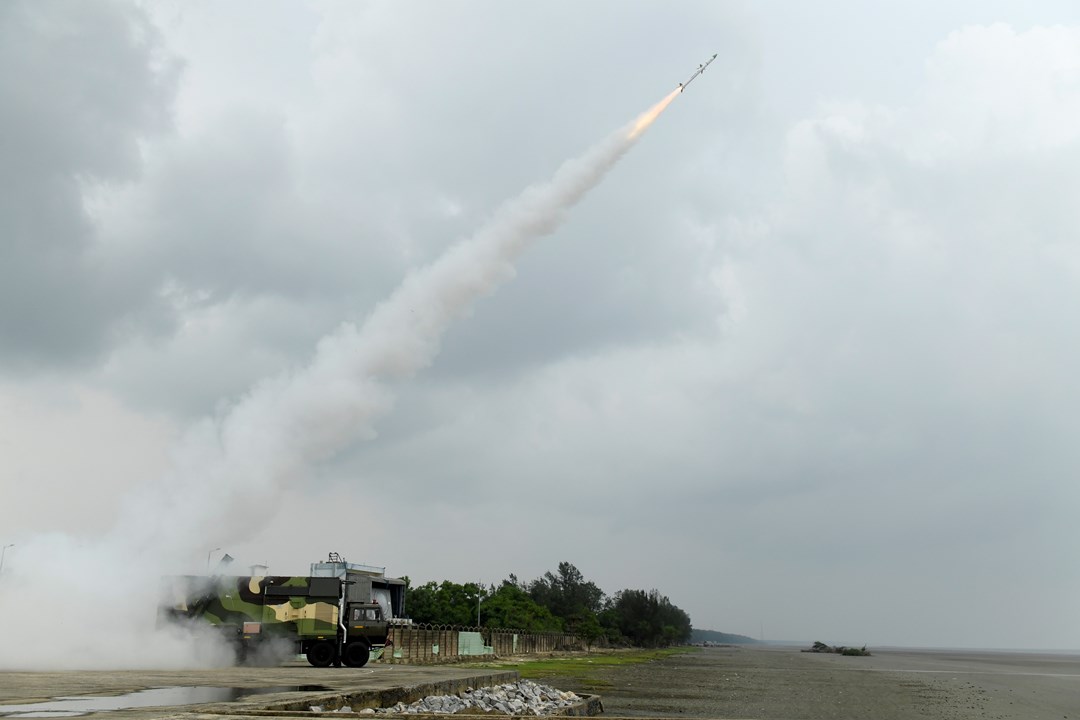
Operational Photo
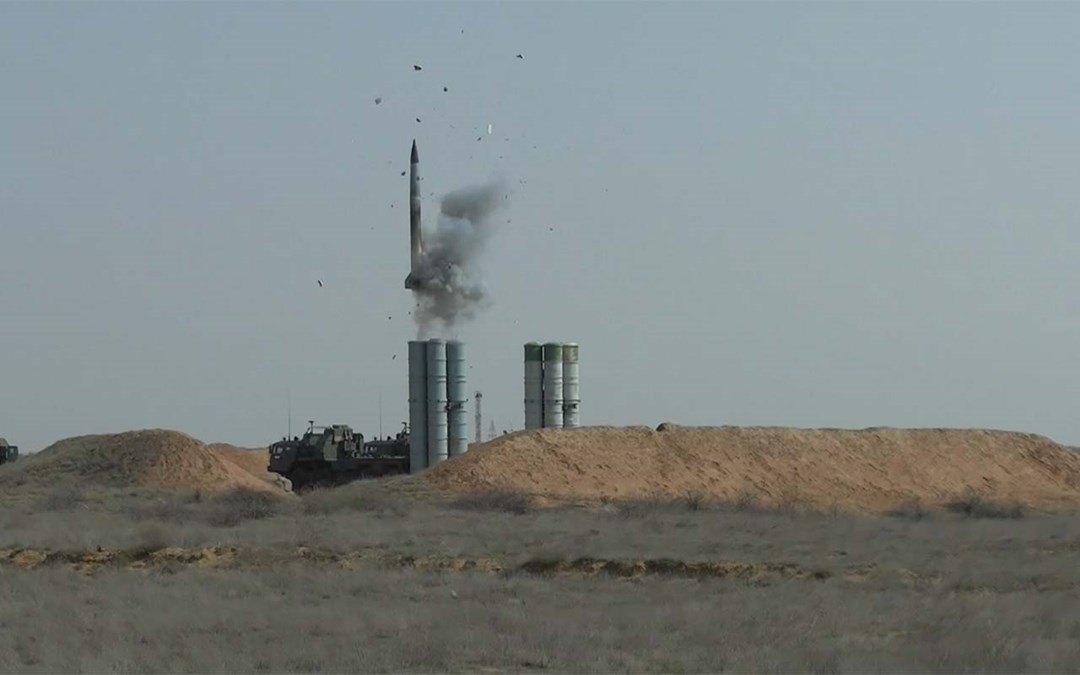
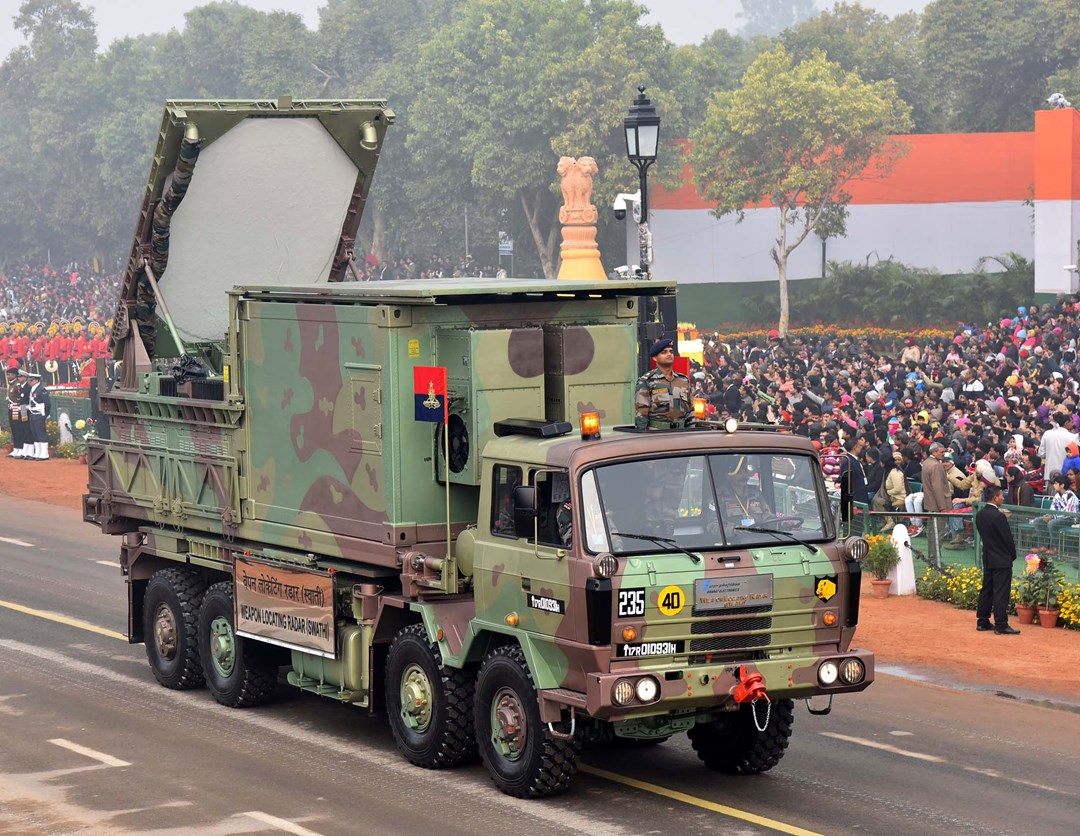
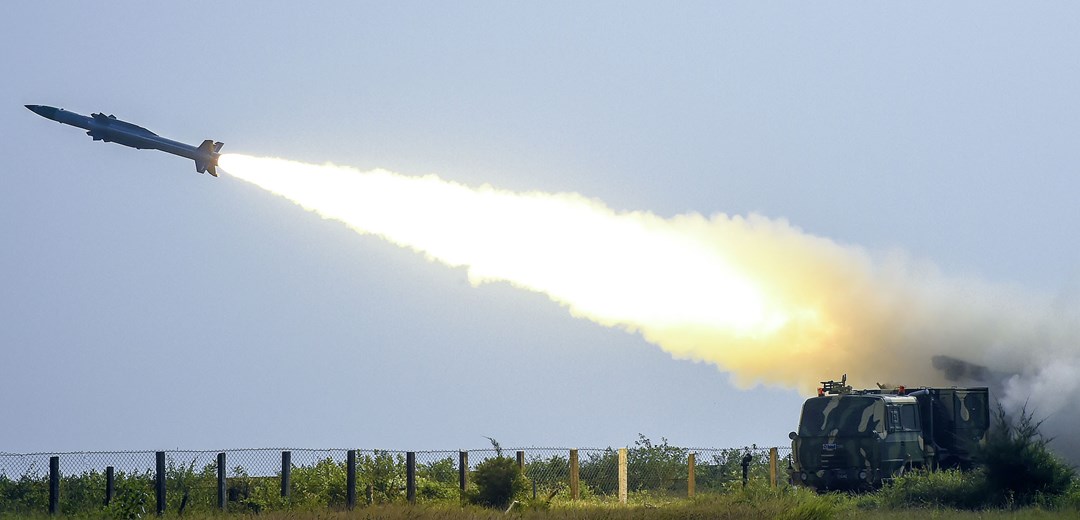
Basic Information
Name
Akash Indian Medium-Range Surface-to-Air Missile (SAM) System
Designation
Akash
Alternate Designation
Akash
Equipment Type
Indian Medium-Range Surface-to-Air Missile (SAM) System
Manufacturer
Bharat Dynamics Limited
Date of Introduction
2009
Description
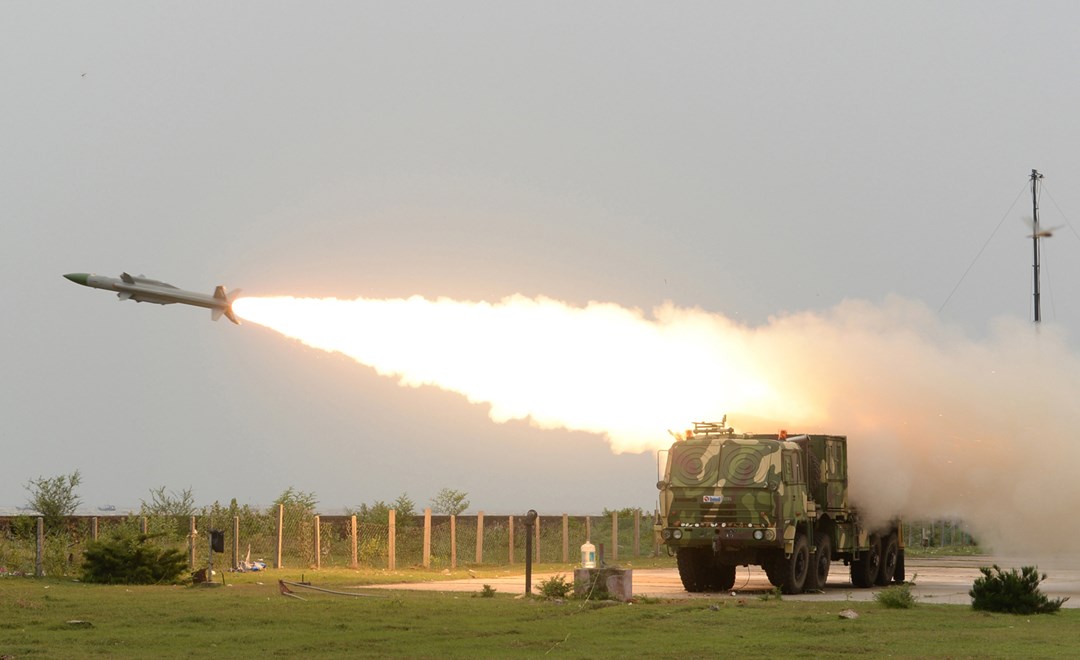
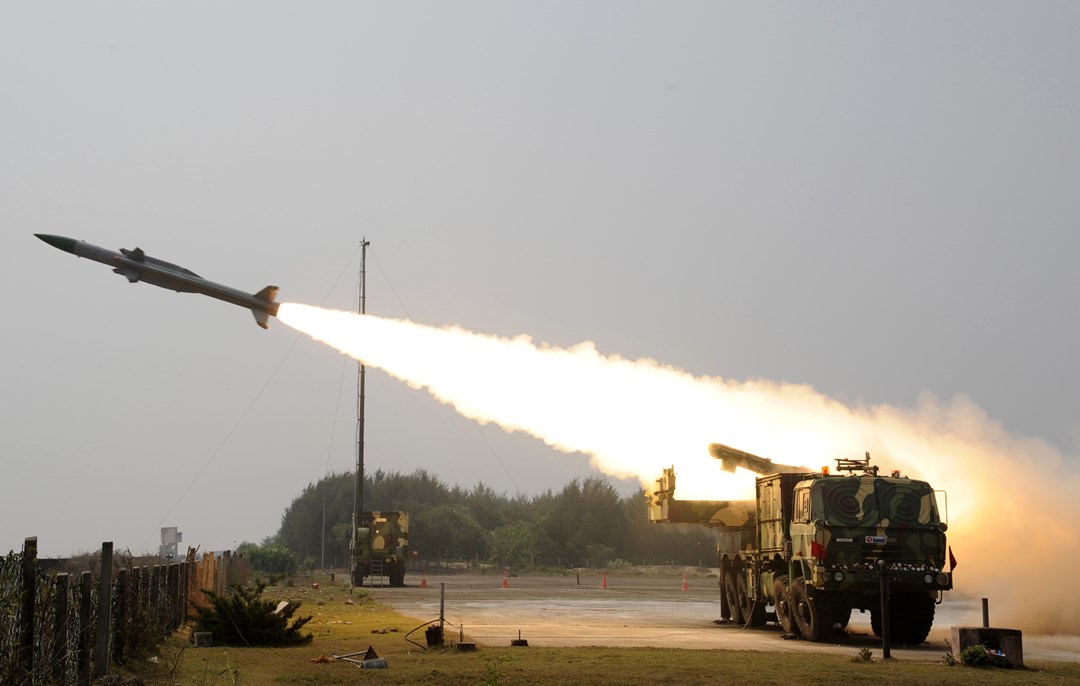
The Akash Indian Medium-Range Surface-to-Air Missile (SAM) System is developed and manufactured in India to provide the various elements of the Indian Armed Forces with a mobile, medium-range air-defense system. It is designed to provide area air defense against various air threats to mobile, semi-mobile, and static vulnerable forces and areas.
Ground Specifications
Max Speed
3460.8 km/h
Range
25.0 km
Variants
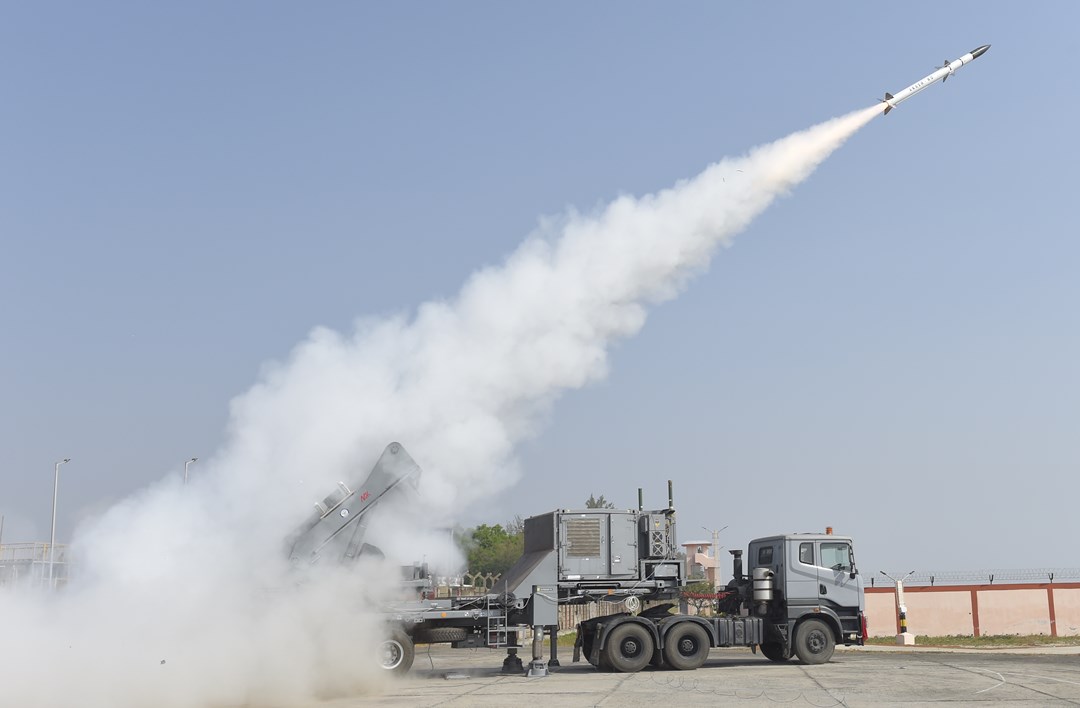
Akash-1S
There was demand from Indian Armed Forces for a missile with a seeker that can target inbound targets more accurately for which the DRDO offered an upgraded Akash with an indigenous seeker named Akash-1S.
Akash Prime
The missile is equipped with an improved active radio-frequency (RF) seeker to further increase the accuracy. Akash Prime is also optimized for low temperature and high altitude operations with modified ground system
Akash-NG
Akash-NG will have an improved reaction time and higher level of protection against saturation attacks. The second stage uses dual-pulse solid rocket motor which is lighter instead of air-breathing solid ramjet engine to increase the overall range from current 40 km to 70 km, an active electronically scanned array Multi-Function Radar (MFR) and optical proximity fuze.
System
Alternate Designation
Akash
Type
Indian Medium-Range Surface-to-Air Missile (SAM) System
Manufacturer
Bharat Dynamics Limited
Akash Firing Battery
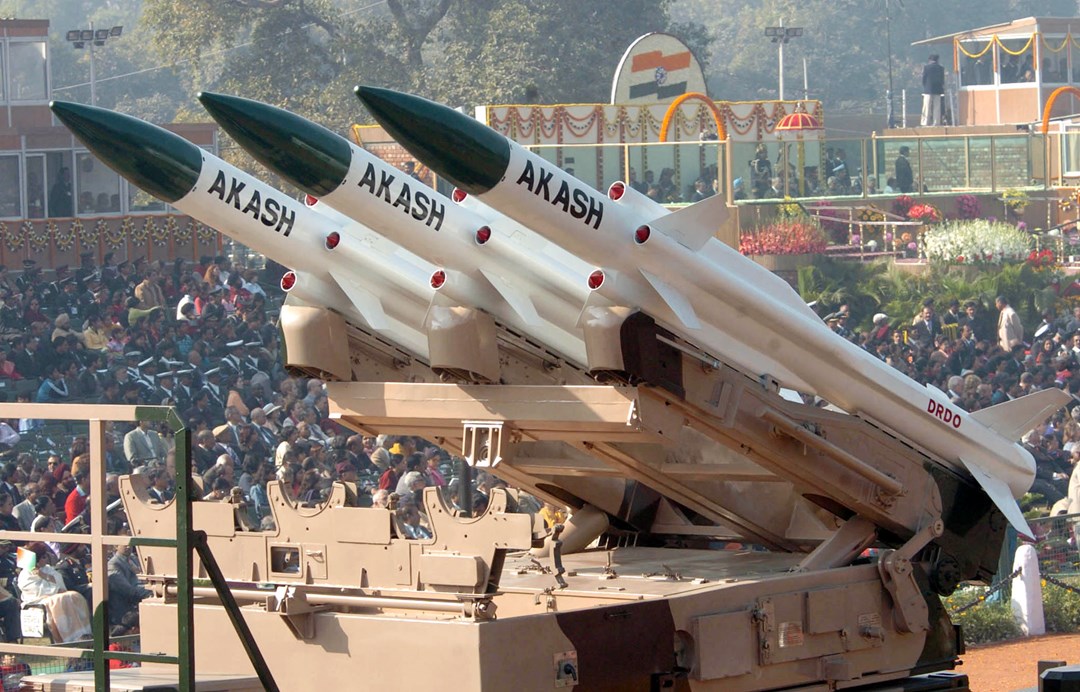
The Akash firing battery consists of: Four launchers (three missiles per launcher vehicle);
Group Control Centre (GCC);
Central Acquisition Radar (CAR);
Battery Control Center;
Battery Level Radar (a phased-array tracking and guidance 3D sensor);
Battery Surveillance Radar (2D sensor);
Support vehicles (power supply, missile transport, and engineering support).
Propulsion
A solid-propellant boost motor accelerates the missile in 4.5 seconds to a speed of M1.5 and is then jettisoned; at this point, the ramjet motor is ignited and this burns for 30 seconds, accelerating the missile to M2.8. This equates to a velocity of 600–700 m/s from 1.5 km onwards.
Warhead
The warhead is a high-explosive (HE) fragmentation type with a lethal radius of 20 m against aircraft targets, and has a weight of 55 kg.
Fuze
The fuzes are a Doppler radar proximity fuze and a contact fuze, and it is reported that a self-destruct system is also fitted.
Guidance System
The targeting and guidance systems included in an Akash group will depend on the size of the group. Some assets are held at battery level, while others are held externally.
Central Acquisition Radar (CAR)
he 3D CAR is capable of detecting and tracking aerial targets up to a range of 150 km at an altitude of 18,000 m. It provides co-ordination in three dimensions of up to 200 targets to the Group Control Centre (GCC) through secure communication links. The data is used to cue the weapon control radar.
Phased-Array Radar
The multifunction phased-array Rajendra radar variants have been configured on BMP and T-72-based tracked vehicles. The Rajendra is similar to the Russian 30N6 (Flap-Lid B) used with the S-300 (SA-10 ‘Grumble') system, and is mounted on a modified BMP-1 tracked chassis or on a wheeled truck. The multi-element antenna arrangement folds flat when the vehicle is moving and is mounted on a raised platform behind the driver's station. The surveillance antenna array has 4,000 elements and operates at 4 to 8 GHz (C-band); the engagement antenna array has 1,000 elements operating at 8 to 12 GHz (X-band); and there is a 16 element identification friend or foe array. This radar has a range of 60 km against aircraft targets, and can track 20 targets at altitudes between 30 m and 20 km. The tracking and missile guidance radar configuration consists of a slewable phased-array antenna of more than 4,000 elements, a spectrally pure TWT-based transmitter, a two-stage super heterodyne correlation receiver for three channels, a high-speed digital signal processor, a real-time management computer, and a powerful radar data processor. The system has multiple target-handling capabilities from any direction. Each radar can simultaneously engage four targets and guide eight missiles in a ripple mode. The radar has advanced ECCM features and it is mounted on a wheeled 8×8 vehicle chassis.
Battery Surveillance Radar (BSR)
Each battery has a battery surveillance radar (BSR), which is mounted on a modified BMP-1 tracked chassis or a wheeled truck, and can track up to 40 targets in range and azimuth. The BSR has a range of 100 km.
Maximum Speed
Mach 2.05
Maximum Range
30.0 km
Minimum Range
3.0 km
Maximum Altitude
18,000 m
Minimum Altitude
30 m
Launch System
The TEL vehicle used by the Indian Army is a modified BMP-1 tracked vehicle, designated as the Army Self-Propelled Launcher (ASPL) and developed by Medak Ordnance, which has assembled and built over 800 BMP-1 vehicles in India under licence. The BMP-1 chassis has been lengthened to include seven rather than six axles, and power is provided by a gas-turbine engine. The three-missile launcher turntable is mounted on a raised structure behind the driver's station, and can rotate through 360°. The launcher is traversed to the front and the missiles held in place by a restraining arm for travelling.
Dimensions
Length
5.820 m
Diameter
350 mm
Fin Span
1.1 m
Weight
720 kg
Details
Country of Origin
India
Category
Radar Guided Missile Systems
Land > Air Defense > Radar Guided Missile Systems
Filter Label
A
Sources
deagel.com: https://www.deagel.com/x/x/a002019 deagel.com: https://www.deagel.com/x/x/a002020
Classification
Domain
Ground
Equipment Status
Active
Dimensions
Length
5.82 m
Width
0.35 m
Height
—
Weight
720 kg
Related Equipment (2)
Variant
Variant
Operators (2)
India
Vietnam
Something went wrong. Please reload the page.
Reload