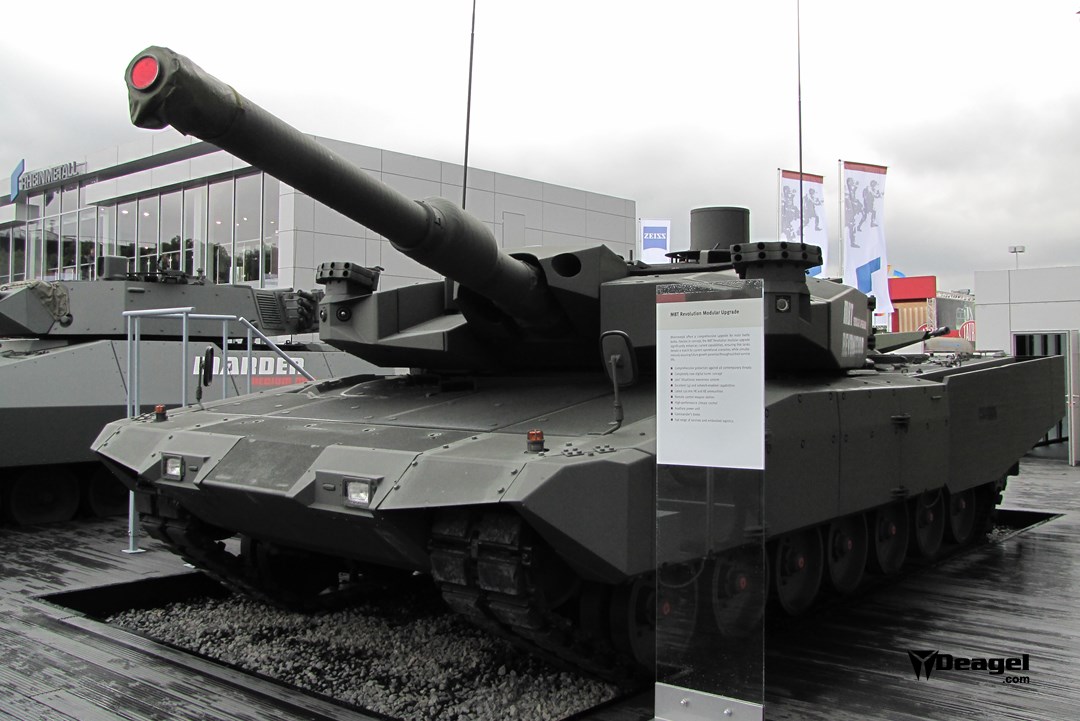
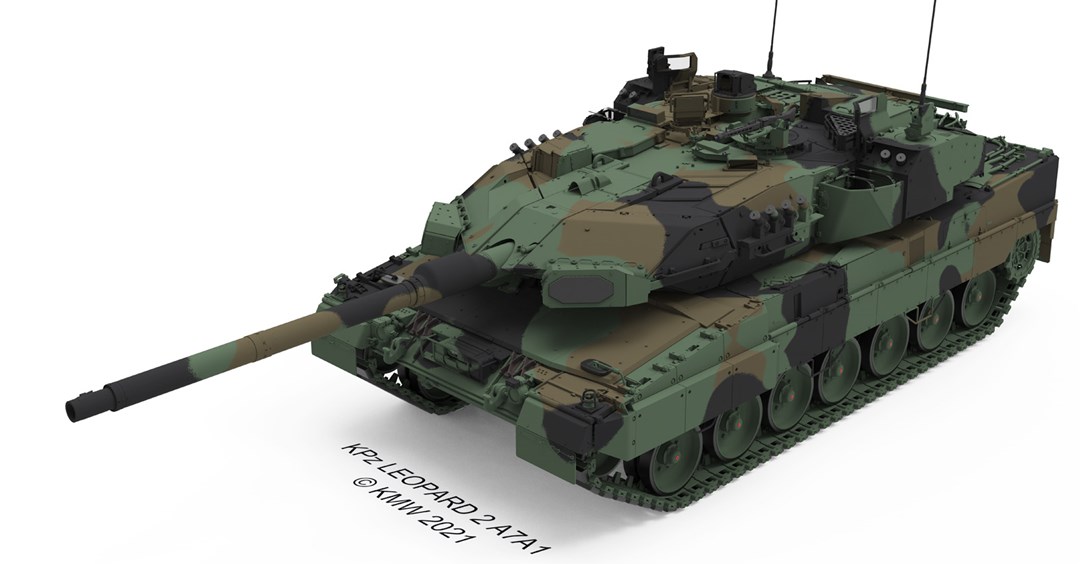
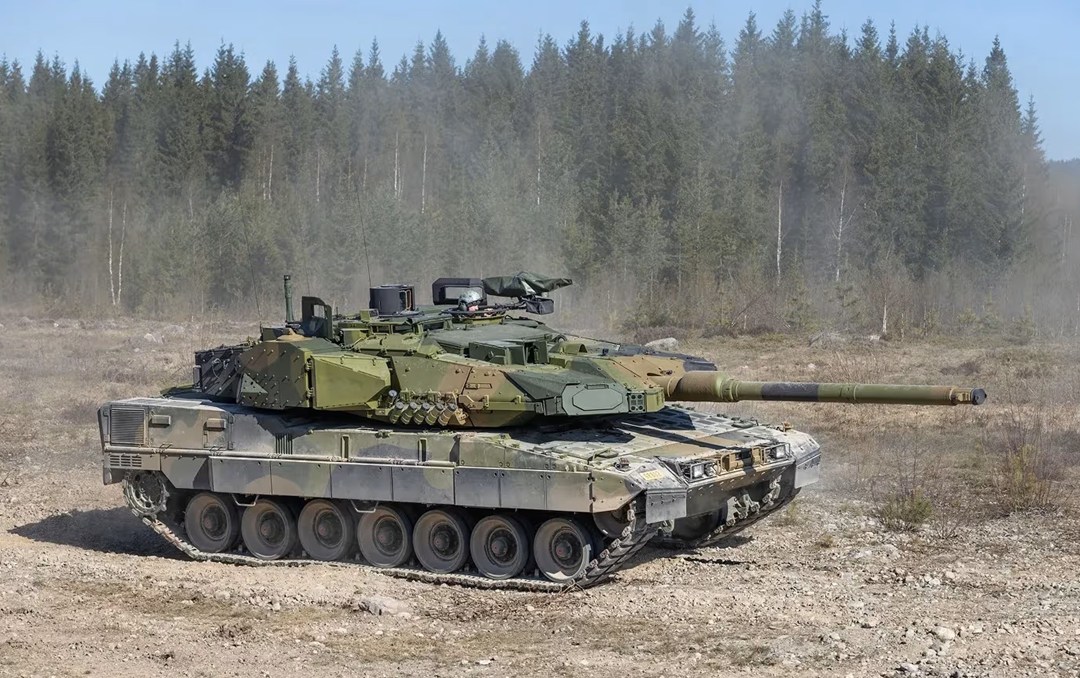
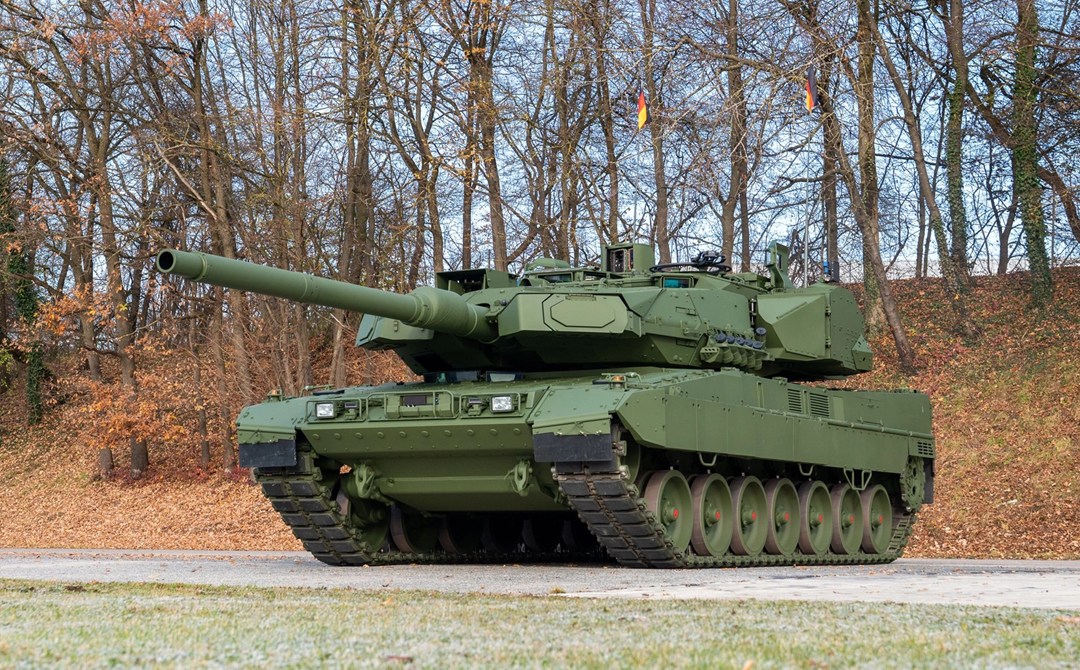
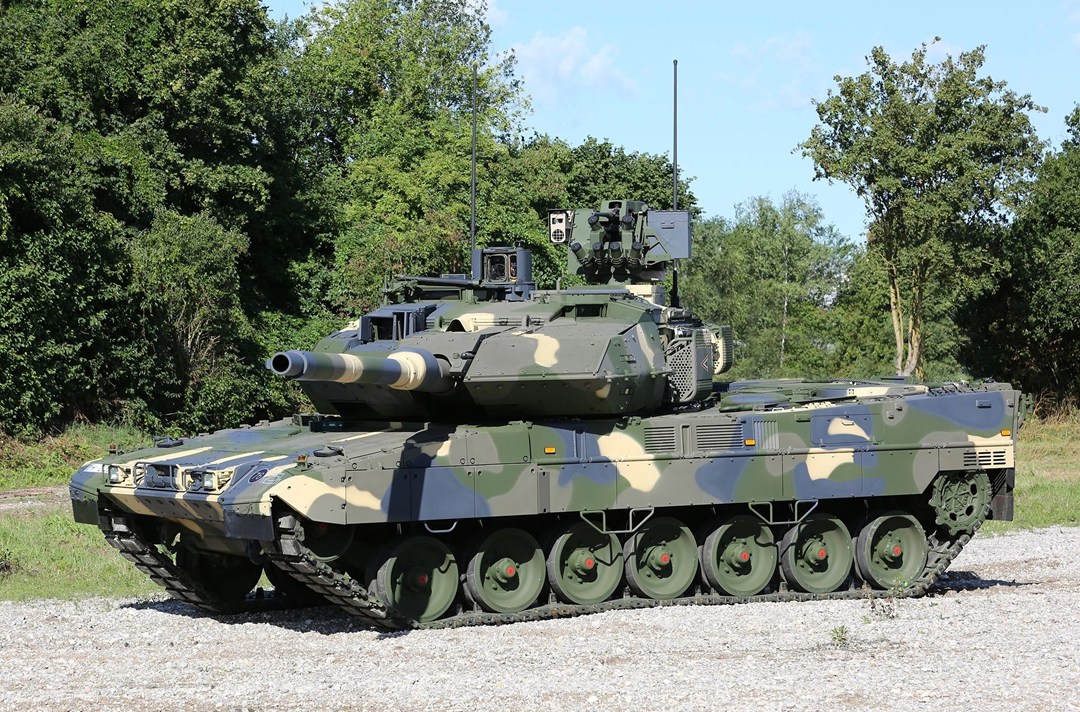
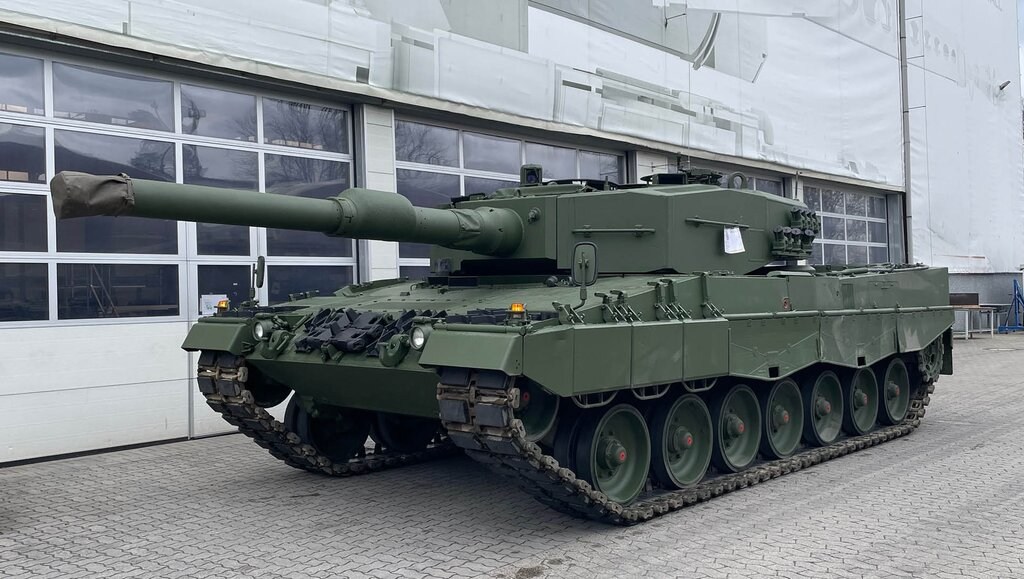
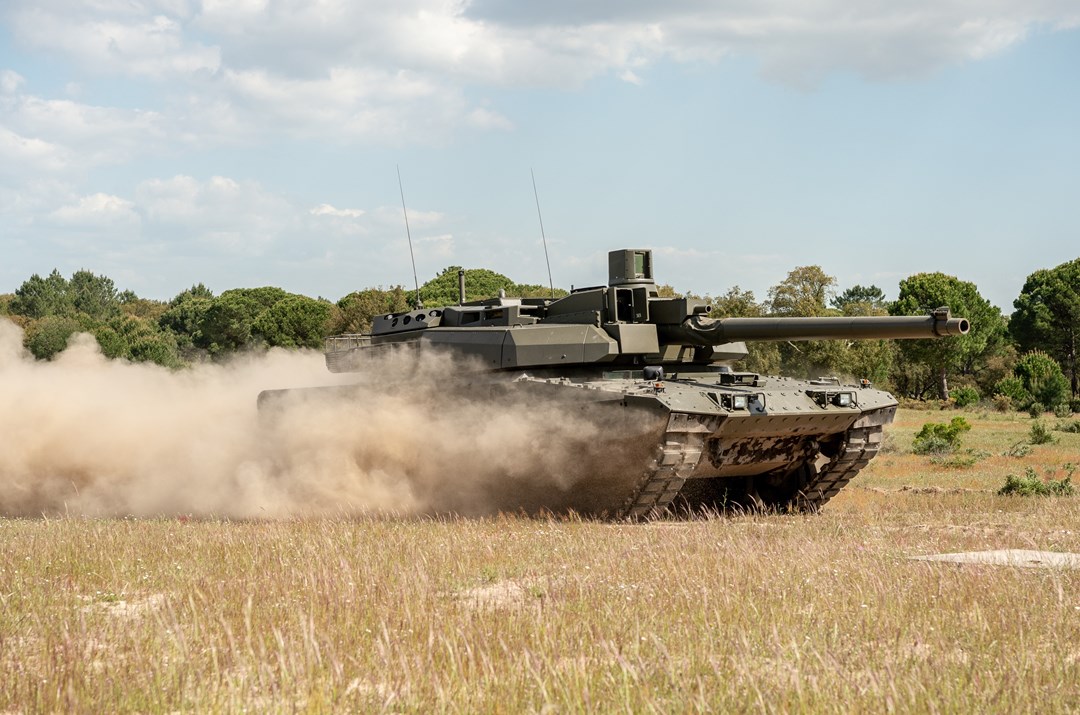
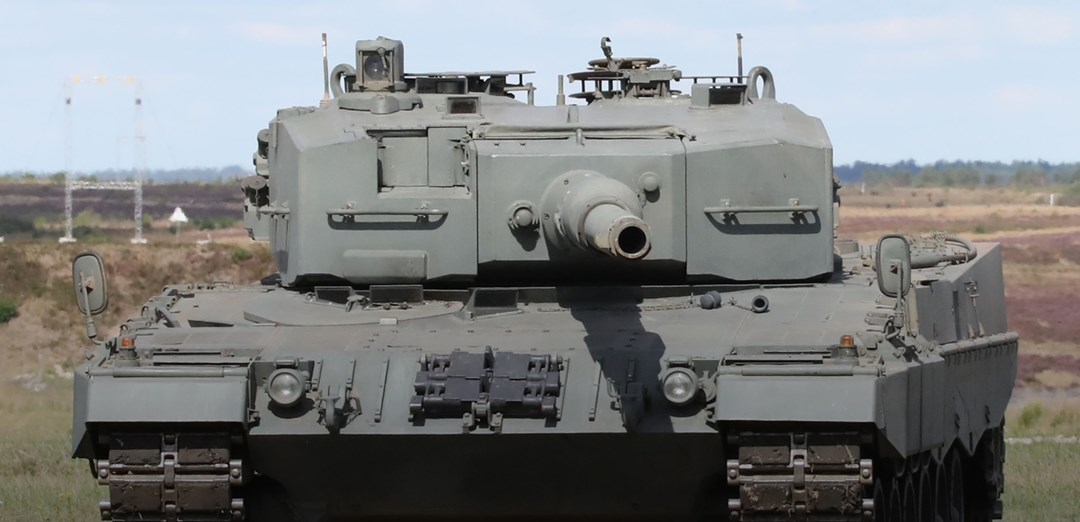
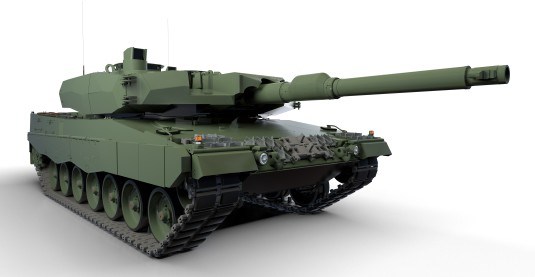
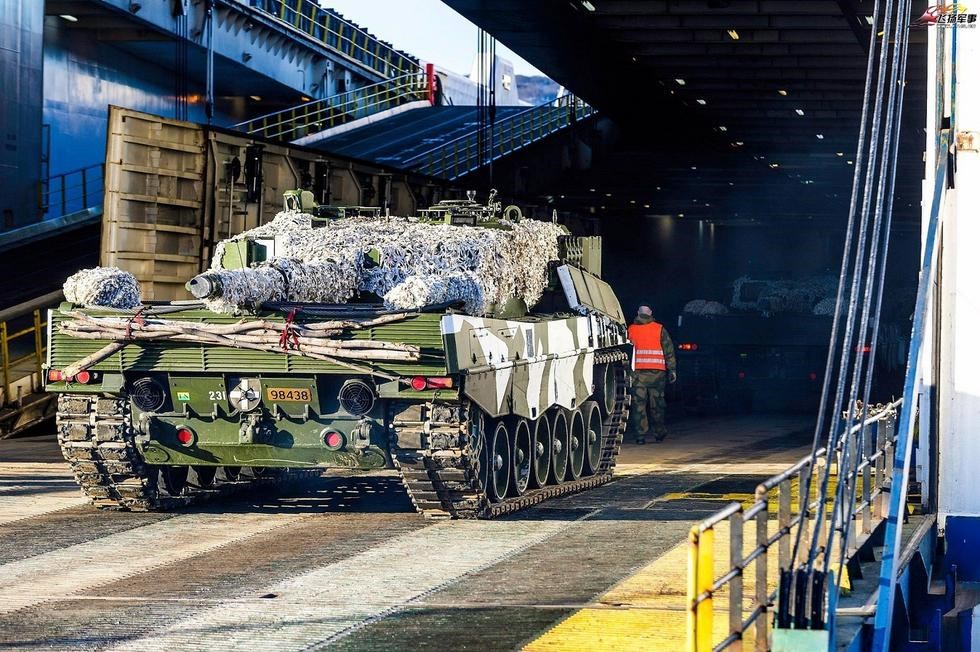
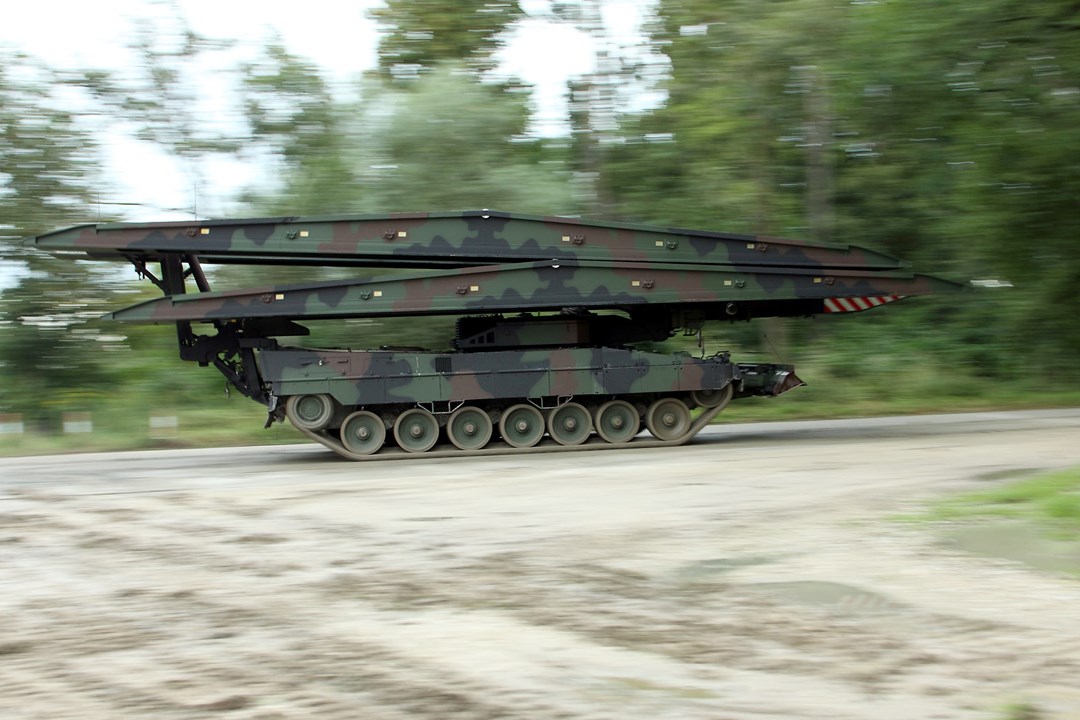
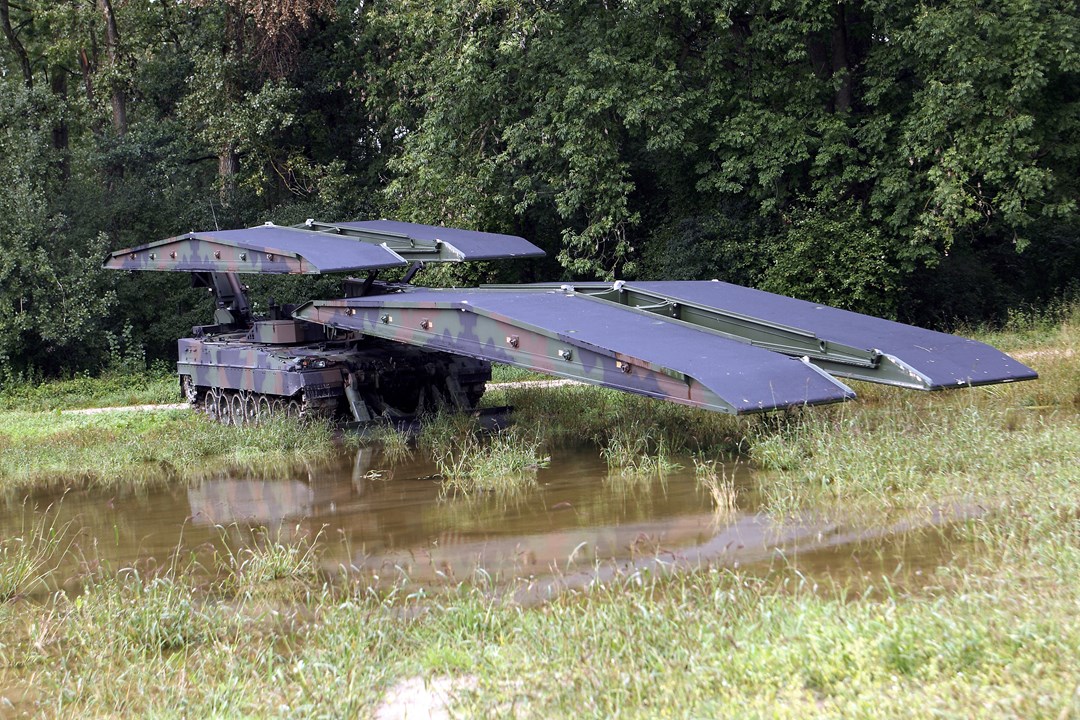
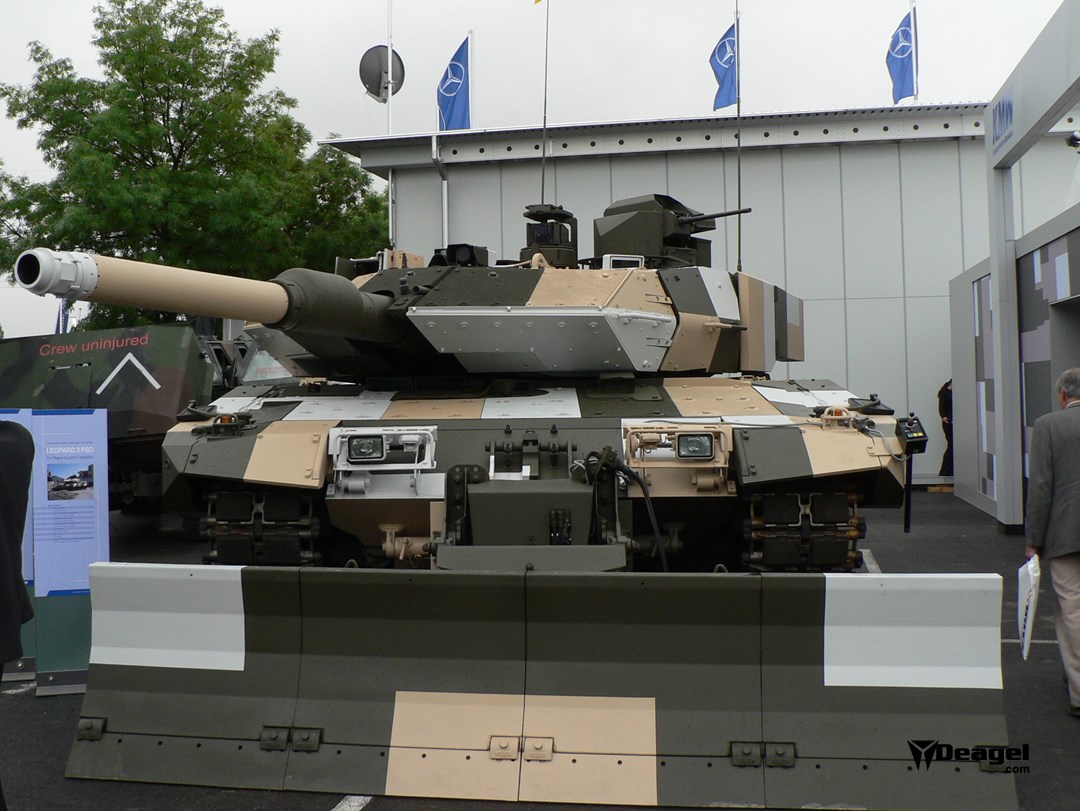
Leopard 2 German Main Battle Tank (MBT)
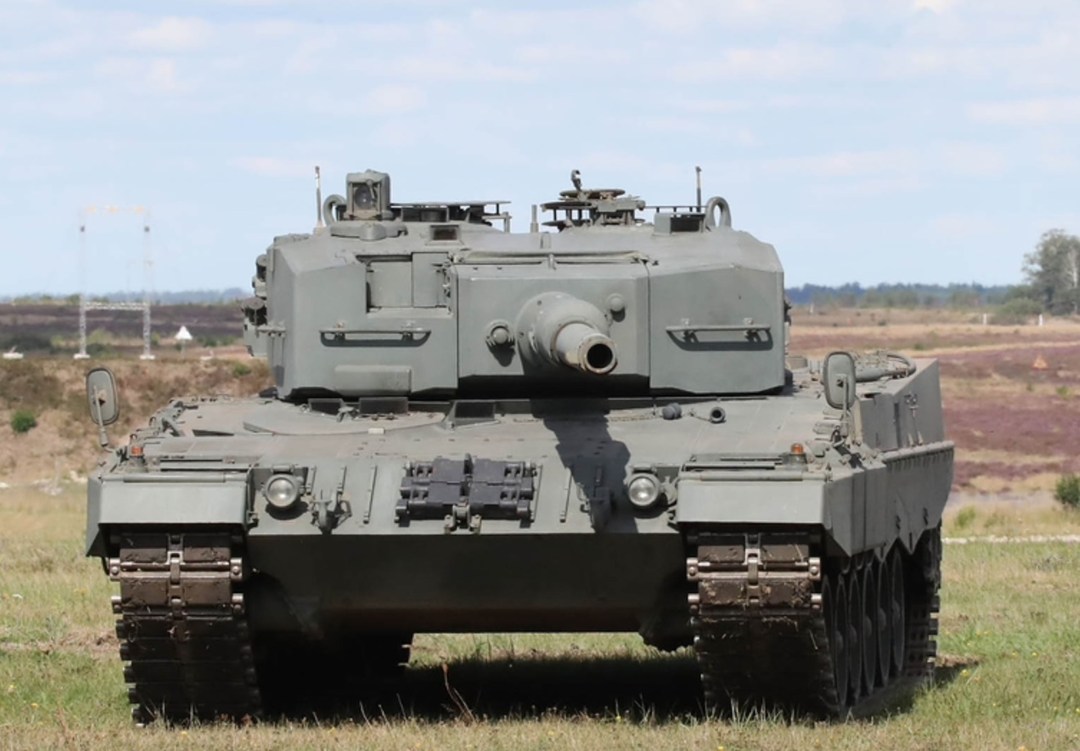
Leopard 2, Swiss Pz87, Stry121


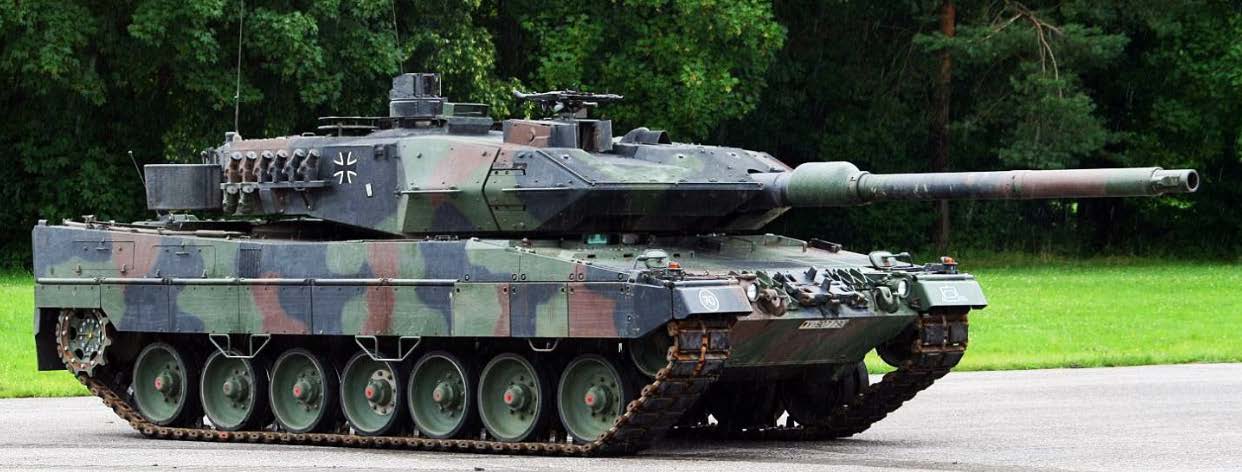
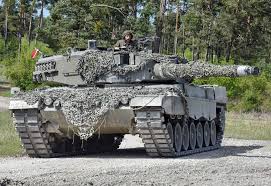
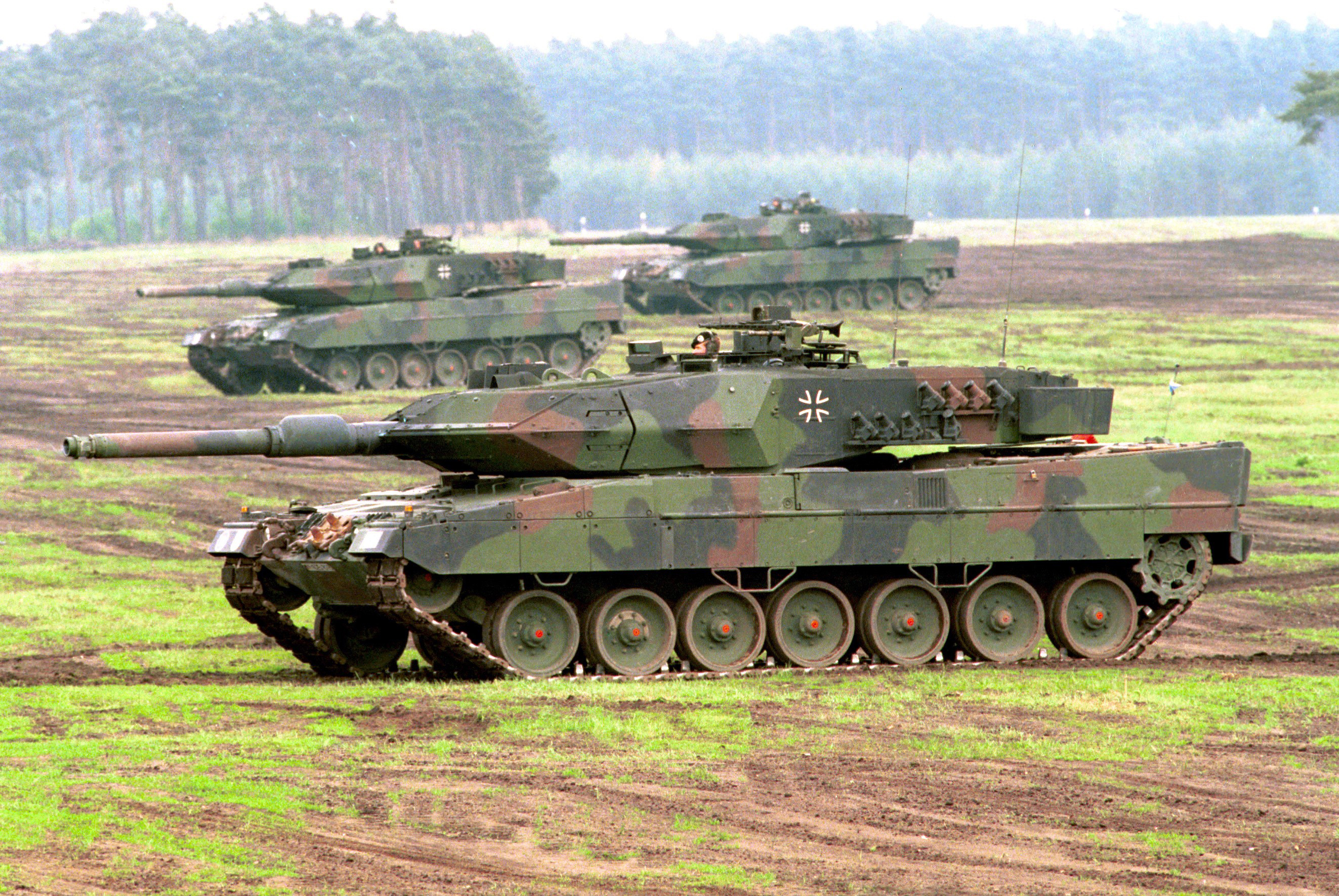
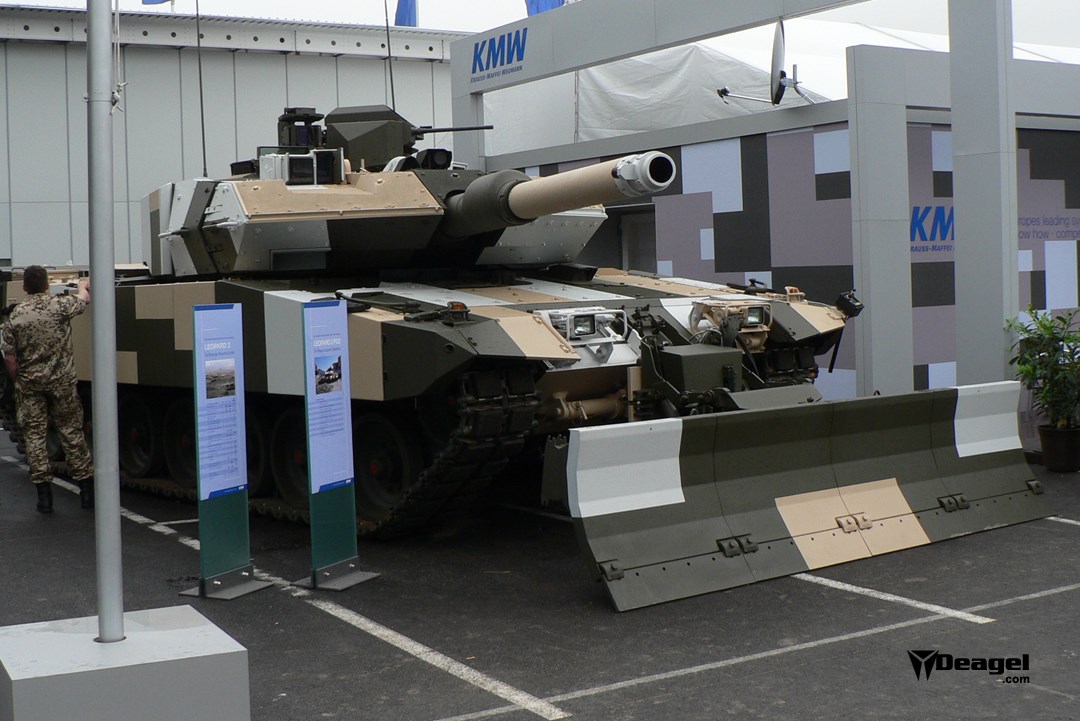
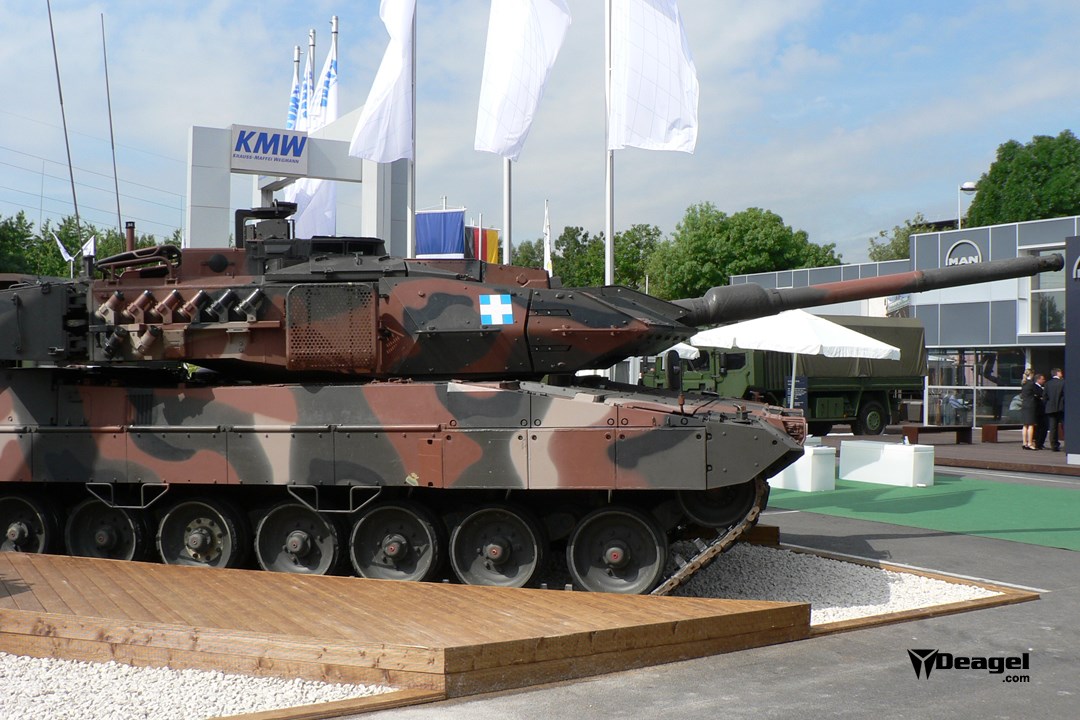
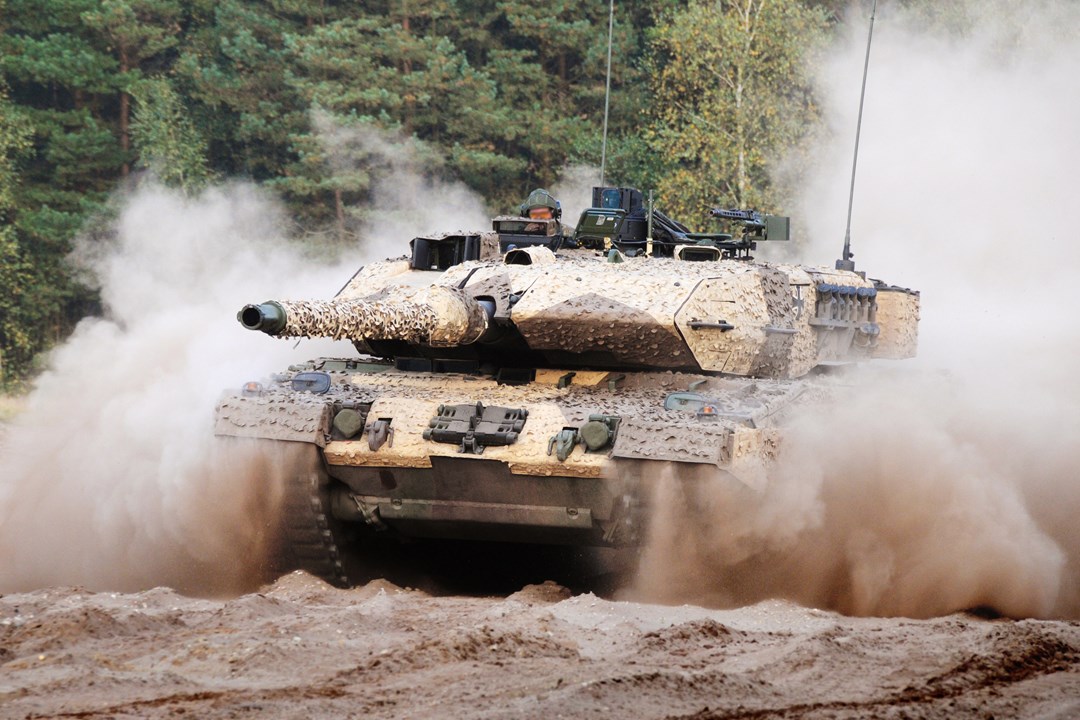
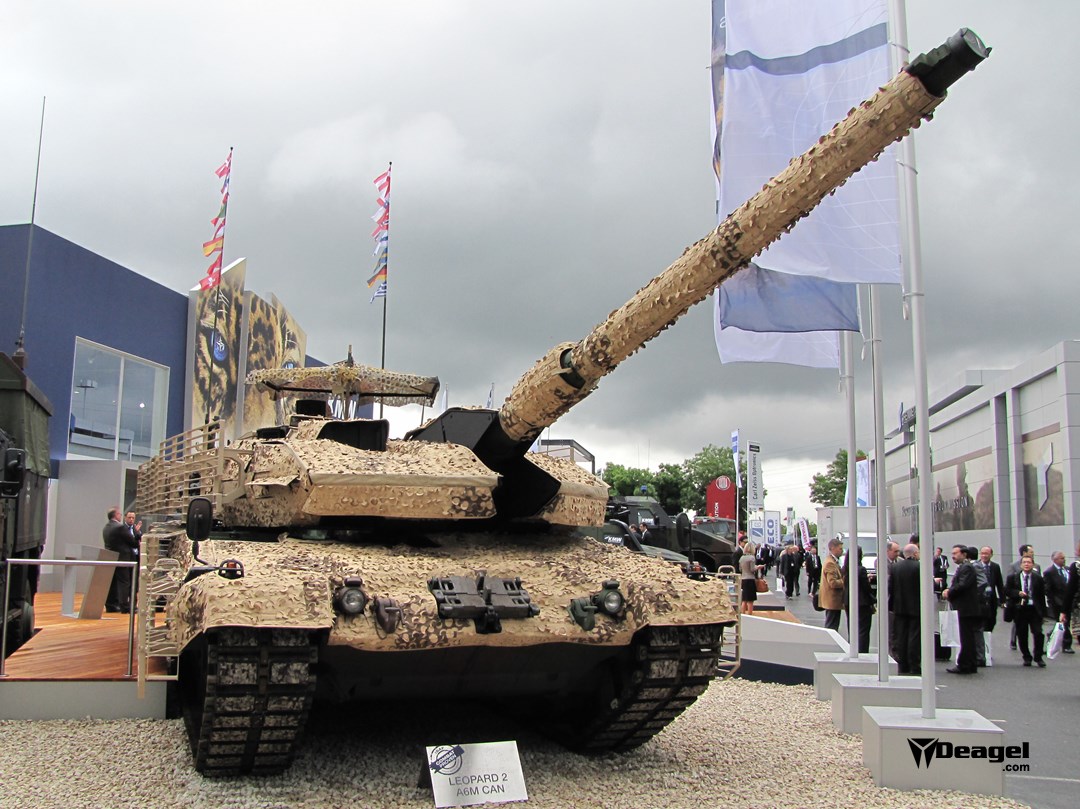
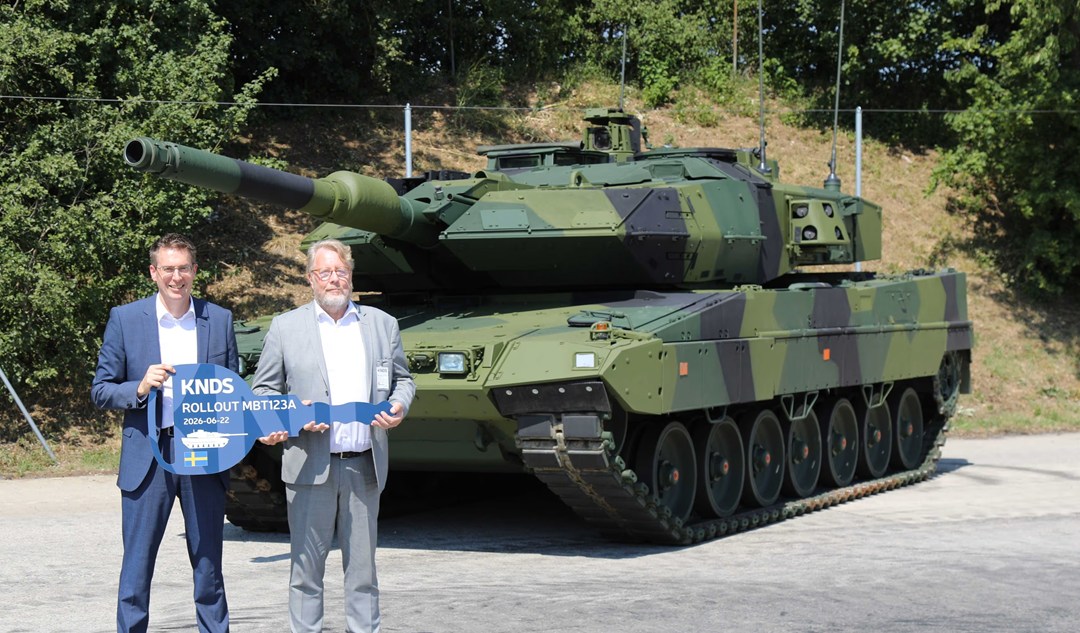
The Leopard 2 is a main battle tank developed by Krauss-Maffei in the 1970s for the West German Army. The tank first entered service in 1979 and succeeded the earlier Leopard 1 as the main battle tank of the German Army. It is armed with a 120 mm smooth bore cannon, and is powered by a V-12 twin-turbo diesel engine. Various versions have served in the armed forces of Germany and 12 other European countries, as well as several non-European nations, including Canada, Chile, Indonesia, Singapore, and Turkey. The Leopard 2 was used in Kosovo with the German Army, and has seen action in Afghanistan with the Dutch, Danish and Canadian contributions to the International Security Assistance Force, as well as seeing action in Syria with the Turkish Armed Forces against ISIS and the YPG. There are two main development batches of the tank: the original models up to Leopard 2A4, which have vertically faced turret Armor, and the improved batch, namely the Leopard 2A5 and newer versions, which have angled arrow-shaped turret applique Armor together with other improvements. All models feature digital fire control systems with laser rangefinders, a fully stabilized main gun and coaxial machine gun, and advanced night vision and sighting equipment (first vehicles used a low-light level TV system or LLLTV; thermal imaging was introduced later on). The tank has the ability to engage moving targets while moving over rough terrain. Even as the Leopard 1 was just entering service, the German military was interested in producing an improved tank in the next decade. This resulted in the start of the MBT-70 development in cooperation with the United States beginning in 1963. However already in 1967 it became questionable whether the MBT-70 would enter service at any time in the foreseeable future. Therefore, the German government issued the order to research future upgrade options of the Leopard 1 to the German company Porsche in 1967. This study was named vergoldeter Leopard (Gilded Leopard) and focused on incorporating advanced technology into the Leopard design. The projected upgrades added an auto loader, a coaxial auto cannon and an independent commander's periscope. The anti-air machine gun could be operated from inside the vehicle and a TV surveillance camera was mounted on an extendable mast. The shape of the turret and hull was optimized using cast steel armor, while the suspension, transmission and the engine exhaust vents were improved. Following the end of the Gilded Leopard study in 1967, the West-German government decided to focus on the Experimental (experimental development) in a feasibility study and to develop new components for upgrading the Leopard 1 and for use on a future main battle tank program. At first 25 million DM were invested, but after the industry came to the conclusion that with such a low budget the development of the two projected test beds was not possible, a total of 30 to 32 million DM was invested. The experimental development was contracted to the company Krauss-Maffei, but with the obligation to cooperate with Porsche for the development of the chassis and with Wegmann for the development of the turret. Two prototypes with differing components were built with the aim to improve the conception of the Leopard 1 in such a way that it would match the firepower requirements of the MBT-70. A high first-hit probability at ranges of 2,000 meters (6,600 ft.) and the ability to accurately engage targets on the move using a computerized fire control system were the main goals of the experimental development. The resulting vehicles were nicknamed Keiler ("tusker"). Two prototypes (ET 01 and ET 02) of the Keiler were built in 1969 and 1970, both of them being powered by the MB 872 engine. The MBT-70 was a revolutionary design, but after large cost overruns and technological problems, Germany withdrew from the project in 1969. After unsuccessful attempts of saving the MBT-70 by conceptual changes in order to eliminate the biggest issue—the driver being seated in the turret—it became clear in late 1969 that Germany would stop the bi-national development. The assistant secretary of the military procurement division of the German Ministry of Defense suggested reusing as much technologies developed for the MBT-70 as possible in a further program, which was nicknamed Eber ("boar") due to his being named Eberhardt. The Eber used a modified MBT-70 turret and hull, with the driver being seated in the hull. Only a wooden mock-up was made. One year later, a choice was made to continue the development based on the earlier Keiler project of the late 1960s, instead of finishing the development of the Eber. In 1971, the name of the design was determined as Leopard 2 with the original Leopard retroactively becoming the Leopard 1, and Paul-Werner Krapke became the project officer of the Leopard 2 program. Originally two versions were projected: the gun-armed Leopard 2K and the Leopard 2FK, which would be armed with the XM150 gun/launcher weapon of the MBT-70. That year 17 prototypes were ordered, but only 16 hulls were built as the production of hull PT12 was cancelled. Ten were ordered initially before another seven were ordered. The 17 turrets were designated T1 to T17, and the hulls were designated PT1 to PT11 and PT13 to PT17. To test a larger number of components and concepts, each prototype was fitted with components not found on the other prototypes. Ten of the turrets were equipped with 105 mm smoothbore guns, and the other seven prototypes were equipped with a 120 mm smoothbore gun. Hulls PT11 and PT17 were fitted with a hydropneumatics suspension based on the MBT-70 design. The running gears of these two hulls had only six road wheels. Different types of APUs were mounted in the prototypes. All turrets were equipped with a machine gun for air defense except the turret mounted on PT11, where a 20 mm remotely operated auto cannon was mounted. With the exception of hulls PT07, PT09, PT15 and PT17, all prototypes used the MB 873 engine. The road wheels were taken from the MBT-70 and the return rollers from the Leopard 1. The prototypes were designed with a projected weight of MLC50, which equals approximately 47.5 tones (46.7 long tons; 52.4 short tons). The welded turret utilized spaced armor formed by two steel plates. The prototypes were equipped with an EMES-12 optical rangefinder and fire control system, which later was adopted on the Leopard 1A4. In mid-1973 a new turret was designed by Wegmann saving 1.5 tones (1.5 long tons; 1.7 short tons) weight.[15] It was nicknamed the Spitzmaus-Turm (shrew turret) due to the highly sloped front. This design was only possible with the new EMES-13 optical rangefinder, which required a base length of only 350 millimeters (14 in) instead of the previous 1,720 millimeters (68 in). Based on experiences in the Yom Kippur War, a higher level of protection than the prototypes' heavily sloped spaced armor was demanded in late 1973 and the Spitzmaus-Turm was never produced. The weight limit was increased from MLC50 to MLC60, which equals approximately 55 tons (54 long tons; 61 short tons). The turret T14 was modified to test a new armor configuration, taking on a blockier-looking appearance as a result of using vertical modules of spaced multilayer armor. It was also used to test the new EMES-13 optical rangefinder. The modified turret T14 was designated T14 mod and was fitted with a fully electric turret drive and stabilization system, which was developed together by the companies General Electric and AEG Telefunken.