Y-20 Kunpeng (Chubby Girl) Chinese Strategic Transport Aircraft
Y-20

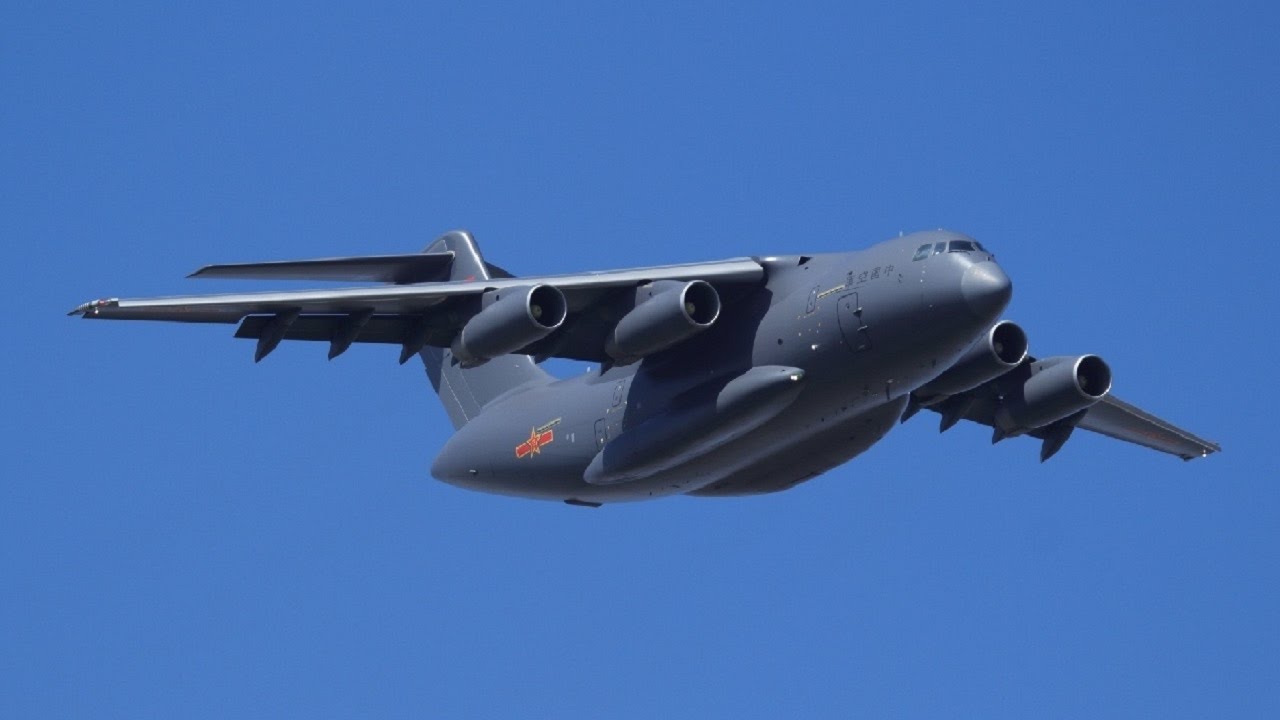

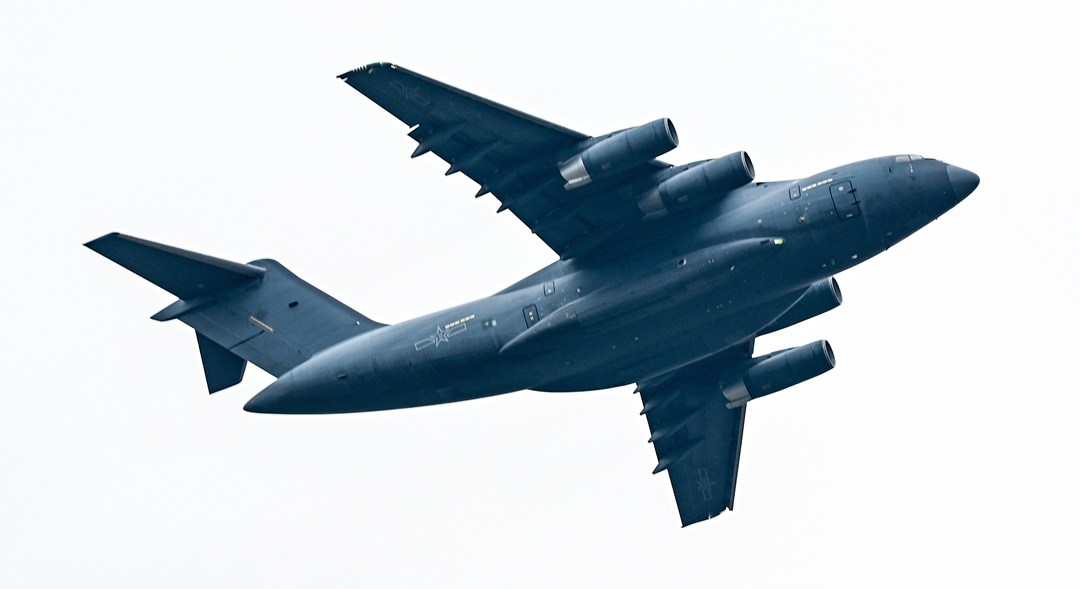


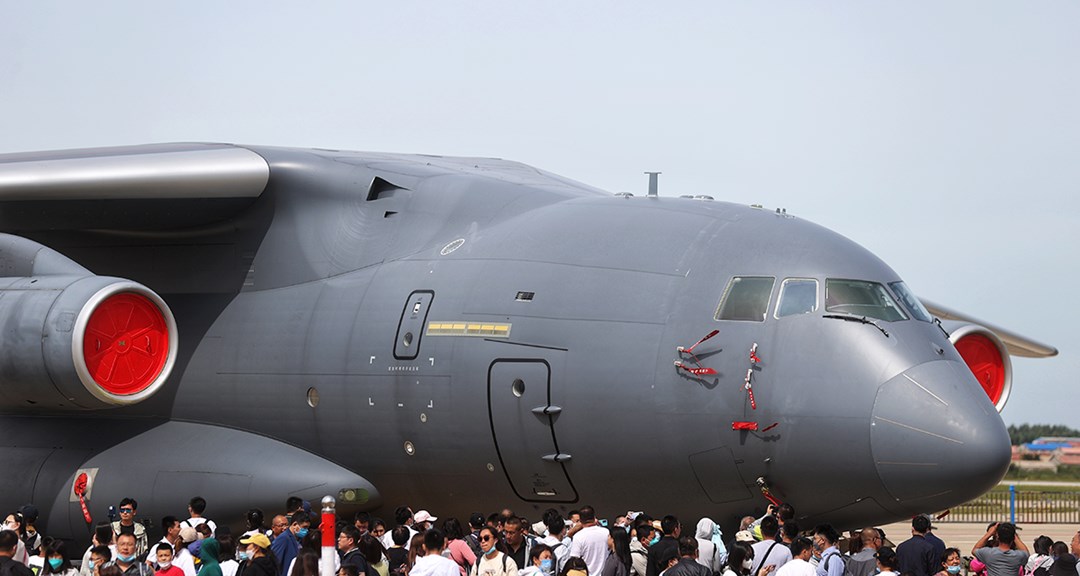
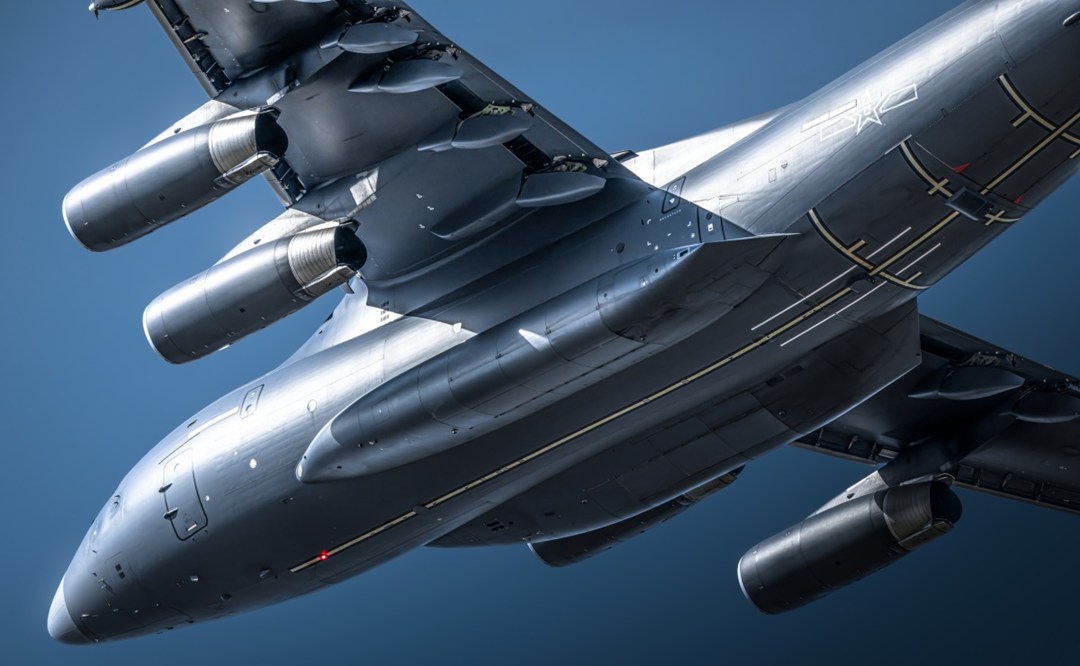
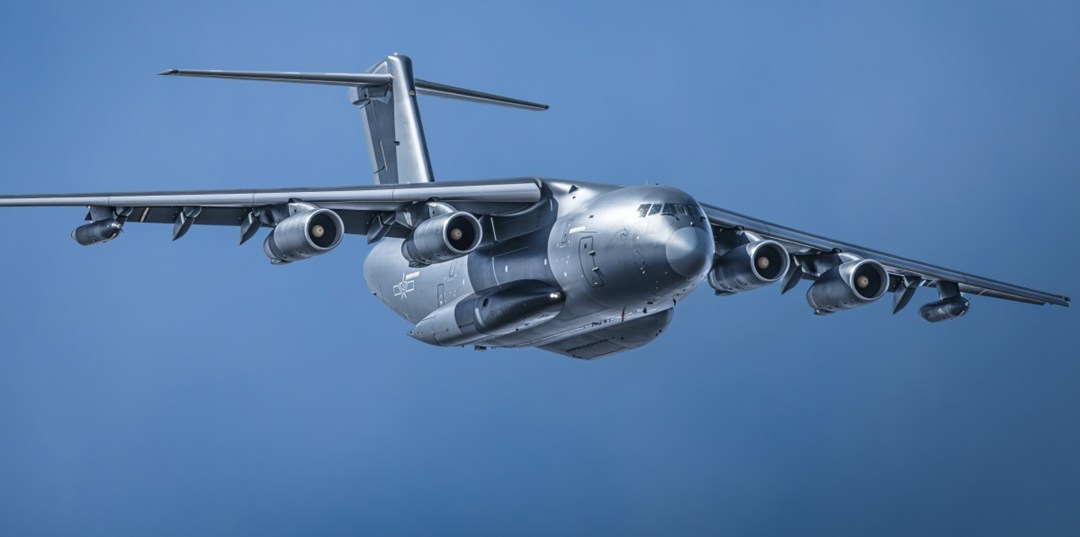


The Xi'an Y-20 (Chinese: 运-20; pinyin: Yùn-20; lit.: 'transport-20') is a large military transport aircraft. The project is being developed by Xi'an Aircraft Industrial Corporation and was officially launched in 2006. The official codename of the aircraft is Kunpeng (Chinese: 鲲鹏), After the mythical bird that can fly for thousands of miles described in the ancient Chinese Taoist classic Zhuangzi. However, within the Chinese aviation industry itself, the aircraft is more commonly known by its nickname Chubby Girl (Chinese: 胖妞), because its fuselage is much wider compared to other Chinese aircraft previously developed in China. The Y-20 uses components made of composite materials. The composites are produced in China, whereas in the past they had to be imported. The Y-20's cabin incorporates flame-retardant composites developed by the 703 Institute of the China Aerospace Science and Technology Corporation (CASC). The 703 Institute was created in March 2009 with development taking three years. The performance of the composites is reportedly comparable to those that fulfill FAR Part 25.835. The 703 Institute achieved another milestone by establishing a comprehensive Chinese evaluation and certification system for aircraft composite materials based on international standards. The Y-20 is the first cargo aircraft to use 3D printing technology to speed up its development and to lower its manufacturing cost. Model-based definition (MBD) is also used, and it's the third aircraft to utilize MBD technology in the world, after Airbus A380 (2000) and Boeing 787 (2005). A project team to implement MBD for Y-20 program was formally formed in October 2009, and after the initial success in application on the main landing gear, MBD application was expanded to the entire aircraft and became mandatory for all contractors and subcontractors of the Y-20 program. The implementation of MBD was initially met with strong resistance, with only a third of suppliers agreeing to implement MBD. However, the general designer of Y-20 declared that those who refused to implement MBD will be banned from participating in the Y-20 program, thus forcing everyone to comply, resulting in increases in productivity. The implementation of MBD greatly shortened the time required, for example, without MBD, installation of wings takes a month or two, but with MBD adopted, the time is drastically shortened to just a few hours, and in general, the design work is reduced by 40%, preparation for production reduced by 75%, and manufacturing cycle reduced by 30%. In addition to 3D printing, the Y-20 is also the first aircraft in China to adopt associative design technology (ADT) in its development. Headed by the deputy general designer of structural design, Mr. Feng Jun (冯军), the initial attempt to implement ADT actually failed after two months spent on the application on the nose section. It was only after the second attempt which took another three months on the application on wings did ADT became successful. The adaptation of ADT greatly shortened the development time by at least eight months, and the modification of the wing design that previously took a week is shortened to half a day. Cargo is loaded through a large aft ramp that accommodates rolling stock. The Y-20 incorporates a shoulder wing, T-tail, rear cargo-loading assembly, and heavy-duty retractable landing gear, consisting of three rows, with a pair of wheels for each row, totaling six wheels for each side. The structural test was completed in 194 days as opposed to the 300 days originally planned, thanks to the successful development and application of an automated structural strength analysis system. In comparison, similar work for the Xian JH-7 took a year. According to the deputy general designer, the shortest take-off distance of the Y-20 is 600 to 700 meters. Y-20 incorporates a total of four LCD EFIS, and the development of EFIS for Y-20 utilizes virtual reality via helmet-mounted display. Eight types of different relays used on Y-20 are developed by Guilin Aerospace Co., Ltd. a wholly own subsidiary of China Tri-River Aerospace Group Co., Ltd.(中国三江航天集团), which is also known as the 9th Academy of the China Aerospace Science and Industry Corporation (CASIC). It was reported that the Y-20 started ground testing in December 2012, including runway taxi tests. The aircraft made its maiden flight lasting one hour on January 26, 2013. During landing in first flight, it was reported that the Y-20 prototype bounced once before finally settling on runway due to high landing speed. In December 2013, a new Y-20 prototype took to the sky. On 6 February 2016, the Y-20 was flown for the first time and pictures of the fifth prototype (serial number 788) in flight appeared on Chinese military web pages. Other known prototypes carry identification numbers 781, 783 and 785. On 27 January 2016, former Chinese test pilot, Xu Yongling, had reported in a Xinhua article that Chinese aviation industry officials had stated that the Y-20 "had completed development" at the end of 2015. In June 2016, the first two Xian Y-20 aircraft were delivered to the People's Liberation Army Air Force (PLAAF)
deagel.com: https://www.deagel.com/x/x/a002813