ARMSNET
Military Equipment Database
Initializing 0%

Oscar II Class (Project 949A Antey Class) Russian Nuclear-Powered Cruise Missile Submarine

Oscar II Class
Nuclear-Powered Ballistic Missile Submarine (SSBN)
Spotted an error? Sign in to suggest an edit.
Basic Information
Name
Oscar II Class (Project 949A Antey Class) Russian Nuclear-Powered Cruise Missile Submarine
Designation
Oscar II Class
Alternate Designation
Oscar II Class; Project 949A Antey Class
Equipment Type
Nuclear-Powered Ballistic Missile Submarine (SSBN)
Manufacturer
Sevmash
Date of Introduction
1986
Description

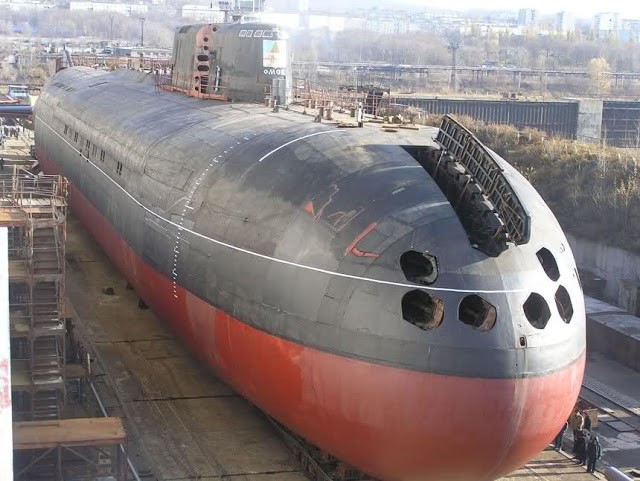
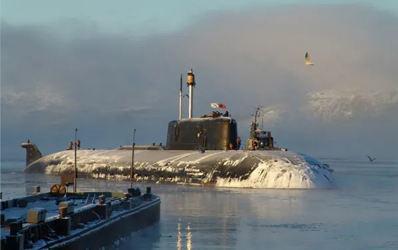
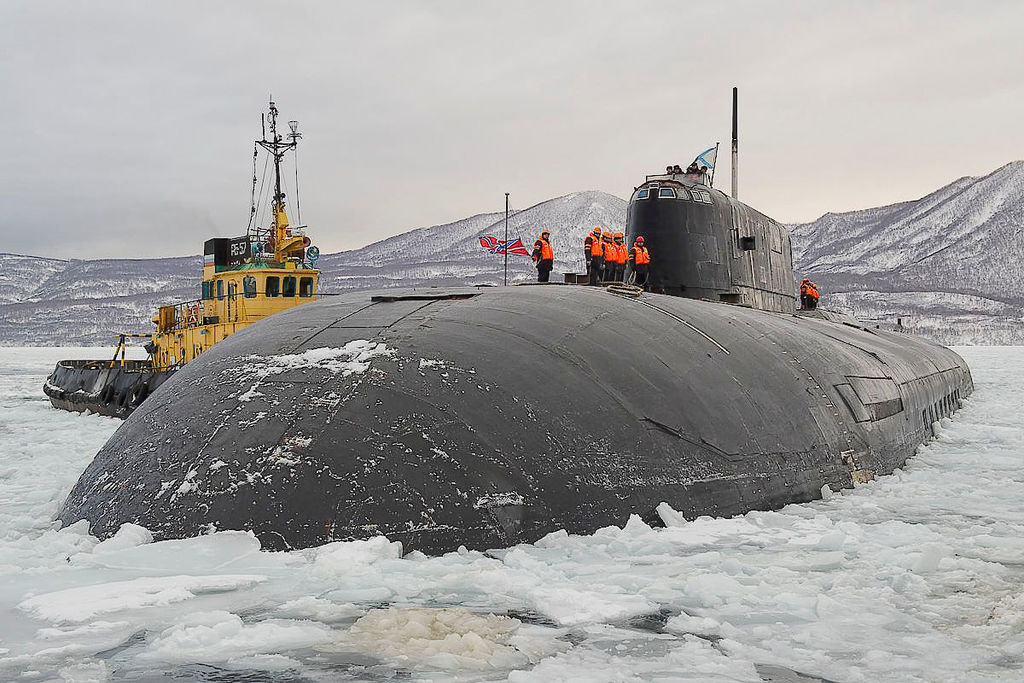
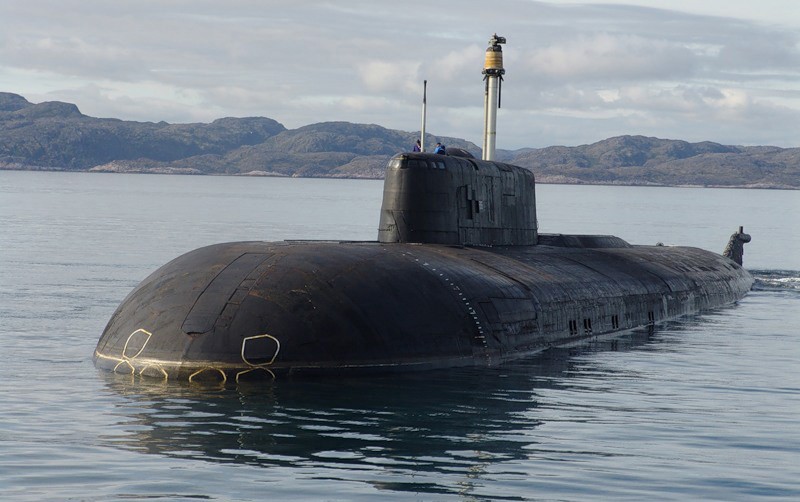
The OSCAR II class SSGNs are the second-largest submarines in the world, second only to the U.S. OHIO class SSBN/SSGNs. SSGN Oscar II class cruise-missile submarines (Project 949A/Antey class) are designed primarily to attack NATO aircraft carriers, battle groups. To cope with its resource problems, the Russian Navy, in the early 1990s, made an effort at preserving its core submarine force capabilities. The Russian Navy continued to invest in new construction. In the late 1990s, it completed several new submarines of the third generation Oscar II. 11 of the larger Oscar II submarines were built between 1985 and 1999 at the Sevmash yard in Severodvinsk. Three have been decommissioned and one, the Kursk, sank. Two Oscar II submarines are active with the Northern Fleet and five with the Pacific Fleet. The Pacific Fleet is set to upgrade four Oscar II submarines with 3M-54 Kalibr family of cruise missiles by 2021 as part of a multi-year program. The submarines can also be fitted with other cruise missiles, including 3M-54 anti-ship, 3M-14 land-attack missiles, and PT91 anti-submarine warfare (ASW) torpedoes. The upgraded submarines will be designated Project 949AM. Eleven Project 949A Antey submarines were completed at Severodvinsk, of which five were assigned to the Soviet Northern Fleet. At one stage it had been planned to develop a new fourth-generation follow-on to Project 949A, but this plan was later dropped. The external differences between the two classes were that the 949A class is about 10 meters (33 ft) longer than its predecessor (approximately 154 meters, 505 ft rather than 143 m, 469 ft), providing space and buoyancy for improved electronics and quieter propulsion. Some sources speculate that the acoustic performance of the Oscar II class is superior to the early Akula class but inferior to the Akula II class as well as subsequent (4th generation) designs. It also has a larger fin, and its propellers have seven blades instead of four. Like all post-World War II Soviet designs, they are of double hull construction. Similarly, like other Soviet submarine designs, Project 949 not only has a bridge open to the elements on top of the sail but, for use in inclement weather, there is an enclosed bridge forward and slightly below this station. A distinguishing mark is a slight bulge at the top of the fin. A large door on either side of the fin reaches this bulge. These are wider at the top than on the bottom and are hinged on the bottom. The Federation of American Scientists reports that this submarine carries an emergency crew escape capsule; it is possible that these doors cover it. The VSK escape capsule can accommodate 110 people

Naval & Littoral Specifications
Crew 94
Beam 18.20 m
Draft 9.20 m
Variants
Krasnodar Commissioned: 1986 Status: Retired, scrapping began in late 2012 Fleet: Northern Fleet
Krasnoyarsk Commissioned: 1986 Status: Inactive, caught fire during scrapping Fleet: Pacific Fleet
Irkutsk Commissioned: 1988 Status: Active Fleet: Pacific Fleet
Voronezh Commissioned: 1989 Status: Active Fleet: Northern Fleet
Smolensk Commissioned: 1990 Status: Active Fleet: Northern Fleet
Chelyabinsk Commissioned: 1990 Status: Active Fleet: Pacific Fleet
Tver (ex-Vilyuchinsk) Commissioned: 1992 Status: Active Fleet: Pacific Fleet
Orel (ex-Severodvinsk) Commissioned: 1992 Status: Active Fleet: Northern Fleet
Omsk Commissioned: 1993 Status: Active Fleet: Pacific Fleet
Tomsk Commissioned: 1996 Status: Active Fleet: Pacific Fleet
Kursk Commissioned: 1994 Status: Lost on 12 August 2000 Fleet: Pacific Fleet
Belgorod Commissioned: 2022 Status: Testing Fleet: INA
System
Alternative Designation Oscar II Class; Project 949A Antey Class
Type Nuclear-Powered Cruise Missile Submarine
Builder Sevmash
Crew 94 Officers and 107 Enlisted
Note Modernization: The Rubin Design Bureau started working on Project 949A modernization in 2011, with Zvezdochka and Zvezda shipyards to carry out modernization of the vessels. In September 2015, Russian Defence Minister Sergey Shoygu announced during his visit to Zvezda shipyard, that at least three Oscar-class submarines will undergo repair and modernization to extend their service life by 20 years. The upgraded submarines will be known as "Project 949AM", according to the Russian officials. Modernization cost was estimated at RUB12 billion (US$182 million) per submarine. In September 2016, it was reported submarines K-132 Irkutsk and K-442 Chelyabinsk are currently being modernized to 949AM. According to the Deputy Prime Minister of Russia Yury Borisov, Russia's Pacific Fleet may get four modernized Oscar II-class submarines armed with Kalibr cruise missiles by 2021.
Dimensions
Length 154.0 m
Beam 18.2 m
Draft 9.2 m
Displacement, Surface 14,700 tons
Displacement, Submerged 19,400 tons
Propulsion System
Engine Name 2 x OK-650B
Engine Type Pressurized-water nuclear reactors
Engine Power 98,000 total shp
Turbines 2 x OK-9 steam turbines
Auxiliary Power 2 x electric low-speed motors (5 knots max. speed)
Maximum Submerged Speed 31 knots
Maximum Surface Speed 15 knots
Endurance 120 days
Communication
Note The Oscar II class boats are fitted with a floating antenna buoy to receive satellite navigation signals, target designation data and radio messages at a great depth and under the ice.
Missile Weapon System
System
Name 24 x P-700 Granit (NATO SS-N-19 Shipwreck) SSM
Type Supersonic Long-Range Anti-Ship Cruise Missile
Manufacturer Chelomey design bureau, Moscow, Russia
Length 10 m
Diameter 0.85 m
Weight 7,000 kg
Warhead 750 kg conventional high-explosive; or 500 kiloton nuclear
Engine 1 x turbojet sustainer; 2 x solid-fuel boosters
Guidance System inertial w/command update, active radar/IR inertial w/anti-radar homing
Maximum Speed Mach 1+
Range 630 km
Blast Yield 500 kt
Note Strategic Implications: Designed to defend against United States’ Navy carrier battle grounds, the Granit remains strategically valuable today because of its unique guidance system. When fired in a swarm (group of 4-8 weapons), one of the weapons climbs to a higher altitude and designates targets while the others attack. If the designating missile is destroyed, another missile will rise to take over the same purpose. They attack targets in order of priority, highest to lowest, using information gathered on targets during flight. The missile can also counter attacking anti-missiles and its on-board computer carries data to evade electronic countermeasures, ensuring a successful target hit. Due to the missile’s size, it can only be deployed in small numbers on Oscar-class submarines, Kirov-class battlecruisers, and the Admiral Kuznetsov aircraft carrier. In the future, it is possible that the Granit missiles will be replaced with smaller Oniks and Kalibr cruise missiles in greater numbers.
Basic Load 24 x P-700 Granit (NATO SS-N-19 Shipwreck) SSM
Torpedo System
Launcher #1 4 x bow 650-mm tubes [Type 86R and Type 88R/SS-N-16 Stallion ASW missiles and/orType 65-76 torpedoes carried]
Launcher #2 4 x bow 533-mm tubes [Type 83RN and Type 84RN/SS-N-15 Starfish ASW missiles and/or USET-80 torpedoes carried]
Mine System
Note 32 x Mines max. in lieu of torpedoes and/or missiles
Radar Systems
Surface Search / Navigation Radar 1 x MRK-50 Albatros' series (Snoop Pair) surface search/navigation
Sonar Systems
Sonar Active / Passice Suite 1 x MGK-540 with Skat-3 (Shark Gill) active/passive suite
Towed Passive Array Sonar 1 x Pelamida towed passive array
Mine-Avoidance Sonar 1 x MGK-519 (Mouse Roar) active high-frequency mine-avoidance
Cavitation Monitor 1 x MG-512 cavitation monitor
Upward-Looking Echo-Sounder 1 x MG-518 upward-looking echo-sounder
Sound-Velocity Measurement 1 x MG-533 sound-velocity measurement
Ice-Lane Detector 1 x NOR-1 ice-lane detector
Surface Warning 1 x NOK-1 surface warning
Protection
Hull Armor The Project 949A Antey is a double-hulled design, which comprises an inner pressure hull and outer hydrodynamic hull. Separation between both hulls provides significant reserve of buoyancy and improved survivability against torpedoes. The outer hull has a weak magnetic signature, which prevents detection by Magnetic Anomaly Detection (MAD) systems. The reinforced sail is intended to break through the Arctic ice.
Countermeasures INA
NBC Water Washdown System Yes
EW 1 x Bald Head intercept
Details
Country of Origin Russia
Category Submarines
Naval > Submarines
Filter Label
O
Classification
Domain
Naval & Littoral
Equipment Status
Active
Dimensions
Length
154 m
Width
18.2 m
Height
Weight
19400000 kg
Operators (1)
Russia
Something went wrong. Please reload the page. Reload