ARMSNET
Military Equipment Database
Initializing 0%

Akrep II Turkish 4x4 Wheeled Armored Vehicle

Akrep II
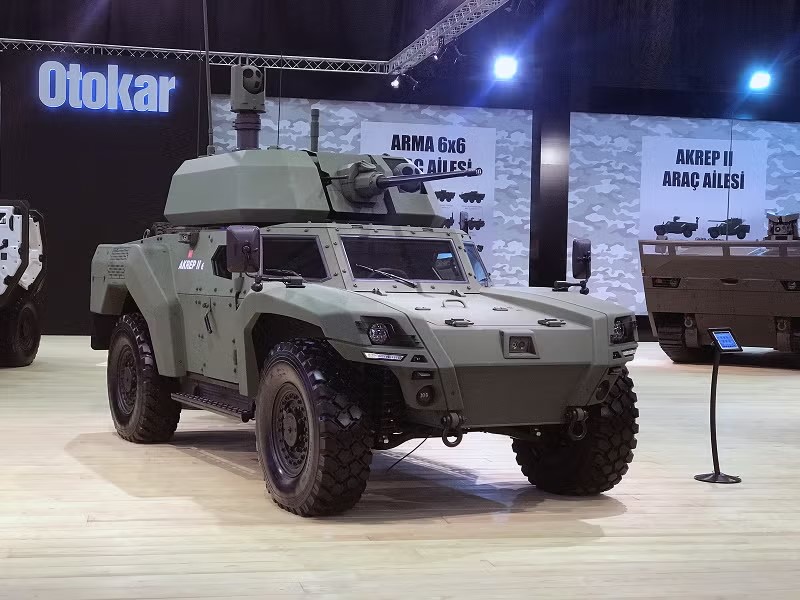
Wheeled Armored Vehicle
Spotted an error? Sign in to suggest an edit.
Basic Information
Name
Akrep II Turkish 4x4 Wheeled Armored Vehicle
Designation
Akrep II
Alternate Designation
Akrep II
Equipment Type
Wheeled Armored Vehicle
Manufacturer
Otokar
Date of Introduction
2019
Description

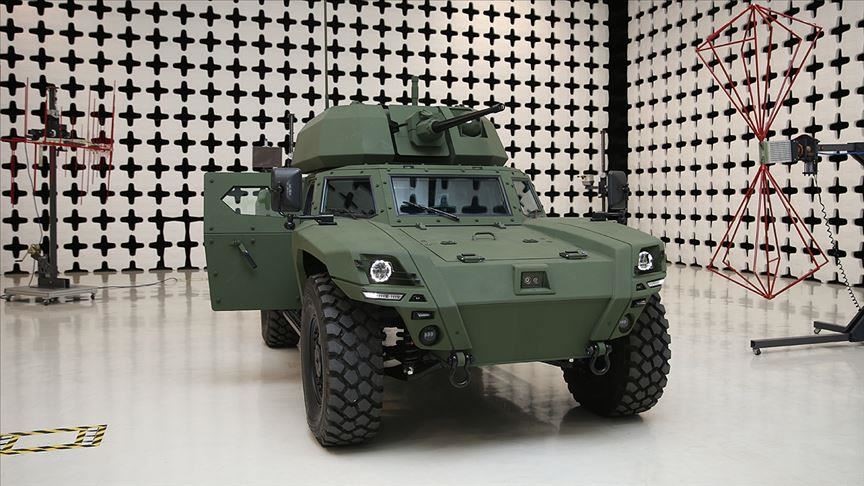
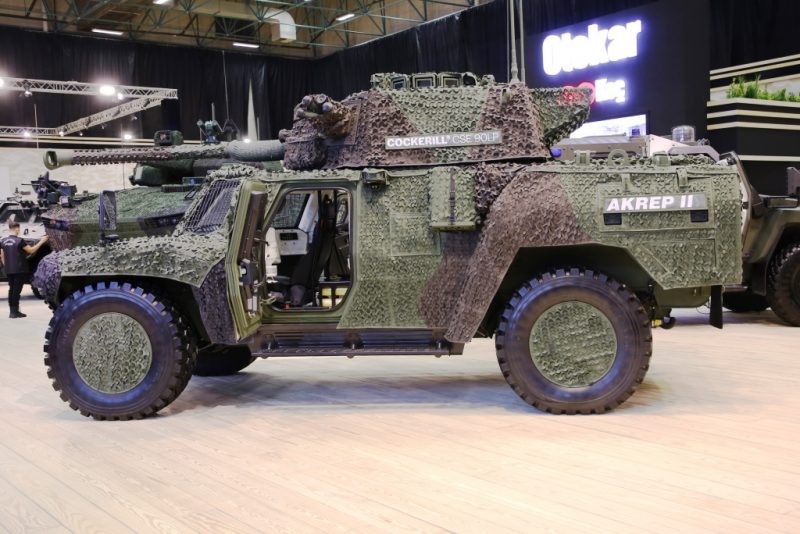
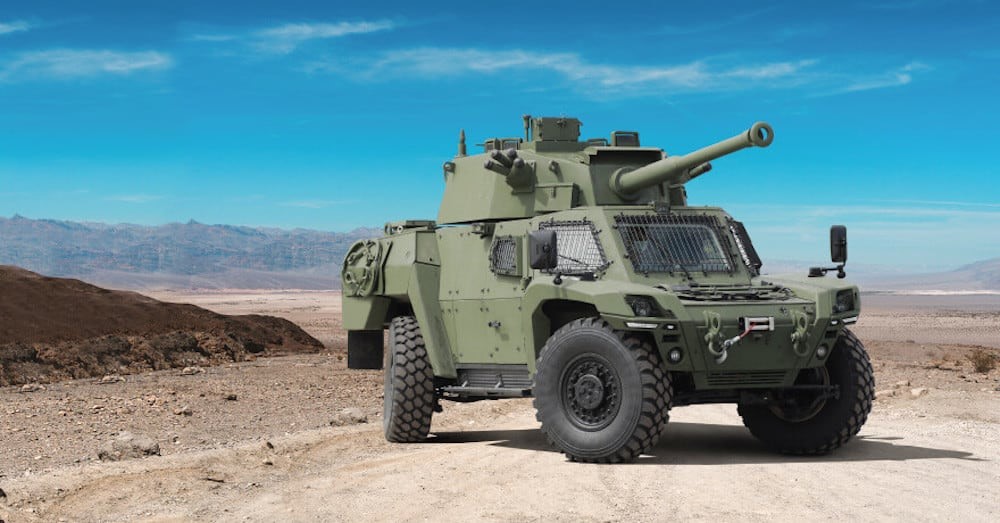
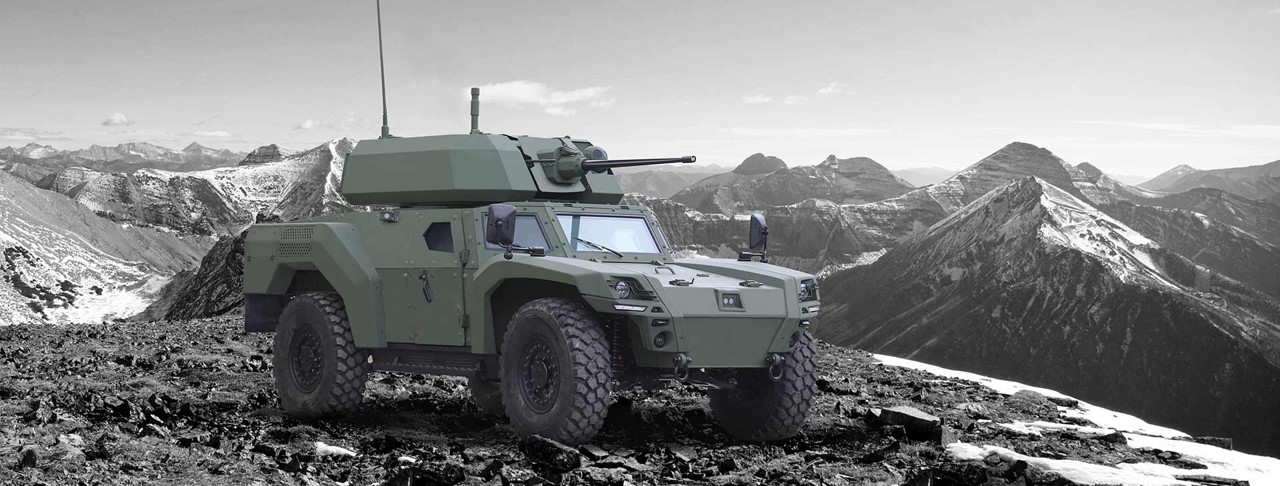
The Akrep II Turkish 4x4 Wheeled Armored Vehicle is a Turkish-designed multi-role, 4x4 wheeled light armored vehicle manufactured by Otokar, representing a sophisticated platform combining reconnaissance capabilities, fire support modularity, and advanced mobility across challenging terrain. Unveiled in 2019 as the successor to the original Akrep platform, the AKREP II accommodates three crew members and delivers flexible mission configurations ranging from pure reconnaissance through medium-caliber fire support with turrets up to 90mm. The vehicle's modular design—available in diesel (IId), fully electric (IIe), and hybrid configurations—enables tailored operational signatures for specific mission requirements, from stealth reconnaissance to sustained fire support operations. The AKREP II represents a mature military platform successfully balancing competing operational requirements: survivability through STANAG 4569 Level 3 protection without compromising mobility; firepower integration through modular 90mm turret systems; and signature management through multiple propulsion options. The drive-by-wire architecture and optional autonomous functions position the platform for future integration into network-centric warfare concepts and potentially unmanned/autonomous reconnaissance operations. The vehicle's primary operational value emerges in rapid-deployment reconnaissance missions, direct-fire support for quick-reaction forces, and asymmetric warfare environments where protected mobility and moderate firepower prove decisive. The electric variant's stealth characteristics address specific niche requirements for covert penetration reconnaissance in urban and complex terrain scenarios. From a strategic defense industry perspective, the AKREP II exemplifies Turkey's growing technological sophistication in indigenous armored vehicle design, combining composite engineering solutions (borrowed component integration) with original Turkish innovations (drive-by-wire systems, unconventional transmission packaging) to create a competitive export platform.

Ground Specifications
Crew 3
Mobility Type Wheeled (4x4)
Main Weapon 90mm turret systems
Engine Turbo Diesel or 2 x 180 kw Electric Mothers or Hybrid (Diesel-Electric) (360 hp)
NBC Protection Yes
Max Speed 110.0 km/h
Range 80.0 km
Variants
Diesel Configuration (AKREP IId) The production-ready diesel variant integrates a turbocharged, intercooled diesel engine producing 360 horsepower, paired with automatic transmission. This configuration delivers maximum operational range (approximately 800 kilometers) and sustained cross-terrain performance, optimized for conventional military deployment scenarios. The U-drive transmission arrangement enables full vertical space optimization, critical given the vehicle's tight internal volume constraints.
Electric Configuration (AKREP IIe) The fully electric variant—initially presented as a technology demonstrator in 2019—incorporates two 180 kW motors (360 kW combined output) integrated at the axles, powered by advanced lithium-ion battery packs. This configuration delivers instantaneous high-torque response characteristics, enabling exceptional acceleration and gradeability despite the compact power envelope. Operational range is constrained to approximately 250 kilometers per charge cycle, limiting sustained operations but making the platform ideal for confined tactical areas requiring stealth penetration and reconnaissance-in-depth missions.
Hybrid Configuration Otokar has announced hybrid-drive development combining diesel and electric propulsion, designed to optimize operational range (estimated 600+ kilometers) while preserving low acoustic and thermal signatures for extended stealth missions not feasible with pure diesel powerplants.
System
Alternative Designation Akrep II
Type Wheeled Armored Vehicle
Manufacturer Otokar
Configuration 4x4
Crew 3 ea
Dimensions
Length 5.5m (baseline IIe); 5.9m (IId with enhanced internal provisions)
Width 2.5m
Height 1.8m (IIe standard); 1.95-1.97m (IId/turret variants)
Weight, Combat 13,500 kg (baseline electric); 15,500 kg (diesel with full turret integration)
Automotive
Engine Name INA
Engine Type Turbo Diesel or 2 x 180 kw Electric Mothers or Hybrid (Diesel-Electric)
Engine Power 360 hp
Maximum Range Diesel: 80 km; Electric: 250 km; Hybrid: 600 km
Maximum Speed 110 km/h
Amphibious No
Gradient 60%
Side Slope 40%
Approach Angle 45 deg
Departure Angle 45 deg
Ground Clearance 400 mm
Turning Redius 8.0 m
Main Weapon System
Armored Reconnaissance Varian Equipped with advanced weapon stations mounting 7.62mm or 12.7mm machine guns with 360-degree traverse and -20° to +70° elevation capability. Integrated sensor suites support passive reconnaissance through electro-optic observation without active weapon employment, ideal for deep reconnaissance missions.
Light Infantry Fire Support (25mm Turret) Mounted with a 25mm autocannon turret, enabling engagement of lightly armored vehicles and air defense roles while maintaining the vehicle's mobility-to-firepower ratio.
Fire Support Vehicle (90mm Turret Integration of the John Cockerill LCTS 90MP turret—a lightweight two-person system armed with a 90mm Cockerill low-pressure rifled gun—represents the vehicle's maximum firepower configuration. This turret delivers: Direct and indirect firing capabilities; Indirect fire range to 8 kilometers at 30° elevation; Advanced autoloader and fully stabilized weapon control system; Precision targeting while in motion through gyrostabilized turret systems; Dual ammunition type compatibility (high-explosive, anti-armor). The 90mm low-pressure gun design minimizes recoil effects, critical for maintaining platform stability in a 15-ton-class vehicle, while the compact turret profile adds only 600mm to the vehicle's height.
Anti-Tank Missile Carrier Configured with turret hard-points enabling integration of wire-guided or sensor-guided anti-tank missile systems.
Laser Weapon Vehicle Emerging configuration adapted for direct-energy weapon system employment, reflecting Turkey's investment in next-generation directed-energy platforms.
Forward Observer/Indirect Fire Coordination Electronic warfare and artillery fire control configuration supporting joint fire network operations.
Protection
Armor The AKREP II baseline achieves STANAG 4569 Level 3 protection across crew compartments, with floor sections meeting Level 2 standards. This protection envelope translates to: 7.62mm x 54R B32 API rounds at 30 meters (854 m/s impact velocity); 7.62mm x 51mm AP tungsten-carbide core rounds at 30 meters (930 m/s impact velocity); Protection coverage azimuth 360°; elevation 0-30°.
Mine and Blast Protection (Artillery Threats) 8 kg explosive mass anti-tank mine detonation under any wheel location. 155mm howitzer high-explosive fire at 60-meter burst radius. Azimuth 360°; elevation 0-30°. The V-shaped hull geometry actively deflects explosive energy from underbody detonations, transferring forces laterally and away from the crew compartment. Advanced optronics feature ballistic glass with polycarbonate liners and laminated construction, maintaining transparency while meeting protection requirements.
Applique Armor Optional add-on armor packages provide enhanced protection against higher-caliber threats without exceeding the vehicle's suspension load capacity, typically increasing protection against 20-25mm cannon fire with careful payload management.
NBC Protection Yes
Smoke Equipment INA
Details
Country of Origin Turkey
Category Wheeled Light Armored Vehicles
Land > Infantry Vehicles > Wheeled Light Armored Vehicles
Filter Label
A
Classification
Domain
Ground
Equipment Status
Active
Dimensions
Length
5.5 m
Width
2.5 m
Height
1.8 m
Weight
13500 kg
Operators (1)
Turkey
Something went wrong. Please reload the page. Reload