Antares
Antares
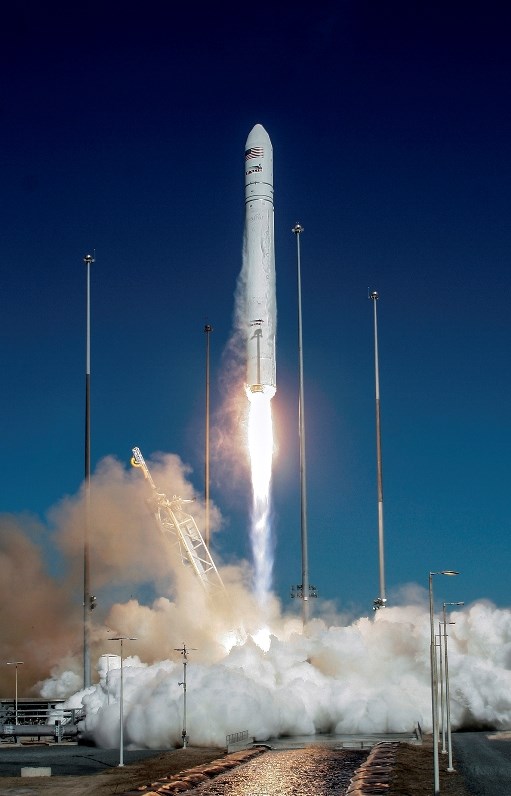

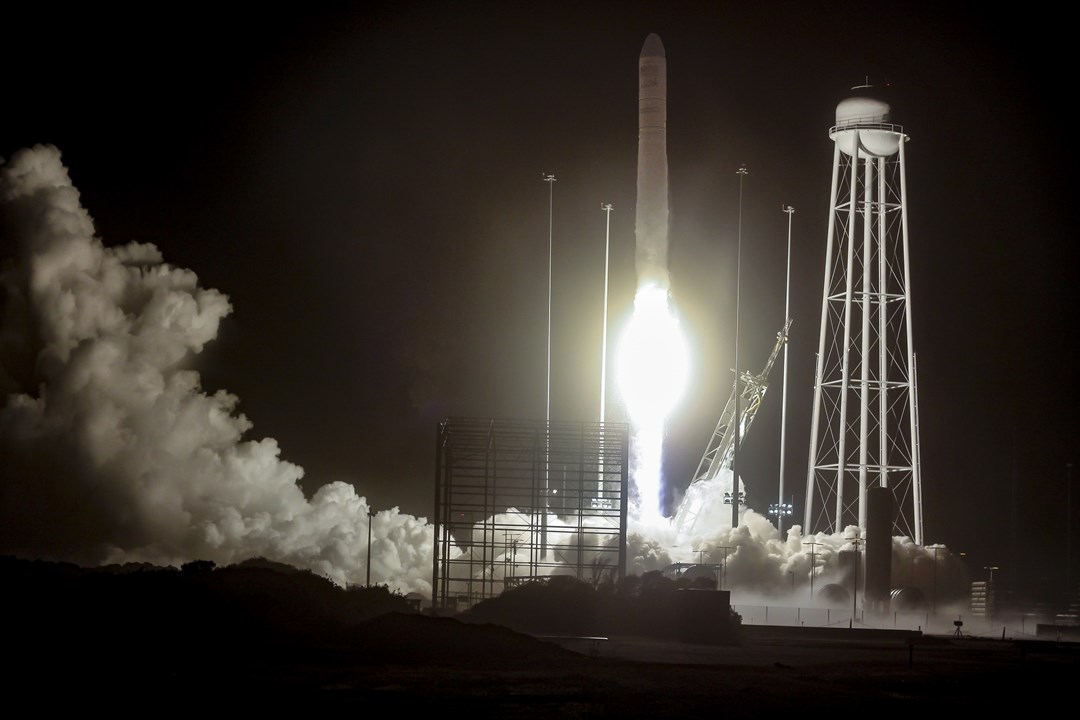

The Orbital Sciences Corporation Antares is a medium class space launch vehicle designed to put a payload of up to 7,000 kg into a Low Earth Orbit (LEO) and developed using Orbital's own funds. The space launch vehicle uses two or three stages, Orbital's MACH avionics and the Pegasus and Minotaur launch vehicle families technologies and solutions. In 2013, NASA awarded a Commercial Orbital Transportation Services (COTS) contract to Orbital for Antares to carry payloads to the International Space Station (ISS) beginning in 2014 under a Commercial Resupply Services (CRS) agreement. The original Antares design was altered following a launch mishap in October 2014. The upgraded Antares will deliver 20% more cargo. The first test launch of the upgraded Antares is scheduled for late 2015 and the first commercial mission is planned for the first quarter of 2016. The first stage twin AJ-26 engines (former Soviet NK-33 engines) was replaced by two RD-181 engines following the engine failure and subsequent explosion during the Antares take-off from NASA's Wallops Flight Facility on October 28, 2014. The new Russian-made RD-181 first stage allows to keep the core nearly identical but adding more power for additional payload. The first stage includes the RD-181 engines with independent thrust vectoring, core tank design provided by Yuzhnoye and core tank production by Yuzhmash. The Antares will carry the Cygnus cargo spacecraft with 20% more payload than in prior plans. The second stage incorporates ATK's Castor 30B solid motor with thrust vectoring or optionally Castor 30XL solid motor. The optional third stage is powered by ATK's STAR 48BV solid rocket motor.
deagel.com: https://www.deagel.com/x/x/a003085