ARMSNET
Military Equipment Database
Initializing 0%

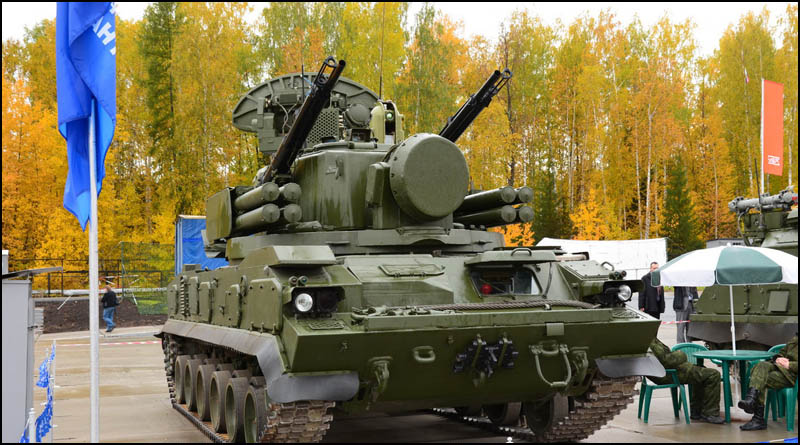
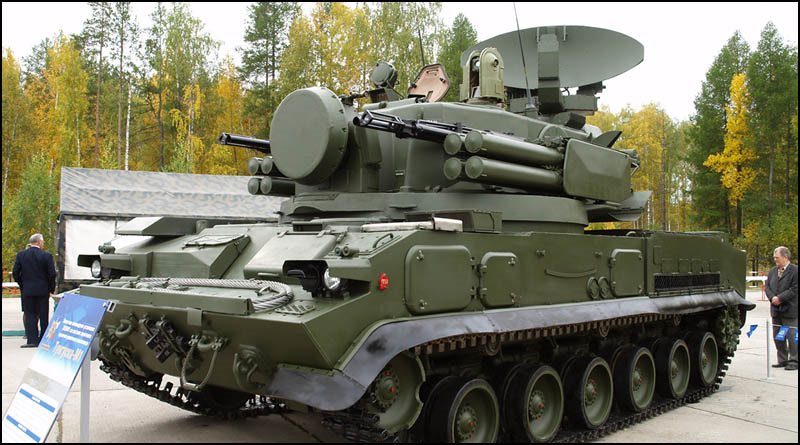
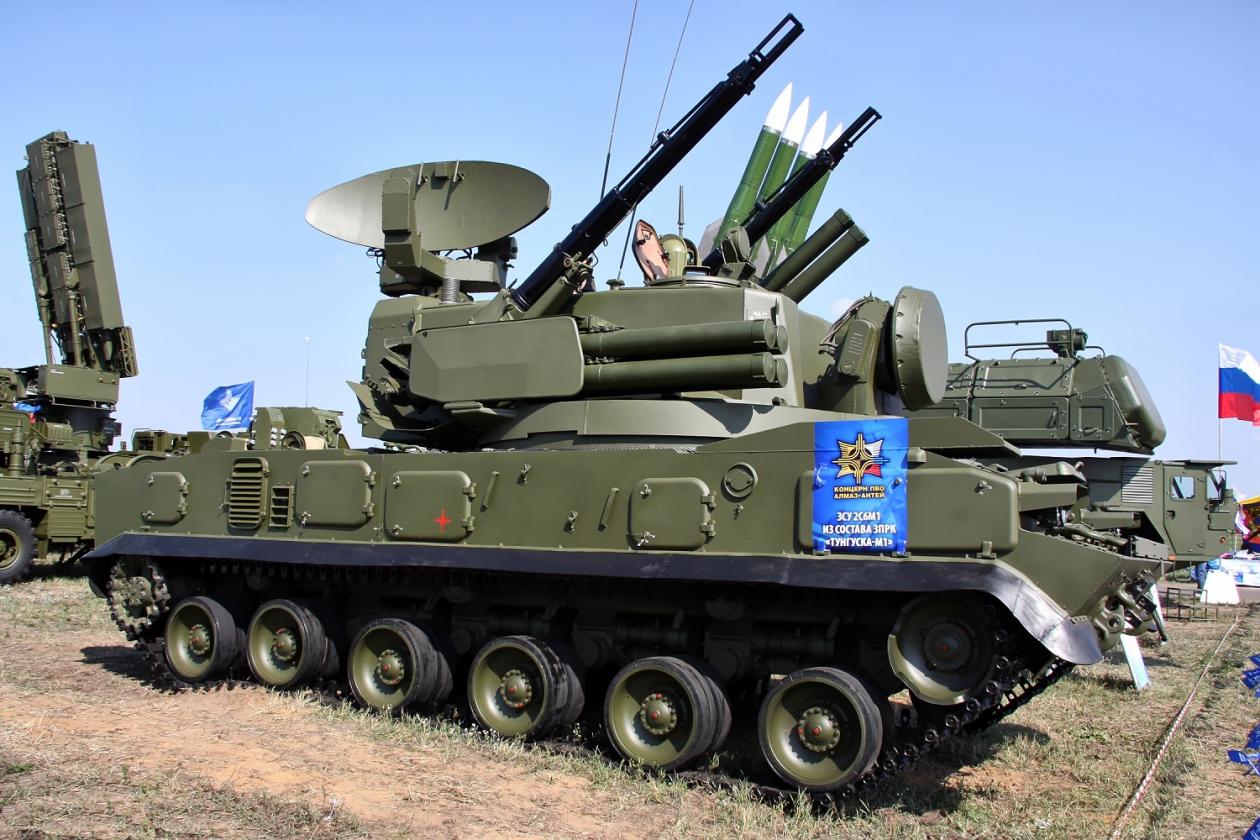
2S6M1 Tunguska-M1 Russian 30mm Self-Propelled Anti-Aircraft System

2S6M1 Tunguska-M1
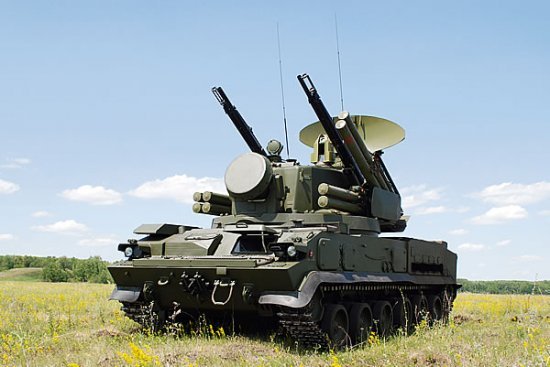
Tracked self-propelled anti-aircraft weapon armed with a anti-aircraft gun and missile system.
Spotted an error? Sign in to suggest an edit.
Basic Information
Name
2S6M1 Tunguska-M1 Russian 30mm Self-Propelled Anti-Aircraft System
Designation
2S6M1 Tunguska-M1
Alternate Designation
2S6M1 Tunguska-M1
Equipment Type
Tracked self-propelled anti-aircraft weapon armed with a anti-aircraft gun and missile system.
Manufacturer
Date of Introduction
2003
Description

2S6M1 Tunguska-M1 is a further improved variant with the improved fire control system. It is based on a GM-5975 special tracked chassis and uses new 9M311-M1 missiles. These have a range of 10 km. These missiles have improved optical tracking and accuracy. Laser proximity fuse was replaced by a radio proximity fuse. The new missiles can engage small targets, such as cruise missiles. The Tunguska-M1 is much more effective than the previous Tunguska-M. All previous Tunguskas can be upgraded to this standard. The 2S6M1 entered service with the Russian Army in 2003. A total of 21 Tunguska-M1 systems were delivered in 2012-2017. The is a modernized variant of the basic 2K22 Tunguska system that was introduced in 2003. It features a digital interface for the Ranzhir automatic command-and-control system, which enables remote, automated target designation for any Tunguska launch vehicle from higher echelons; modernization of the fire-control radar; improved fire-control software, which increases engagement capability against fast-moving targets in the electro-optical mode; new 9M311M or 9M311-1M missiles; and upgraded target angular speed-measuring devices, which increases accuracy for both the missiles and guns. Other improvements included automatic external target designation, reception and transmission, and processing equipment by radio with the battery command post. This allows the command post to automatically distribute targets among the battery; the gunner's assistance system, which performs automatic high-speed, two-coordinate optical tracking; upgraded missile coordination calculation equipment that improves jamming resistance; and modified heading and roll/pitch control system that reduces disturbances to gyros while the system is moving, reducing line of sight stabilization errors and enhancing the stability of the 30-mm cannons.

Ground Specifications
Crew 4
Mobility Type Tracked
Main Weapon 30 mm autocannon
Engine V-12 Turbocharged Diesel
Active Protection None
NBC Protection Yes
Max Speed 65.0 km/h
Range 10.0 km
Variants
2S6 first version of the vehicle with four missiles, two either side of the turret.
2S6M the production version with eight missiles
2S6M1 digital interface Ranzhir automated command-and-control system, new fire control system, new missile 9M311M with a maximum range of 10 km. Existing 2S6M Tunguska will be gradually upgraded to the new standard.
System
Alternative Designation 2S6M1 Tunguska-M1
Type Tracked self-propelled anti-aircraft weapon armed with a anti-aircraft gun and missile system.
Family 2K22 Tunguska
In Service 2003-Present
Crew 4 ea
Chassis GM-5975 chassis
Displacement Time INA
Emplacement Time INA
Note The Tunguska-M1 is much more effective than the previous Tunguska-M. All previous Tunguskas can be upgraded to this standard.
Dimensions
Length 7.93 m
Width 3.24 m
Height, TAR Up 4.02 m
Height, TAR Down 3.36 m
Weight, Combat 34 mt
Automotive
Engine Name INA
Engine Type V-12 turbo diesel
Engine Power INA hp
Cruising Range 500 km
Speed, Maximum Road 65 km/h
Speed, Average Cross INA
Speed Maximum Swim Not Amphibious
Fording Depth INA
Communications
Tactical Radio R-173
Digital Yes
Range 50 km
Main Weapon System
System
Name Shipunov 2A38M
Type Soviet/Russian 30 mm autocannon
Caliber 30 mm
Length 3.027 m
Barrel Length 2,416 mm
Barrels 1 ea
Weight 115 kg
Action Gas-operated
Rate of Fire, Low 200 to 300 rds/min
Rate of Fire, High 550-800 rds/min
Maximum Effective Firing Range 4,000 m
Effective Firing Range 2,000 m
Feed System Twin Feed
Reload Time gun ammunition and missiles in about 16 min
Maximum Elevation +87 deg
Minimum Elevation -10 deg
Fire on the Move Yes
Ammunition
Type Rifle, Autocannon
Caliber 30 mm
Cartridge 30 × 165 mm
Muzzle Velocity 960 m/s
Maximum Range 4,000 m
Minimum Range 200 m
Maximum Altitude 3,000 m
Basic Load INA
Ammo Types AP-T, Frag-T, HE-I
Missile System
System
Name 9M311-M1
Type Surface-to-air missiles
Length 2.5 m
Diameter 1.7 m
Wingspan 2.2 m
Basic Load 8 ea
Speed 900 m/s
Engagement Speed The missile’s maximum speed is 900 m/s and can engage targets travelling at speeds up to 500 m/s.
Maximum Range 15 to 6,000m for ground targets and 15 to 10,000m for air targets.
Fuse Type Radio proximity fuse.
Note These missiles have improved optical tracking and accuracy.
Fire Control
FCS Name INA
Computerized FCS Yes, a improved FCS over the 2S6M
IFF Yes, IFF system (1RL138), operating in C-and D-band
Direct-view Optics (DVO) Yes
Command-and-Control System Ranzhir automated command-and-control system
Radar System
Note The HOT SHOT radar system, which consists of a surveillance radar with a maximum range of 18 km, and a tracking radar with a maximum range of 13 km
Radar #1
Name 1RL144 Radar
Type Target Acquisition Radar (TAR)
Function This radar provides primary search capability in addition to measurement of range and bearing
Frequency/Band E-band
Maximum Range 20 km
Antenna Location antenna is mounted at the rear of the turret and is folded down when not in use
Antenna Rotation The antenna rotates at approximately 1 r/s, which gives a rapid update of the airspace around the 2S6M
Fan Beam The TAR emits a fan beam covering 4.50 in azimuth and 150 in elevation. The beam is pointed at a constant elevation of 7.50 to permit detection of low-altitude targets.
Radar #2
Name 1RL144M
Type Target Tracking Radar (TTR)
Function The tracking radar constantly relays target range, elevation and bearing to the fire-control computer, and on the basis if these data the computer generated the laying commands for the weapon system.
Frequency/Band J-band
Maximum Range 18 km
Antenna Location antenna is mounted at the front section of the turret and has two fundamental functions that depend on whether the guns or missiles are selected.
Optical Sight A stabilized optical sight is used as a back up tracking channel, allowing target data to be relayed to the fire-control computer. This sight is also used to calculate the deviation of a missile's flight path from the line-of-sight, these data being automatically relayed to the fire control computer and used to generate correction signals.
Gun Engagement During a gun engagement, the TTR functions as an automatic target tracker, feeding target position data to the fire-control computer.
Missile Engagement During missile engagement, the tracking radar locks onto the target and then lays the optical sight on the target. Subsequently the gunner assumes the target-tracking function with the electro-optic sight, and the radar is used for relaying guidance commands to the SA-19 missile.
Protection
Hull Armor INA
Turret Armor INA
Applique Armor INA
Explosive Reactive Armor No
Active Protection System No
Mine Clearing No
Self-Entrenching Blade No
NBC Protection Yes
Smoke Equipment INA
Details
Country of Origin Russia
Category Land
Land
Filter Label
2
Classification
Domain
Ground
Equipment Status
Active
Dimensions
Length
7.93 m
Width
3.24 m
Height
Weight
34000 kg
Operators (8)
Russia
India
Belarus
Morocco
Myanmar
Syria
Yemen
CFE Treaty
Something went wrong. Please reload the page. Reload