Kh-25 (AS-10 Karen) Russian Air-to-Ground Missile
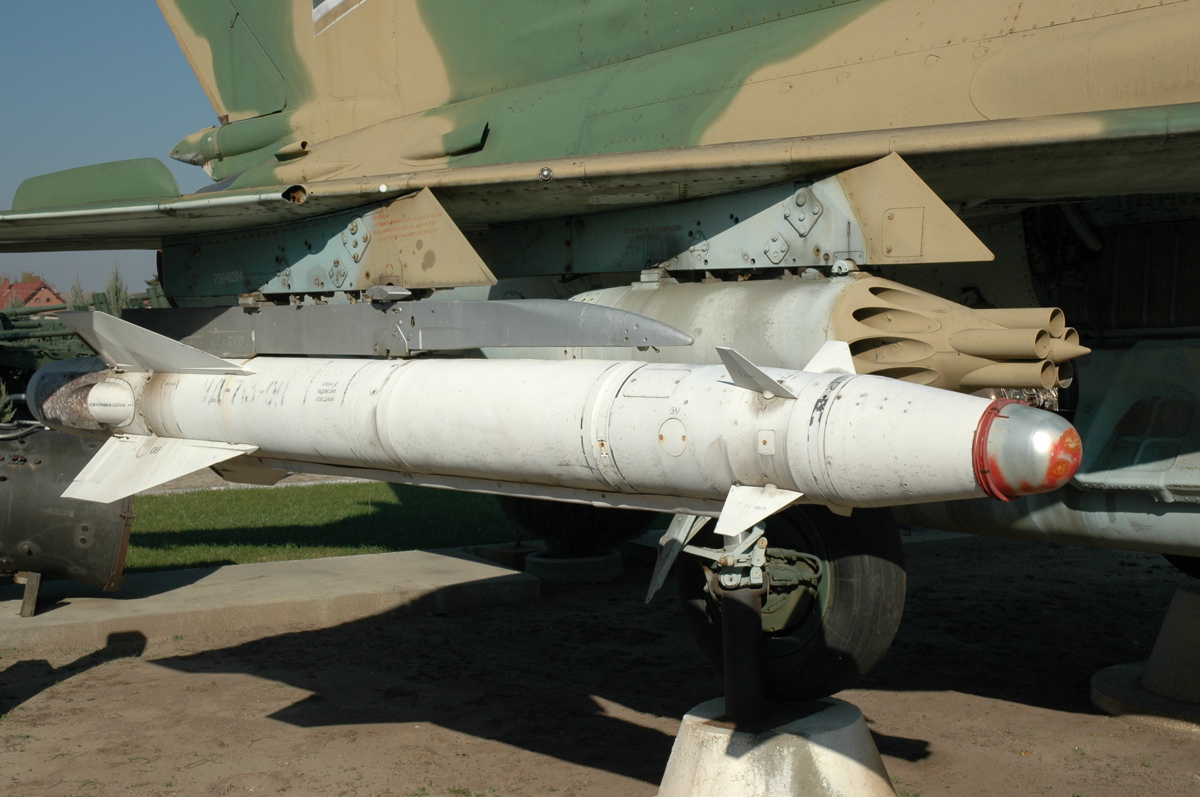

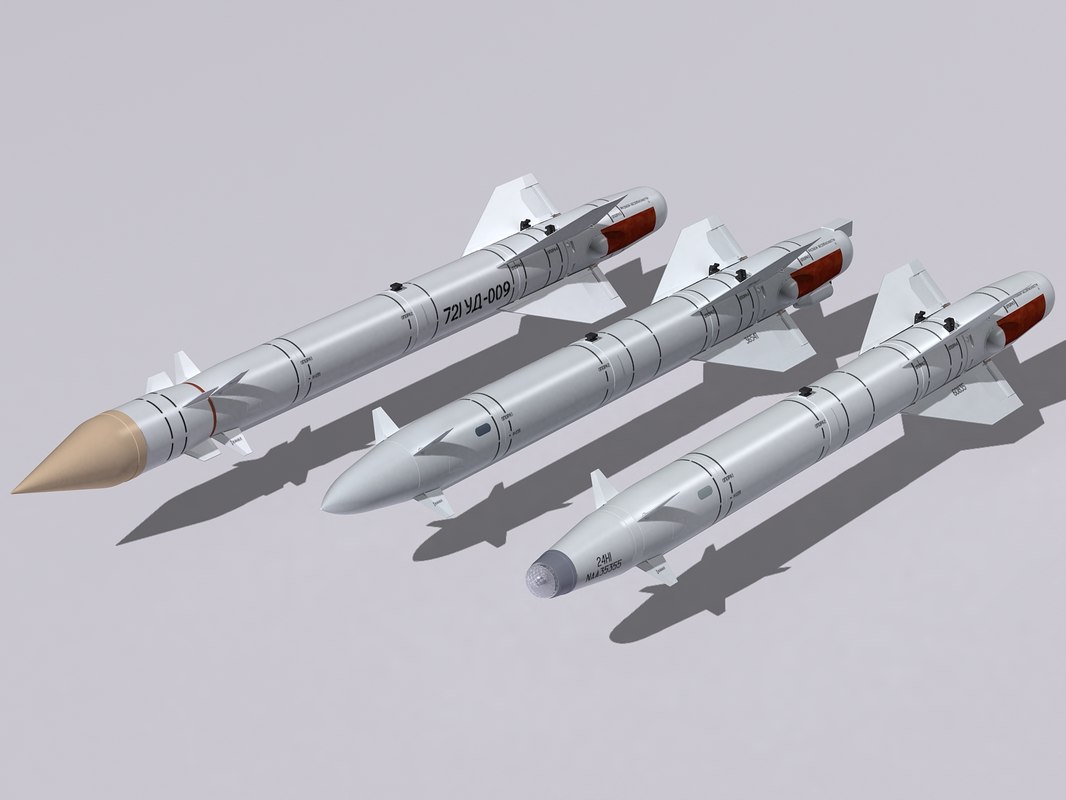
The Kh-25/Kh-25M (Russian: Х-25; NATO:AS-10 'Karen') is a family of Soviet lightweight air-to-ground missiles with a modular range of guidance systems and a range of 10 km. The anti-radar variant (Kh-25MP) is known to NATO as the AS-12 'Kegler' and has a range up to 40 km.[2] Designed by Zvezda-Strela, the Kh-25 is derived from the laser-guided version of the Kh-23 Grom (AS-7 'Kerry'). It has now been succeeded by the Kh-38 family, but the Kh-25 remains in widespread use. Based on an air-to-air missile, the beam-riding Kh-66 had been the Soviet Union's first air-to-ground missile for tactical aircraft, entering service in 1968. However it proved difficult to use in practice as the launch aircraft had to dive towards the target. A version with radio-command guidance, the Kh-23, was first tested in 1968 but problems with the guidance system meant that it would not enter service for another five years. So in 1971 work began on a version with a semi-active laser seeker, which became the Kh-25. This was initially known in the West as the Kh-23L. State testing began on 24 November 1974, and the Kh-25 entered production in 1975. Work began on an anti-radar missile derived from the Kh-66[5] in 1972, using a passive radar seeker and SUR-73 autopilot. The long-range Kh-31 anti-radar missile came out of the same project. The Kh-27 began state testing on a MiG-27 on 8 August 1975 but did not enter service until 2 September 1980. It was assigned the NATO reporting name AS-12 'Kegler' and in effect it replaced the much heavier Kh-28 (AS-9 'Kyle'). In 1973 Victor Bugaiskii was appointed head engineer of the bureau and he started work on combining the Kh-23M, Kh-25 and Kh-27 into a single modular system to reduce costs and improve tactical flexibility. This was completed by the end of 1978, resulting in the Kh-25MP (anti-radar), Kh-25ML (laser-guided) and Kh-25MR (radio-guided) family. NATO continued to refer to these as the AS-12 and AS-10 respectively, even though they could now be switched by a simple change of seeker head.