ARMSNET
Military Equipment Database
Initializing 0%

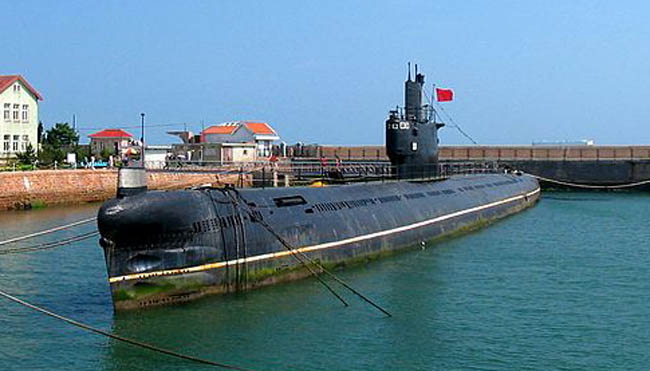
Type 033 Class (Romeo Class) Chinese Diesel-Electric Submarine

Type 033 Class
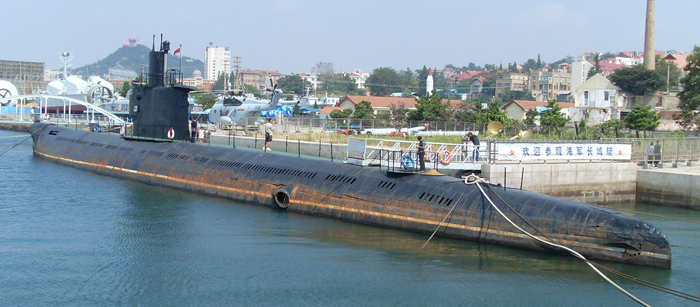
Diesel-Electric Submarine
Spotted an error? Sign in to suggest an edit.
Basic Information
Name
Type 033 Class (Romeo Class) Chinese Diesel-Electric Submarine
Designation
Type 033 Class
Alternate Designation
Type 033 Class; NATO: Romeo Class
Equipment Type
Diesel-Electric Submarine
Manufacturer
Date of Introduction
1962
Description

Chinese Type 033 Romeo-class Under the 1950 Sino-Soviet Friendship and Mutual Assistance Treaty, the Soviets passed to China (and later to North Korea) the documentation necessary to produce Romeo submarines in 1963. The Chinese variant is known as the Type 033 Romeo. A total of 84 Type 033 submarines were built in China from 1962 to 1984, plus several exported to other countries. The Chinese Type 033 incorporated some improvements over the original Romeo, including noise reduction of 20 dB. Sonar on board was also continuously upgraded: the original Soviet sonar was first replaced by domestic Chinese Type 105 sonar, which consequently was replaced by H/SQ2-262A sonar built by No. 613 Factory. Today most of the Type 033 subs have been retired or preserved, with a few remaining in service for training purposes. A total of six Chinese Romeo class submarine variants were developed: Type 6633: Original Chinese built Romeo, China was to have assembled these Romeos from knock-down kits provided by the Soviet Union, 6 were planned, but only 2 were completed. The construction program came to a complete stop when the USSR stopped delivery of parts following the Sino-Soviet split. Construction of the 3rd unit at Wuhan was stopped, and available parts were diverted to complete the first pair, but many parts had to be developed indigenously. The primary improvement of Type 6633 over the original Soviet boats is the use of domestic Chinese batteries, which had slightly superior performance to that of the original Soviet batteries. Type 033: Complete domestic production in China was achieved in 1967, and subsequently the project was renamed the Type 033. However, experience from deployment of completed boats in warmer climates proved that the original Soviet refrigeration and air conditioning system designed for subarctic and arctic area was woefully inadequate for subtropical and tropical regions, so redesigns were needed to improve refrigeration and air conditioning systems, and all boats to be stationed in tropical and subtropical regions went through such a refit. In September 1969 construction of new Type 033s, with improved air conditioning and refrigeration capability, began at Huangpu Shipyard in Guangzhou, eventually, 13 units were completed. ES5A: Upgraded Type 033, with improvements mainly involving the replacement of equipment of Soviet origin with domestic Chinese systems, which includes: QZHA―10 (Type 779) attack periscope and QDYA―10 (Type 778) general purpose periscope. Addition of H/SQG-2 ranging sonar, Type 063 communication systems, and countermeasure systems. Domestic Chinese Type 801 sonar replaced the original Soviet MARS-24 sonar. The only difference between the Type 801 sonar and the MARS-24 sonar is that there are 24 transducer elements for the Type 801 as opposed to 12 in the original MARS 24, so the Chinese sonar had better accuracy. Domestic Chinese H/SQZ-D reconnaissance sonar (with Type 105 transducers) replaced the original Soviet system, the performance of the SQZ-D is almost identical to the original Soviet sonar it was developed from, except for the sector of scan, which is increased by 15 degrees. Additional noise reduction measures were also adopted. This is the type China originally sold to Egypt in the 1980s. Type 033G: Development of the ES5A, with the incorporation of the capability to launch acoustic homing torpedoes; analog computers installed to achieve automation of, and speeding up of, torpedo fire control calculations that were previously manually calculated. All Chinese Romeos were converted to this standard. The NATO reporting name for this type is rumored to be the Wuhan-class. Type 033G1: A single Type 033G was modified to carry 6 YJ-1 (CSS-N-4) anti-ship missiles, this variant is called Type 033G1, with the rumored NATO reporting name of Wuhan A. The missile had to be fired while the boat was surfaced, with a total exposure time on the surface of less than 7 minutes. The most significant improvement, however, is the reduction of noise level by 12 dB. ES5B: Development of the Type 033G, primarily intended for export. This is an upgrade package for Romeo submarine users. The primary improvement of this class is the ability to launch wire guided torpedoes and anti-ship missiles (AShM) while submerged. The program originally begun in the mid-1980s, and Egypt is reported to be the only customer when China won a contract to upgrade its Romeo-class submarine fleet, including both Soviet built and Chinese built units. This is the last type of Chinese Romeo class submarine; with noise reduction of 20 dB to 140 dB in comparison to the 160 dB of the original Soviet Project 633 submarines acquired by China.

Naval & Littoral Specifications
Crew 65
Beam 6.70 m
Draft 5.00 m
Variants
Project 633 Class; NATO: Romeo Class Under the 1950 Sino-Soviet Friendship and Mutual Assistance Treaty, the Soviets passed to China (and later to North Korea) the documentation necessary to produce Romeo submarines in 1963. The Chinese variant is known as the Type 033 Romeo. A total of 84 Type 033 submarines were built in China from 1962 to 1984, plus several exported to other countries. The Chinese Type 033 incorporated some improvements over the original Romeo, including noise reduction of 20 dB. Sonar on board was also continuously upgraded: the original Soviet sonar was first replaced by domestic Chinese Type 105 sonar, which consequently was replaced by H/SQ2-262A sonar built by No. 613 Factory. Today most of the Type 033 subs have been retired or preserved, with a few remaining in service for training purposes. A total of six Chinese Romeo class submarine variants were developed: Type 6633: Original Chinese built Romeo, China was to have assembled these Romeos from knock-down kits provided by the Soviet Union, 6 were planned, but only 2 were completed. The construction program came to a complete stop when the USSR stopped delivery of parts following the Sino-Soviet split. Construction of the 3rd unit at Wuhan was stopped, and available parts were diverted to complete the first pair, but many parts had to be developed indigenously. The primary improvement of Type 6633 over the original Soviet boats is the use of domestic Chinese batteries, which had slightly superior performance to that of the original Soviet batteries. Type 033: Complete domestic production in China was achieved in 1967, and subsequently the project was renamed the Type 033. However, experience from deployment of completed boats in warmer climates proved that the original Soviet refrigeration and air conditioning system designed for subarctic and arctic area was woefully inadequate for subtropical and tropical regions, so redesigns were needed to improve refrigeration and air conditioning systems, and all boats to be stationed in tropical and subtropical regions went through such a refit. In September 1969 construction of new Type 033s, with improved air conditioning and refrigeration capability, began at Huangpu Shipyard in Guangzhou, eventually, 13 units were completed. ES5A: Upgraded Type 033, with improvements mainly involving the replacement of equipment of Soviet origin with domestic Chinese systems, which includes: QZHA―10 (Type 779) attack periscope and QDYA―10 (Type 778) general purpose periscope. Addition of H/SQG-2 ranging sonar, Type 063 communication systems, and countermeasure systems. Domestic Chinese Type 801 sonar replaced the original Soviet MARS-24 sonar. The only difference between the Type 801 sonar and the MARS-24 sonar is that there are 24 transducer elements for the Type 801 as opposed to 12 in the original MARS 24, so the Chinese sonar had better accuracy. Domestic Chinese H/SQZ-D reconnaissance sonar (with Type 105 transducers) replaced the original Soviet system, the performance of the SQZ-D is almost identical to the original Soviet sonar it was developed from, except for the sector of scan, which is increased by 15 degrees. Additional noise reduction measures were also adopted. This is the type China originally sold to Egypt in the 1980s. Type 033G: Development of the ES5A, with the incorporation of the capability to launch acoustic homing torpedoes; analog computers installed to achieve automation of, and speeding up of, torpedo fire control calculations that were previously manually calculated. All Chinese Romeos were converted to this standard. The NATO reporting name for this type is rumored to be the Wuhan-class. Type 033G1: A single Type 033G was modified to carry 6 YJ-1 (CSS-N-4) anti-ship missiles, this variant is called Type 033G1, with the rumored NATO reporting name of Wuhan A. The missile had to be fired while the boat was surfaced, with a total exposure time on the surface of less than 7 minutes. The most significant improvement, however, is the reduction of noise level by 12 dB. ES5B: Development of the Type 033G, primarily intended for export. This is an upgrade package for Romeo submarine users. The primary improvement of this class is the ability to launch wire guided torpedoes and anti-ship missiles (AShM) while submerged. The program originally begun in the mid-1980s, and Egypt is reported to be the only customer when China won a contract to upgrade its Romeo-class submarine fleet, including both Soviet built and Chinese built units. This is the last type of Chinese Romeo class submarine; with noise reduction of 20 dB to 140 dB in comparison to the 160 dB of the original Soviet Project 633 submarines acquired by China.
Type 6633 Original Chinese built Romeo, China was to have assembled these Romeos from knock-down kits provided by the Soviet Union, 6 were planned, but only 2 were completed. The construction program came to a complete stop when the USSR stopped delivery of parts following the Sino-Soviet split. Construction of the 3rd unit at Wuhan was stopped, and available parts were diverted to complete the first pair, but many parts had to be developed indigenously. The primary improvement of Type 6633 over the original Soviet boats is the use of domestic Chinese batteries, which had slightly superior performance to that of the original Soviet batteries.
Type 033 Complete domestic production in China was achieved in 1967, and subsequently the project was renamed the Type 033. However, experience from deployment of completed boats in warmer climates proved that the original Soviet refrigeration and air conditioning system designed for subarctic and arctic area was woefully inadequate for subtropical and tropical regions, so redesigns were needed to improve refrigeration and air conditioning systems, and all boats to be stationed in tropical and subtropical regions went through such a refit. In September 1969 construction of new Type 033s, with improved air conditioning and refrigeration capability, began at Huangpu Shipyard in Guangzhou, eventually, 13 units were completed
ES5A Upgraded Type 033, with improvements mainly involving the replacement of equipment of Soviet origin with domestic Chinese systems, which includes: QZHA―10 (Type 779) attack periscope and QDYA―10 (Type 778) general purpose periscope. Addition of H/SQG-2 ranging sonar, Type 063 communication systems, and countermeasure systems. Domestic Chinese Type 801 sonar replaced the original Soviet MARS-24 sonar. The only difference between the Type 801 sonar and the MARS-24 sonar is that there are 24 transducer elements for the Type 801 as opposed to 12 in the original MARS 24, so the Chinese sonar had better accuracy. Domestic Chinese H/SQZ-D reconnaissance sonar (with Type 105 transducers) replaced the original Soviet system, the performance of the SQZ-D is almost identical to the original Soviet sonar it was developed from, except for the sector of scan, which is increased by 15 degrees. Additional noise reduction measures were also adopted. This is the type China originally sold to Egypt in the 1980s
Type 033G Development of the ES5A, with the incorporation of the capability to launch acoustic homing torpedoes; analog computers installed to achieve automation of, and speeding up of, torpedo fire control calculations that were previously manually calculated. All Chinese Romeos were converted to this standard. The NATO reporting name for this type is rumored to be the Wuhan-class.
Type 033G1 A single Type 033G was modified to carry 6 YJ-1 (CSS-N-4) anti-ship missiles, this variant is called Type 033G1, with the rumored NATO reporting name of Wuhan A. The missile had to be fired while the boat was surfaced, with a total exposure time on the surface of less than 7 minutes. The most significant improvement, however, is the reduction of noise level by 12 dB
ES5B Development of the Type 033G, primarily intended for export. This is an upgrade package for Romeo submarine users. The primary improvement of this class is the ability to launch wire guided torpedoes and anti-ship missiles (AShM) while submerged. The program originally begun in the mid-1980s, and Egypt is reported to be the only customer when China won a contract to upgrade its Romeo-class submarine fleet, including both Soviet built and Chinese built units. This is the last type of Chinese Romeo class submarine; with noise reduction of 20 dB to 140 dB in comparison to the 160 dB of the original Soviet Project 633 submarines acquired by China.
System
Alternative Designation Type 033 Class; NATO: Romeo Class
Type Diesel-Electric Submarine
Builder Krasnoye Sormovo Shipyard, Gorky Wuchang Shipyard (Wuhan) Guangzhou Shipyard (Canton) Jiangnan Shipyard (Shanghai) Bohai Shipyard (Huludao) Mayang-do Naval Shipyard (North Korea) - Assembly site of North Korean kits from China.
Crew 65 total (10 Off. + 55 Enl.)
Dimensions
Length 76.6 m
Beam 6.7 m
Draft 5.0 m
Displacement, Surface 1,319 tons surface
Displacement, Submerged 1,830 tons submerged
Propulsion System
Engine Name Type 37D
Engine Type Diesel-Electric drive: 2 Type 37D diesels
Engine Power 2,700 total bhp; 2 shafts hp
Auxiliary Power 2 Electric 100 shp creep motors
Speed, Surface 13 knots (surface)
Speed, Submerged 10 knots (submerged)
Range, Surface 14,000 nm at 9 kts(surface)
Range, Submerged 350 nm at 9 kts(submerged
Normal Operation Depth 270.0 m
Maximum Operation Depth 300.0 m
Torpedo Weapon Systems
Torpedo Launcher
Number of Tubes 8 533-mm tubes (6 fwd; 2 aft)
Torpedo (Option #1)
Name SAET-60
Type Heavy Weight Torpedo
Length 7.80 m
Diameter 533 mm
Weight, Total 1.855 kg
Explosive Warhead The SAET-60 uses an electric motor and has a 300 kg high explosive warhead with impact and proximity fuse.
Guidance System Homing Passive acoustic homing
Wire Guidance No
Power Source Silver zinc battery, 46 cells
Propulsion Twin propeller wakeless propulsion
Speed 42 kt
Maximum Range 13 km at 42 kt
Depth Up to 400 m launch depth
Basic Load 14
Torpedo (Option #2)
Name Yu-1
Type Torpedo
Length 7.8 m
Diameter 533 mm
Weight 2,000 kg
Warhead Weight 400 kg
Engine Steam
Operational Range 3.5 km at 50 knots 9 km at 39 knots
Maximum Speed 39 to 50 knots
Guidance System Straight running gyroscopic, later upgraded to passive acoustic homing
Mines
Note Can carry 28 mines in lieu of torpedoes
Radar Systems
Name 1 x Snoop Plate
Type Surface search/navigation
Frequency INA
Range INA
Sonar Systems
Name 1 x 1 Herkules or Tamir-5L high-frequency active/passive search and attack
Type Active Sonar
Protection
Active Protection System INA
Countermeasures INA
NBC Water Washdown System Yes
Electronic Warfare 1 CEIEC Model 92A intercept
Details
Country of Origin China
Category Submarines
Naval > Submarines
Filter Label
T
Classification
Domain
Naval & Littoral
Equipment Status
Active
Dimensions
Length
76.6 m
Width
Height
Weight
Operators (1)
China
Something went wrong. Please reload the page. Reload